The IMF’s latest warning is a reminder that Saudi Arabia’s economic story cannot be separated from the region’s security outlook: if conflict drags on, growth prospects weaken, trade routes become more vulnerable, and investor confidence can erode. That matters far beyond finance because the modern World Cup is not just a football tournament; it is a decade-scale governance project that depends on stability, capital, mobility, and trust.
A warning with sporting implications
The IMF says the Middle East war is already disrupting energy markets, supply chains, and financial conditions, with roughly 25 to 30 percent of global oil and 20 percent of liquefied natural gas passing through the Strait of Hormuz and higher risk premia already curbing investment and growth. In Saudi Arabia’s case, the IMF’s medium-term concern is not simply a weaker quarterly number but a less predictable environment for infrastructure delivery, tourism, and foreign capital.
That is why the warning should be read as more than a macroeconomic footnote. Mega-events are built on assumptions about air links, shipping, insurance, financing, labor availability, and a credible security environment, and those assumptions become fragile when a host region is exposed to military escalation. The World Cup is supposed to be a celebration of global openness, yet it is also a logistics-intensive event that can be derailed by instability long before a ball is kicked.
The bid’s core assumption
FIFA awarded the 2034 World Cup on the basis of a Saudi narrative built around Vision 2030, infrastructure investment, and economic diversification, all presented as proof that the kingdom can host a sprawling tournament in a stable and modernized setting. Saudi Arabia’s own bid materials stress a “compact” tournament, extensive transport networks, more than 230,000 room keys, and a long-term football legacy tied to Vision 2030.
That case was always strongest when judged on financial capacity, not geopolitical insulation. Saudi Arabia can clearly fund stadiums, roads, airports, fan zones, and security arrangements; the harder question is whether the regional environment will remain sufficiently calm across the long lead-up to 2034. The IMF’s warning about conflict spillovers invites exactly that question, because a host’s ability to spend does not eliminate the strategic risk created by a volatile neighborhood.
What instability could disrupt
Shipping routes matter because the tournament’s construction boom will depend on imported materials, equipment, and specialist services, and the IMF has already warned that rerouting ships raises freight and insurance costs and lengthens delivery times. If regional tensions affect ports, airspace, or maritime traffic, even a rich host will face higher costs and scheduling pressure, especially for projects tied to NEOM, Jeddah, Riyadh, and other large developments.
Tourism and foreign investment are equally exposed. The IMF notes that air-traffic disruptions around Gulf hubs can affect global tourism, while tighter financial conditions can weigh on business confidence; for a World Cup host, that matters because visitors, sponsors, and contractors all price risk into their decisions. Even if Saudi Arabia can absorb some shocks better than poorer states, repeated uncertainty could still increase the cost of staging the event and dent the broader “safe, seamless, world-class” story the bid is trying to sell.
Sportswashing debate
This is where the sportswashing debate becomes unavoidable. Supporters argue that hosting the World Cup can accelerate reform, deepen international engagement, and expose the country to greater scrutiny in a constructive way; Saudi Arabia’s bid materials explicitly frame the event as a tool for youth development, community growth, and global exchange.
Critics counter that major events can also sanitize reputations without requiring political reform, particularly when the host faces human rights concerns, restrictions on expression, and allegations around labor exploitation and displacement. Human Rights Watch said FIFA’s award ignored “well-known and severe risks,” while other civil society groups have argued that the bid process failed to secure meaningful protections for workers and residents.
The critical point is not that every World Cup in an imperfect state is illegitimate. It is that a tournament of this scale can become a reputational shield, and the more severe the surrounding tensions—regional, political, and social—the more scrutiny is warranted over whether football is amplifying reform or simply laundering risk.
FIFA’s duty of care
FIFA says it has human rights responsibilities, and those responsibilities should extend beyond stadium access and anti-discrimination language to include conflict risk, labor standards, and the resilience of hosting conditions over time. Saudi Arabia’s bid itself claims alignment with human rights commitments, but rights language is only meaningful if it is tested against the realities of governance, legal safeguards, and enforcement.
The flaw in FIFA’s process is that it seemed to treat the absence of a competitive contest as an administrative convenience rather than a reason for deeper caution. Human Rights Watch argued there was no meaningful consultation with affected people and no binding measures capable of guaranteeing compliance with labor and human rights standards. That critique now looks even more relevant when geopolitical risk is added to the equation, because a host country’s readiness is not just about construction schedules; it is about whether the wider region remains stable enough to protect people and deliver the event responsibly.
Historical precedents
There is a long history of sport colliding with politics. The 1936 Berlin Olympics, the 1980 and 1984 Olympic boycotts, and the controversy around South Africa during apartheid all show that international sport is never immune from moral and strategic conflict. More recently, Qatar 2022 demonstrated how labor rights criticism can follow a tournament for years and shape its public legacy far beyond the final whistle.
The lesson is not that every contentious host should be blacklisted forever. It is that sporting bodies often underestimate how quickly a prestige event can become a pressure point when politics, rights, and security converge, and how difficult it is to separate football symbolism from the realities on the ground once the award is made. FIFA should have learned that lesson by now; the Saudi award suggests it has not.
The countercase
To be fair, Saudi Arabia has real strengths. It has the financial firepower to absorb shocks, the administrative capacity to build quickly, and a long list of infrastructure plans that, in peacetime conditions, could make the tournament logistically impressive. Its supporters also argue that the World Cup could spur job creation, tourism, regional development, and cross-cultural exchange, while the bid insists it is committed to sustainability and a responsible tournament.
Those claims are not trivial, and they should not be dismissed out of hand. But the issue is not whether Saudi Arabia can host a World Cup in some abstract sense; it is whether FIFA should have locked in the world’s biggest sporting event in a region where the macroeconomic and security environment may deteriorate in ways that make the promised legacy far less secure. The IMF’s warning does not make hosting impossible, but it does make the original confidence look less persuasive.
Why scrutiny is back
The IMF’s assessment should now serve as a wake-up call for FIFA, sponsors, national federations, and civil society. Saudi Arabia’s World Cup may still go ahead, but it should no longer be treated as a settled triumph of planning over politics; it should be examined as a live test of whether FIFA’s rhetoric on sustainability, stability, and governance means anything when confronted with regional conflict risk.
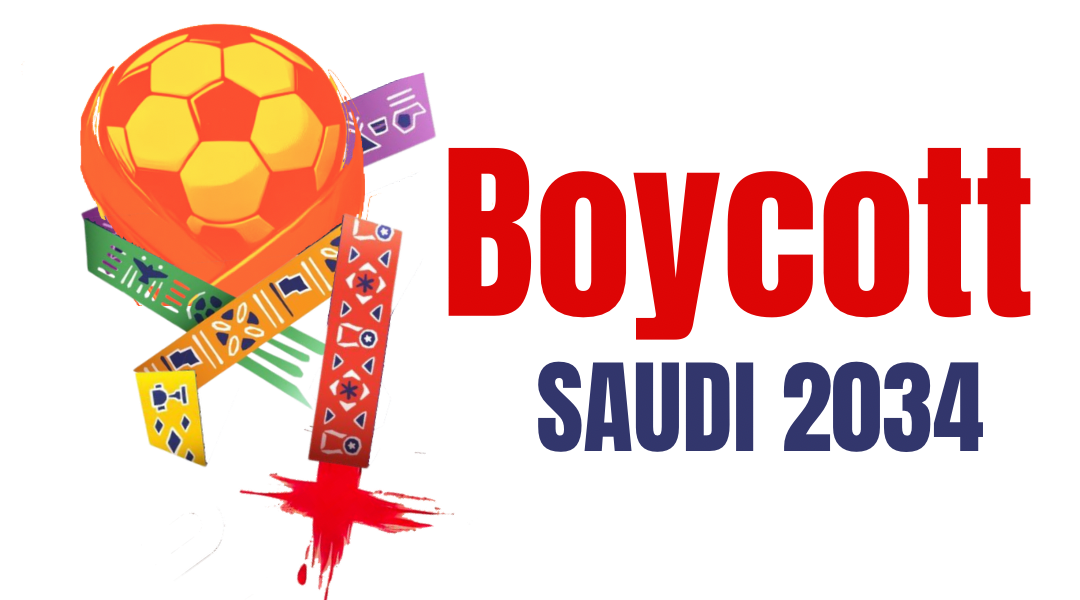
That is why calls for boycott are emerging not merely because of politics, but because of broader concerns about economic resilience, regional security, and the credibility of global sport governance. If FIFA wants its flagship event to stand for more than spectacle, it must show that choosing a host in a geopolitically fragile neighborhood was a defensible decision—not just a lucrative one.