
Yemen’s Houthi movement has struck Saudi Arabia’s Jazan region repeatedly over the past two weeks, killing two civilians and hitting the same Aramco refinery at least twice, even after Saudi Arabia signed a new nuclear-backed defence pact with Turkey and Pakistan. The sustained attacks on Saudi territory raise fresh doubts about the kingdom’s ability to guarantee security in the years leading up to the 2034 World Cup.
Yemen’s Houthi movement struck Saudi Aramco’s oil refinery in Jazan for at least the second time in a week, Bloomberg reported on 13 August, extending a wave of attacks on Saudi Arabia’s southern border region that has continued despite the kingdom signing a new mutual defence pact with Turkey and Pakistan earlier in the month. The strikes have not been limited to energy infrastructure: the United Arab Emirates condemned a Houthi projectile strike on Jazan city’s Samtah governorate that killed two civilians and injured seven, describing it as a dangerous escalation. The sustained pattern of attacks on Saudi territory, continuing even after the kingdom moved to strengthen its regional security architecture, raises direct questions about the stability Saudi Arabia will need to guarantee through the remaining years of preparation for the 2034 World Cup.
Civilians Killed In Direct Strike On Jazan City
Gulf News reported that the UAE’s Ministry of Foreign Affairs and International Cooperation strongly condemned the targeting of civilians in Jazan after a projectile launched by Houthi forces killed two people and injured seven others in Samtah governorate. The ministry called the attack a cowardly act and urged that all necessary measures be taken to protect civilians from what it described as continuing threats from the group.
A Refinery Struck Twice In One Week
Bloomberg reported that Houthi forces targeted the Aramco refinery in Jazan on the Red Sea coast for the second time in under a week, with the group’s Saba news agency citing an unidentified military source as saying two drones had struck the facility. NPR and Al Jazeera reported that the earlier strike, on 9 August, saw a Houthi military spokesman say the group had used a drone to target the refinery in direct retaliation for what it described as Saudi drone incursions into Yemen’s Saada and Hajjah provinces, causing a fire that Saudi Arabia’s Energy Ministry said was extinguished without casualties. The Maritime Executive separately reported that satellite fire-detection data identified a cluster of substantial new thermal anomalies across the eastern half of the refinery in the hours following the strike, describing the scale of the fire signature as unprecedented for that location.
Attacks Continue Two Days After A New Defence Pact
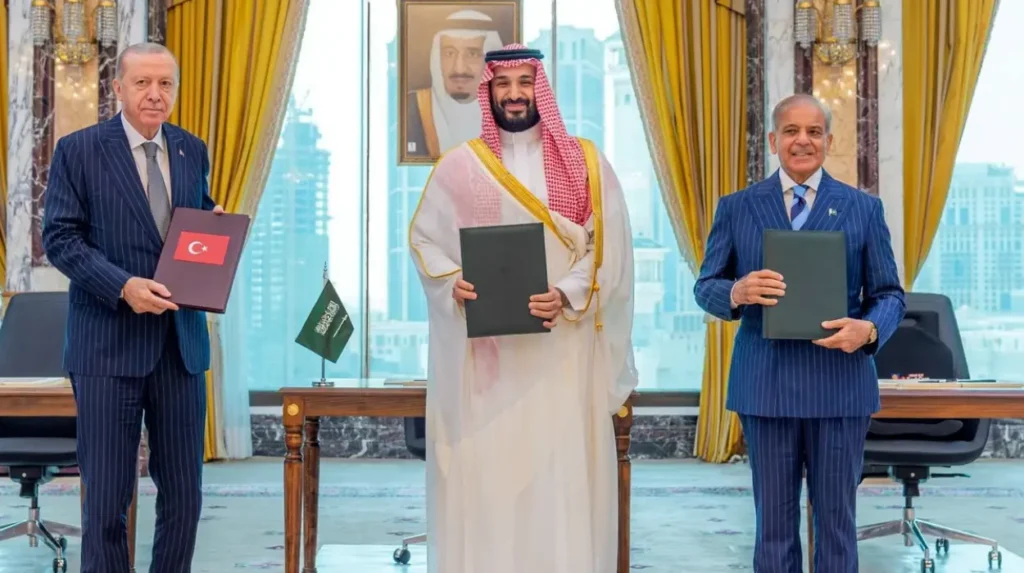
The Jerusalem Post reported that the 9 August strike on Jazan came just two days after Saudi Arabia signed the Mecca Joint Defence Agreement with Turkey and Pakistan, a mutual defence pact under which an armed attack on any of the three signatories would be treated as an attack on all. Despite the pact’s sweeping language, it remained unclear, according to the Jerusalem Post, whether or how either Turkey or Pakistan would be involved in any Saudi response to the continuing Houthi attacks, and there has been no indication that either ally has been invoked in the weeks since the agreement was signed.
A Naval Blockade And A Widening Confrontation
NBC News reported that the Houthis declared a naval blockade against Saudi Arabia in the Red Sea last month, citing what they described as a Saudi siege against them, an allegation Riyadh denies. The group has separately carried out missile and drone strikes against the Yemeni Red Sea port city of Mocha, controlled by the internationally recognised, Saudi-backed government, with Yemeni government sources telling Reuters that air defences engaged drones launched toward the port’s commercial quay and storage facilities. The Saudi-led coalition has responded with what it called a proportionate military response against Houthi targets in Yemen’s Hodeidah province and on Kamaran Island, according to Turkiye Today, after the Houthis targeted commercial vessels in the Red Sea.
Yemen’s Government Calls For International Action
Al Jazeera reported that Rashad al-Alimi, head of Yemen’s Saudi-backed presidential council, briefed the acting US envoy to Yemen on the escalating situation, saying the continuing Houthi attacks placed a responsibility on the international community, and the United States in particular, to move beyond simply containing the Houthi threat and instead address its underlying sources and instruments. The comments reflect growing frustration among Saudi-aligned parties that four years of relative calm along the border, which had held since an informal 2022 truce, have unravelled without a clear international response capable of stopping the attacks.
Why This Matters For Saudi Arabia’s 2034 World Cup
Two weeks of sustained strikes on Saudi Arabia’s own territory, including civilian deaths and repeated hits on critical energy infrastructure, are difficult to reconcile with the kind of predictable, decade-long security environment FIFA’s hosting requirements assume. That the attacks have continued largely unabated even after Saudi Arabia signed a new, nuclear-backed defence pact specifically intended to strengthen collective deterrence raises a pointed question about how much practical protection the kingdom’s evolving alliance structure actually provides against the threats it currently faces.
An Untested Pact Meets A Live Crisis
The gap between the Mecca pact’s sweeping mutual-defence language and the reality of continued, unanswered strikes on Jazan illustrates precisely the concern raised when the agreement was first signed: that new regional alliances are being built faster than they can be tested, and that their value in an actual, ongoing crisis remains unproven. For FIFA, participating federations and fans planning around Saudi Arabia’s 2034 hosting commitment, a border region absorbing repeated attacks on civilians and energy infrastructure, even after new security guarantees were put in place, offers little reassurance about the kingdom’s capacity to manage sustained regional threats over the coming years.
Broader Debate Over Regional Stability And Ethical Hosting
Critics of Saudi Arabia’s 2034 hosting rights have long argued that the tournament depends on a level of durable regional security the kingdom has not yet demonstrated it can guarantee. Two civilian deaths, a refinery struck twice in a week, and a naval blockade declared against Saudi shipping, all within the same fortnight the kingdom signed a major new defence pact, add direct and current weight to that argument. Neither FIFA nor the Saudi government has commented publicly on how the continuing Houthi attacks factor into long-term security planning for 2034. For international federations, rights organisations and fans who will eventually be asked to travel to the kingdom, the persistence of these attacks, even as Saudi Arabia’s defence posture expands, is likely to remain a central and unresolved question in the years ahead.