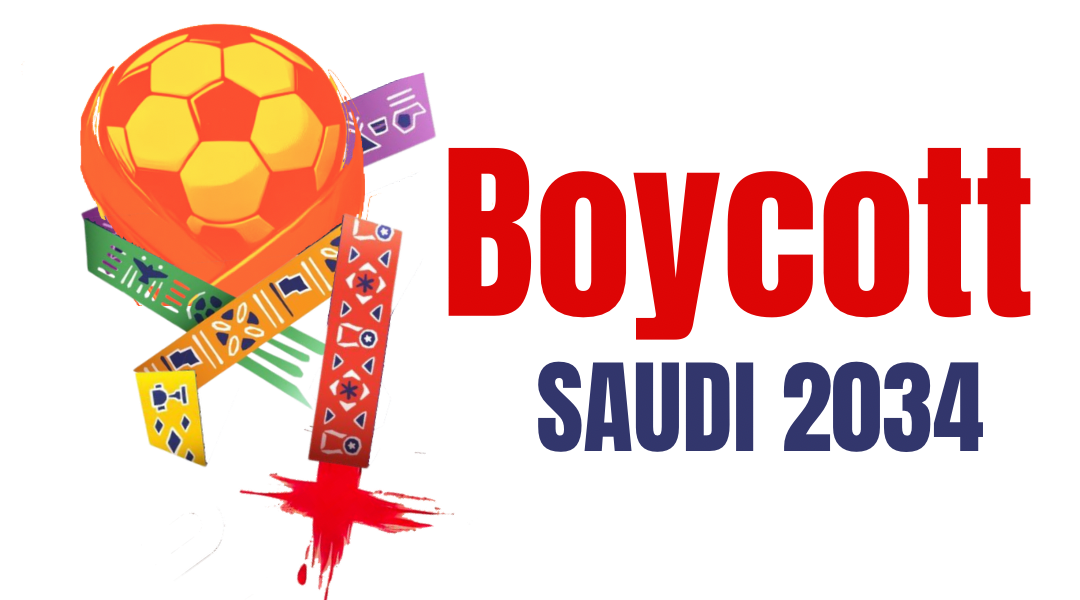

More than 60 Saudi dissident accounts have reportedly been blocked from users inside Saudi Arabia after requests from Saudi authorities, according to The Guardian. The development has renewed concerns over freedom of expression in the Kingdom as Saudi Arabia prepares to host the 2034 FIFA World Cup. The restrictions raise questions about whether FIFA can ensure that its human-rights commitments are meaningful in a tournament hosted by a country where access to critical voices remains restricted.
Saudi Arabia is preparing for one of the most internationally visible events in its history: the 2034 FIFA World Cup. Yet as the Kingdom works to present itself as a modern global destination for sport, tourism and investment, a new controversy over online censorship is putting its record on freedom of expression back under scrutiny.
More than 60 accounts belonging to Saudi dissidents have reportedly been made unavailable to users inside Saudi Arabia on Elon Musk’s X platform since mid-July, following demands from Saudi authorities, according to a report published by The Guardian on August 4. The affected accounts reportedly include prominent Saudi activists and critics, including Yahya Assiri, head of the UK-based human-rights organization ALQST, and Abdullah Alaoudh, a Saudi government critic based in the United States.
The development is significant not simply because of the number of accounts involved, but because it raises questions about how Saudi Arabia’s legal and regulatory environment can affect the ability of people inside the Kingdom to access dissenting political and human-rights content.
X Blocks More Than 60 Saudi Dissident Accounts
According to The Guardian, X has geoblocked more than 60 accounts within Saudi Arabia following requests from Saudi authorities. Users attempting to access some of the accounts reportedly received notices stating that restrictions were imposed to comply with Saudi legal obligations.
The report says the notices did not identify violations of X’s own platform rules. Instead, the restrictions were reportedly connected to Saudi legal requirements.
The distinction is important.
If accounts are unavailable because a platform determines that they violate its own rules, the decision represents private content moderation. If accounts are restricted because a government invokes domestic law, the issue becomes part of a much broader debate about state power, censorship and freedom of expression.
The Guardian reported that Saudi authorities cited provisions relating to public order, morals and religious values in their demands. Critics argue that such broad provisions can provide authorities with significant scope to restrict critical speech.
Prominent Saudi Critics Among Those Affected
The restrictions reportedly affect several well-known Saudi critics.
Yahya Assiri, who leads the UK-based human-rights organization ALQST, is among those whose account has reportedly been blocked inside Saudi Arabia. Abdullah Alaoudh, a Saudi government critic based in the United States, was also reportedly affected.
The Guardian also reported restrictions involving satirist Ghanem al-Masarir, who has previously been targeted through Saudi legal complaints.
The significance of these cases goes beyond individual accounts. Dissidents living outside Saudi Arabia often rely on social-media platforms to communicate with audiences inside the Kingdom. Geoblocking therefore does not necessarily remove the content from the internet entirely; instead, it can prevent people inside Saudi Arabia from accessing particular voices.
That distinction makes the issue particularly relevant to the question of civic space.
Saudi Arabia’s Digital Restrictions Extend Beyond X
The latest controversy also appears within a wider pattern.
The Guardian reported that X’s actions follow restrictions affecting Saudi dissident content on other major platforms, including Meta-owned services and Snapchat. Human-rights advocates have argued that the cumulative effect could be to make it increasingly difficult for Saudi citizens to access independent criticism online.
ALQST has called on major technology platforms to restore access to the affected accounts and provide greater transparency about the decisions.
The concern is therefore not limited to one company.
It is about whether international technology companies are becoming increasingly responsive to government requests that restrict access to political and human-rights content.
The Timing Matters: Saudi Arabia Is Preparing for FIFA 2034
The latest restrictions come at a particularly important moment for Saudi Arabia.
The Kingdom is preparing to host the 2034 FIFA World Cup, the largest sporting event ever awarded to Saudi Arabia. The tournament is central to Riyadh’s wider effort to establish itself as a major international destination for sport, entertainment, tourism and investment.
That transformation has already attracted significant scrutiny.
Human-rights organizations have repeatedly raised concerns about freedom of expression, migrant-worker rights, women’s rights and the treatment of critics in Saudi Arabia. Amnesty International and the Sport & Rights Alliance previously called on FIFA to demand credible human-rights safeguards before awarding the 2034 tournament.
FIFA ultimately awarded Saudi Arabia the tournament in December 2024.
The latest X controversy now provides a fresh example of why those concerns have not disappeared.
Can FIFA’s Human-Rights Commitments Be Enforced?
The central question for FIFA is not whether the football governing body controls X.
It does not.
Nor does the latest report establish that FIFA had any involvement in the blocking of Saudi dissident accounts.
The more important question is whether FIFA’s human-rights commitments surrounding the 2034 World Cup can have meaningful impact within the host country.
Saudi Arabia’s World Cup human-rights strategy includes commitments relating to grievance mechanisms and protections for people affected by tournament activities. FIFA’s published material for the Saudi bid described mechanisms intended to allow attendees to report incidents and seek assistance during the tournament.
But freedom of expression is broader than the operation of stadiums.
A World Cup does not take place in isolation from the wider legal and social environment of its host country. Journalists, supporters, activists, migrant workers, residents and international visitors will all interact with that environment.
That makes the ability to criticize authorities and access independent information an important part of the wider human-rights debate surrounding the tournament.
The Sportswashing Question Returns
Saudi Arabia has invested enormous resources in international sport as part of its broader transformation strategy.
Football has become one of the most visible elements of that strategy. The Kingdom’s investment in clubs, players, sporting competitions and ultimately the FIFA World Cup has dramatically increased its international profile.
Supporters of Saudi Arabia’s transformation argue that these investments are opening the Kingdom to the world.
Critics, however, argue that high-profile sporting events can improve a country’s international reputation while diverting attention from unresolved human-rights concerns.
The latest restrictions on dissident accounts feed directly into that debate.
The contrast is difficult to ignore: Saudi Arabia wants to use the world’s biggest football tournament to project an image of openness and global integration, while reports of restrictions on access to critical Saudi voices continue to emerge.
That does not prove that the World Cup itself is being used to conceal censorship.
But it does demonstrate why the Kingdom’s human-rights record will remain under scrutiny throughout the preparations for 2034.
FIFA Cannot Treat Human Rights as a Branding Exercise
FIFA has increasingly emphasized human rights as part of the requirements surrounding major tournaments.
That makes the Saudi case particularly important.
Human Rights Watch has previously warned that awarding the 2034 World Cup to Saudi Arabia carried serious risks for residents, migrant workers and visiting fans.
Amnesty International likewise called for FIFA to halt the Saudi bidding process unless meaningful human-rights reforms were announced.
The latest controversy suggests that the debate is not going away simply because Saudi Arabia has been confirmed as the host.
Instead, the scrutiny is likely to intensify as the tournament approaches.
FIFA therefore faces a credibility test.
If its human-rights requirements are meaningful, the organization must be able to demonstrate how those commitments will be monitored, independently assessed and enforced.
If they are merely assurances attached to the bidding process, critics will have grounds to argue that human rights were treated as a box-ticking exercise rather than a binding condition of hosting the World Cup.
What Happens When the World Cup Arrives?
The 2034 tournament will expose Saudi Arabia to unprecedented international attention.
Hundreds of thousands of visitors, international journalists, football supporters and human-rights observers are expected to focus on the country.
The question will therefore extend beyond whether Saudi Arabia can build stadiums, transport networks and hotels.
It will also concern whether the country can accommodate the scrutiny that comes with hosting the world’s largest football tournament.
Today’s reported restrictions on Saudi dissident accounts provide an uncomfortable reminder that openness remains contested.
For FIFA, the challenge is equally clear.
The organization cannot control Saudi Arabia’s domestic internet policy. But it can determine how seriously it treats the human-rights commitments associated with its flagship tournament.
A Test for Saudi Arabia — and for FIFA
Saudi Arabia’s 2034 World Cup is being presented as evidence of the Kingdom’s transformation into a global sporting power.
But international sporting legitimacy brings international scrutiny.
The reported blocking of more than 60 Saudi dissident accounts shows that questions about freedom of expression remain highly relevant.
For Saudi Arabia, the issue is whether its global transformation narrative can withstand continued scrutiny over restrictions on dissent.
For FIFA, the issue is whether its human-rights commitments can withstand scrutiny when they are tested in the real political and legal environment of a host country.
The 2034 World Cup will ultimately be judged on more than stadiums, matches and spectacle.
It will also be judged on whether the promises surrounding human rights, transparency and openness are reflected in the reality experienced by people living in and visiting the host country.
And as Saudi Arabia prepares for the global spotlight, the question will become increasingly difficult to avoid:
Can a country present itself as an open host to the world while restricting access to some of the voices criticizing it at home?