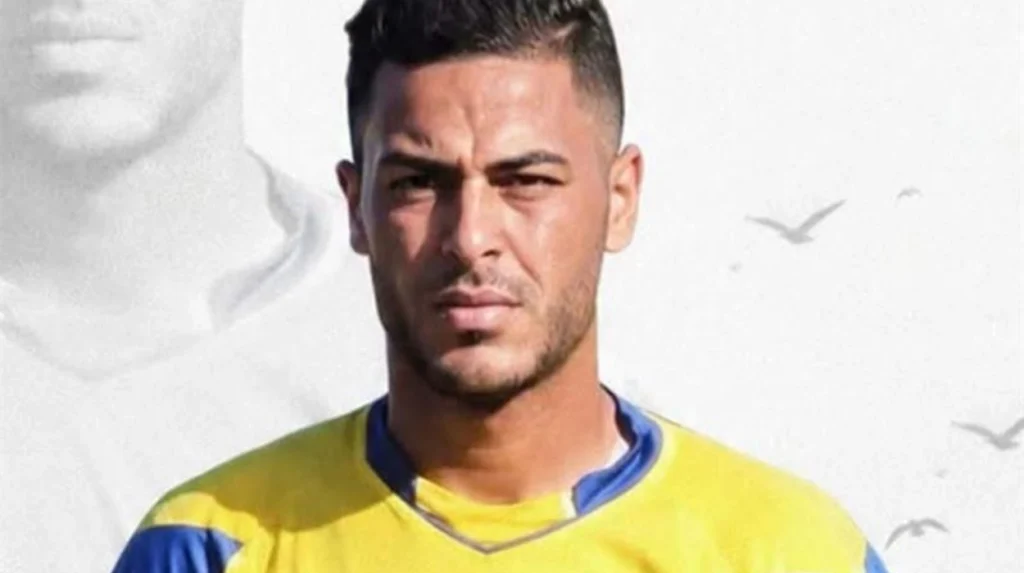
The reported killing of Palestinian goalkeeper Saleem al-Ashqar has reignited a deeper question that FIFA has never fully answered: when footballers are harmed in war, what exactly is the federation’s duty beyond words? The criticism directed at FIFA is not only about one tragedy, but about whether the world’s most powerful sports body applies its rules with consistency, transparency, and institutional discipline.
For an organization that presents itself as a guardian of football’s global unity, the challenge is structural. FIFA has built a modern human-rights vocabulary and repeatedly invoked neutrality, yet it has struggled to show that those principles amount to a clear operational standard when conflict enters the sport.inside.
The Russia and Israel Comparison
The most obvious reference point is Russia’s suspension after the invasion of Ukraine in February 2022. FIFA and UEFA jointly announced that all Russian teams, national and club, would be suspended from competition “until further notice,” describing the decision as a response taken in solidarity with those affected in Ukraine.inside.
That precedent matters because it proves FIFA is capable of fast and decisive action in a geopolitical crisis. But it also exposes the federation’s most persistent weakness: it has never fully set out a public, durable test explaining why one conflict triggered immediate sporting exclusion while another, far more protracted one, has led to hesitation, partial measures, or no comparable sanction.
The Israel-Palestine case is legally and politically different from the Russia-Ukraine war, and that difference cannot be ignored. The status of the West Bank, the jurisdictional reach of the Israel Football Association, and the unresolved territorial questions all create complexities that FIFA can point to as reasons for caution.
Still, complexity is not the same as clarity. If FIFA believes the cases are materially different, it must explain those distinctions in a way that is precise enough to withstand scrutiny from member associations, athletes, lawyers, and the public. Without that, the perception of selective enforcement becomes almost inevitable.inside.
Human Rights and FIFA Policy
FIFA’s own human-rights framework is stronger on paper than many critics admit. The federation says it is committed to respecting all internationally recognised human rights, and it ties that commitment directly to Article 3 of its Statutes. FIFA’s 2017 Human Rights Policy said it would strengthen and guide the organization’s human-rights work, while its current public material says human rights are embedded across operations and relationships.inside.
The question is whether that policy has become a governance mechanism or remained largely aspirational. Human-rights language only matters if it translates into visible procedures for risk assessment, escalation, remedy, and communication when football people or football infrastructure are affected by armed conflict.
That is where FIFA remains difficult to assess. It can cite policy statements, but it has offered far less evidence of a transparent conflict-response framework that would tell stakeholders how it weighs player safety, club operations, association responsibility, and public accountability. In practice, FIFA still appears to decide many of these questions case by case, which may be flexible, but is not the same as being consistent.
Gianni Infantino’s Leadership Record
Gianni Infantino’s presidency has amplified both FIFA’s ambition and its contradictions. His supporters argue that he has expanded FIFA’s social-policy language and kept the federation focused on football’s global reach, while insisting that sport should not be pulled too deeply into political battles. FIFA’s official materials under his leadership stress social responsibility, anti-discrimination work, and human rights as part of its strategic objectives.
Yet Infantino’s public posture has often reinforced criticism that FIFA is selective about when it embraces moral language and when it retreats into procedural caution. During the Qatar World Cup period, he drew heavy criticism from rights groups for responding defensively to scrutiny, an episode that added to the impression that FIFA under his leadership often treats accountability as an external irritant rather than a governance duty.
His stance on Russia has also complicated his legacy. In 2026, Infantino said he supported lifting the ban on Russia and argued that the suspension had “achieved nothing,” which is a defensible policy view in abstract terms but an awkward one for an organization that had used the ban as a sign of principled action.
Taken together, these episodes suggest a presidency that has not resolved FIFA’s core identity problem. Under Infantino, FIFA has projected power and diplomatic reach, but it has not always projected institutional consistency. That distinction matters because credibility in governance depends not just on bold decisions, but on whether similar disputes are handled through similar standards.inside.
Political Neutrality in Football
FIFA’s traditional defense in politically charged cases is that it is a football body, not a foreign ministry. That argument has merit, because the organization is not designed to arbitrate international conflicts or replace public international law. Its statutes and governance structures are built around association membership, sporting rules, and the orderly administration of the game.digitalhub.
But neutrality is not an excuse for opacity. When FIFA says it is staying out of politics, the public still expects it to explain how its sporting principles apply when war damages the football ecosystem. A neutral institution can still be accountable, and indeed needs to be more transparent precisely because it is operating in contested territory.digitalhub.
This is the heart of the problem. FIFA wants the authority to intervene when it deems it necessary, as it did with Russia, but it also wants the discretion not to intervene when political risk is high or legal uncertainty is greater. That may be institutionally understandable, yet it leaves the federation vulnerable to accusations that neutrality is being used as a shield for inconsistency.
Transparency and Accountability
A governing body earns trust when stakeholders can understand how decisions are made, even if they disagree with the outcome. FIFA’s current problem is not only what it decides, but how little it publicly reveals about the standards behind those decisions. The absence of a clear conflict-sanctions framework makes it harder to defend the federation against charges of unequal treatment.inside.
That matters in practical terms for players, clubs, and national associations. When footballers are killed, displaced, or forced to play under conditions shaped by war, the sport’s governing body cannot simply rely on broad statements about peace and unity. It needs procedures that can be seen, tested, and compared across cases, especially when member associations expect equal treatment under the same statutes.inside.
The credibility issue is heightened because FIFA has already shown that it can move quickly when it chooses to. Russia’s suspension demonstrated institutional capacity; the lack of a similarly explicit framework elsewhere raises the opposite question, namely whether FIFA’s enforcement is guided more by diplomacy and context than by published principle.
The Cost of Selective Enforcement
Selective enforcement is damaging because it creates hierarchy inside a system that claims universality. If one member association can be swiftly suspended after a geopolitical shock while another can operate amid sustained conflict without a clearly articulated equivalent standard, the federation risks creating a two-track version of football governance.
That perception affects more than elite politics. Supporters, clubs, and players read institutional behavior as a measure of whose suffering counts in football’s global order. When FIFA is seen as decisive in one case and deferential in another, its language of equality begins to sound conditional rather than universal.inside.
There is, however, a serious counterargument. Broad sporting sanctions can punish athletes and fans who are not responsible for state actions, and blanket bans may entrench division rather than resolve it. That is why some legal and governance experts prefer targeted measures, legal review, and structured due process over immediate exclusion. FIFA’s challenge is to show that if it prefers caution in one case, that caution rests on principled criteria rather than convenience.
What this controversy ultimately means for FIFA is not whether the organization will suddenly solve the politics of war. It is whether the federation can protect the legitimacy of its own rules by applying them consistently, explaining them clearly, and aligning them with the human-rights commitments it already claims to uphold.inside.
If FIFA continues to respond to armed conflicts in an ad hoc way, it will deepen the suspicion that its governance is shaped as much by power, diplomacy, and reputational calculation as by statute. If it develops a transparent framework for crisis response, it would not remove the political difficulty, but it would strengthen institutional credibility.
For Infantino, this is a legacy issue. His presidency has left FIFA more visible, more commercially powerful, and more outspoken on social questions, but not necessarily more trusted on consistency. The al-Ashqar case has made that gap harder to ignore, and in global football governance, trust is the one asset that cannot be manufactured after the fact.