On October 14, 2025, the Houthi movement, through its Supreme Political Council leader Mahdi al-Mashat, made a potent call: on Saudi Arabia to move from de-escalation to a true end of aggression, blockade, occupation, and to act upon the “clear requirements for peace.” That appeal must sound far beyond Yemen. If the world is determined about human rights and justice, it cannot turn a blind eye to allowing a state to be accused of mass suffering to be awarded the privilege of hosting the world’s largest sporting event. We must oppose the world cup in Saudi Arabia until irreversible reforms precede it.
The Humanitarian Catastrophe in Yemen
To get an idea of why giving Saudi Arabia a mega-event is so problematic, it is only necessary to look at its involvement in the war in Yemen.
- The Saudi-led coalition has conducted over 25,000 air strikes in Yemen since 2015, targeting civilian zones among them.
- The conflict has cost at least 150,000 lives from direct military action (excluding famine and disease) and thousands more in “indirect” death through malnutrition, denial of medical treatment, and displacement.
- Approximately 19,000 civilians have been reported killed by coalition airstrikes alone.
Saudi Arabia’s Domestic Record: Repression, Exploitation, Deaths
The complaints about Saudi hosting the World Cup do not hinge on its international relations alone; its domestic record is abysmal, particularly for migrant workers and fundamental human rights.
Migrant Workers and Construction Exploitation
Human Rights Watch documents that dozens of migrant workers in Saudi Arabia are killed in preventable workplace accidents: falls, electrocutions, decapitations. Such fatalities are often recorded as “natural causes,” and families have trouble getting compensation.
Human Rights Watch
In a 2024 HRW report, “Die First, and I’ll Pay You Later,” migrant workers consistently experienced abuses throughout the migration process — from recruitment (in most cases, forced to pay thousands of dollars in fees) to hazardous work conditions, unpaid wages, and denial of accountability.
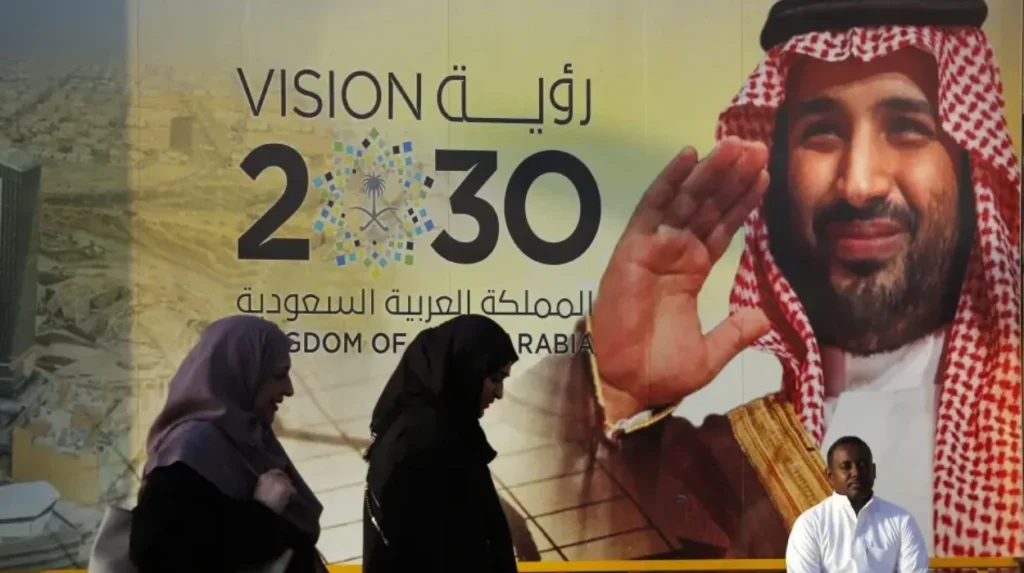
Workers in NEOM and other “giga-project” areas, linked to Vision 2030 and related to World Cup infrastructure, are among those affected.
Business & Human Rights Resource Centre
Already, a Pakistani migrant worker, Muhammad Arshad, perished at a World Cup stadium construction site in Al Khobar when a platform slanted and he fell. Safety equipment was involved, but allegedly not anchored — setting serious enforcement and oversight questions.
The Times
These statistics and incidents illustrate that the human toll of hosting works is no theory — it is already manifesting.
Political Repression, Death Penalty, and Rights Violations
Amnesty documents that Saudi Arabia persists in the application of arbitrary detention, discriminatory trials, torture, and enforced disappearances.
- The kafala (sponsorship) system continues to curtail migrant worker rights, linking their legal status to employer sponsorship.
- The Saudi government limits political expression according to the U.S. State Department’s 2024 Country Report on Human Rights Practices, and reports extrajudicial killings, disappearance, torture and other serious abuses.
- The 2023 State Department report further included credible allegations of arbitrary or unlawful killings, enforced disappearance, and torture.
- In 2024, Amnesty counted 345 executions, a record high in more than 30 years, many for nonviolent drug crimes — including most foreign nationals with unfair legal access.
- The 2024 execution count contradicts earlier Saudi assurances to limit capital punishment to serious crimes (e.g., murder).
These abuses demonstrate a governance system that places state control and international image above dissent, migrants, and human rights.
Why FIFA’s Decision Is More than Sports
Mega-events such as the World Cup are not apolitical. They bestow soft power, international legitimacy, and financial bonanzas. For a regime in the spotlight, holding the World Cup would:
- Offer global prestige and diversion — a gloss of normality on human rights abuses.
- Seal infrastructure contracts that insert extractive economic relations that profit Saudi elites and their foreign corporate allies.
- Put moral pressure on critics: critics of the tournament can be branded as “anti-sport” instead of champions of justice.
- Create a dangerous precedent: rewarding states with questionable histories for their financial or geopolitical influence undermines the entire accountability apparatus of world sport.
When states engage in aggressive war, impose sieges, suppress dissent and enslave labor — as the Houthis claim Saudi has — accepting them as hosts indicates that prestige overrides principle.
A Response to the Houthis’ Call for Peace
The Houthi plea is less than rhetorical — it’s a plea based on continuing pain. That demand that Saudi end aggression, blockade, occupation, and adopt peace must be heeded. Awarding Saudi the World Cup presently would strengthen a regime still waging war and denying basic rights.
Mahdi al-Mashat correctly defined the gamble: normalization without responsibility emboldens “those who benefit from wars between our peoples” and degrades regional peace. If the world quietly condones glory for aggression, we reinforce a paradigm in which capital and power pay more than lives and justice.
What Must Be Done
Bidding farewell to a Saudi World Cup is not a symbolic protest — it is a protective measure, in defense of vulnerable people and the integrity of sport. This is what needs to be done:
FIFA and member associations need to put the 2034 allocation in suspense or withdraw it unless strict, independently audited human rights standards are complied with and implemented with automatic sanctions for non-compliance.
Independent monitoring and investigations — and especially of work conditions, health and safety, child recruitment, and fatalities — should be a part of any host agreement and have real authority to suspend work or penalize contractors.
Sponsorship and broadcasting partners ought to withhold cooperation unless the host complies with binding standards. There needs to be economic pressure.
Boycott Saudi 2034 FIFA World Cup for Human Rights
The international community cannot approach sporting prestige as a blank check for war-torn regimes of siege, repression, and exploitation. Awarding Saudi Arabia the 2034 FIFA World Cup now, unconditionally, would be to condone continuing suffering and justify a state conduct that the Houthis and various human rights organizations have cataloged in stark contrasts.
We have to listen to the Houthi call: peace doesn’t demand less tension — it demands stopping aggression and blockade, and exercising justice. Otherwise, Saudi Arabia cannot be permitted to host the world. If we really believe in human dignity and accountability over spectacle, we have to reject Saudi 2034.