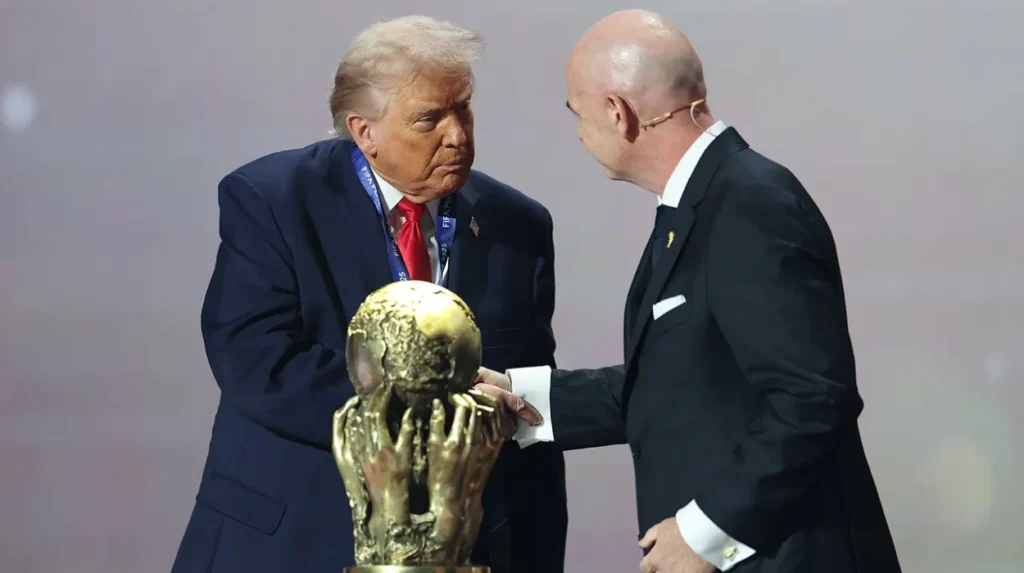
A startling proposal has emerged from U.S. special envoy Paolo Zampolli, linked to President Donald Trump, suggesting that FIFA replace Iran with Italy in the 2026 World Cup. Though unofficial and unlikely to succeed, its mere existence signals deeper issues in FIFA’s governance.
Proposal Context
Zampolli openly confirmed pitching the idea to both Trump and FIFA President Gianni Infantino, citing Italy’s four World Cup titles and its playoff elimination as justification. Iran qualified legitimately through AFC processes, amid its own geopolitical tensions, including a sports minister’s earlier boycott threats. The suggestion blends football merit with U.S.-Italy diplomacy, strained by Iran-related conflicts, highlighting how political envoys now view FIFA as a venue for such maneuvers.
This is not a formal demand but a reported overture, underscoring the perceived accessibility of FIFA’s leadership. Infantino has so far upheld qualification rules, yet the incident reveals a governance gap where informal lobbying feels viable.
FIFA’s Neutrality Claims
FIFA’s statutes mandate political neutrality, obliging member associations to remain independent from government interference. The organization has suspended nations like Nigeria in 2014 and Kuwait in 2015 for perceived meddling, and recently Russia for the 2026 tournament.
Yet history contradicts this stance: the 1978 World Cup in Argentina under dictatorship, 2022 Qatar hosting amid human rights scrutiny, and Olympic boycotts spilling into football show politics’ persistent intrusion. Such precedents erode FIFA’s self-proclaimed apolitical fortress, making Zampolli’s approach plausible in influential circles.
Roots of Perceived Accessibility
Political actors like Zampolli likely see FIFA as approachable due to its centralized power structure and past scandals. The 2015 corruption crisis exposed bribery in World Cup bids, leading to reforms like the Governance Committee for independence checks, but critics argue these are superficial.
FIFA’s reliance on host nations’ revenues and Infantino’s rapport with world leaders—evident in U.S.-hosted 2026 ties—fuels perceptions of leverage points. Envoys bet on backchannel influence, assuming geopolitical weight trumps sporting merit. This reflects institutional credibility deficits, where opacity in decision-making invites external pressures.
Geopolitical Risks in Sport
Allowing such proposals risks politicizing qualification, turning the World Cup into a diplomatic tool. Replacing a qualified team like Iran with a non-qualifier like Italy would validate exclusion based on U.S.-Iran hostilities, echoing Cold War-era bans.
Global tournaments demand merit-based integrity; deviations could cascade, with rivals proposing swaps for China or others amid trade wars. This undermines the World Cup’s unifying ethos, prioritizing alliances over competition and alienating fans in affected nations.
Erosion of Trust and Fairness
The qualification system’s credibility hinges on transparency; even floated ideas sow doubt about hidden deals. Fans and federations might question if slots are secured via lobbies rather than pitches, mirroring club football’s state-owned influences like sportswashing in the Premier League.
Global representation suffers as smaller confederations like AFC perceive bias toward UEFA powerhouses. Italy’s pedigree is undeniable, but overriding rules erodes faith in playoffs and draws, potentially boycotting fan engagement worldwide.
Reforms for Independence
FIFA must enforce stricter lobbying protocols, mandating public disclosure of high-level contacts. Expanding independent oversight beyond the Governance Committee—perhaps via external auditors—could deter informal overtures.
Clearer boundaries, like codified rejection responses to political suggestions, would reinforce neutrality. Member associations need binding commitments to insulate governance, learning from suspensions to preempt interference. Ultimately, transparency rebuilds trust, ensuring football transcends geopolitics.