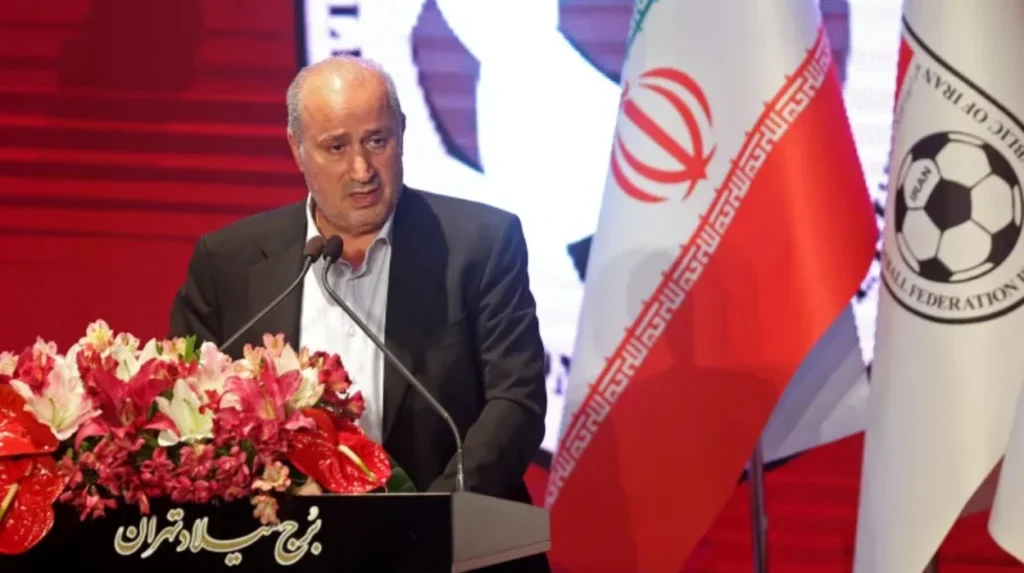
In a contentious decision that has sparked widespread debate, FIFA rejected Iran’s official request to relocate its 2026 World Cup matches away from the United States, citing safety fears amid escalating geopolitical tensions. Iran’s Football Federation formally approached FIFA in early 2026, arguing that U.S. hostility toward the Islamic Republic posed an imminent threat to its national team’s players, staff, and supporters. Under President Gianni Infantino’s leadership, FIFA dismissed the plea without substantive public rationale, insisting the tournament’s multi-nation hosting framework—spanning the U.S., Canada, and Mexico—remains sacrosanct.
This article critically assesses FIFA’s response as a profound failure of leadership, revealing Infantino’s lack of sensitivity to geopolitical realities and a blatant prioritization of commercial interests over player and team safety. By sidelining legitimate concerns from a member association, FIFA risks eroding its moral authority and global credibility.
Contextual Background
The rift between Iran and the United States traces back decades, intensified by events like the 1979 Iranian Revolution, the U.S. designation of Iran’s Revolutionary Guard Corps as a terrorist organization in 2019, and ongoing sanctions over Iran’s nuclear program. Tensions peaked in 2025 with U.S. airstrikes on Iranian proxies in the Middle East and Trump’s re-election rhetoric branding Iran a “state sponsor of terror.” Iranian officials, including Foreign Minister Abbas Araghchi, warned that Team Melli players could face arrest, detention, or worse upon U.S. entry, echoing cases like the 2019 detention of Iranian tanker crews. For Iran’s squad, many of whom serve compulsory military duty intertwined with national security, traveling to the U.S. evokes fears of extradition or sanctions violations.
FIFA, as football’s global governing body founded in 1904, bears unequivocal responsibilities to safeguard participants. Its Statutes (Article 3) mandate protecting “the integrity of the game” and ensuring “fair play,” while the FIFA Disciplinary Code emphasizes player welfare. The organization’s own human rights policy, updated post-2018 Qatar controversies, commits to risk assessments for host nations. In a 48-team expanded 2026 World Cup across 16 U.S. venues, FIFA must navigate these duties amid diverse member nations’ vulnerabilities, yet its rejection of Iran’s request appears to flout this ethos.
Critique of FIFA’s Decision
FIFA’s rationale—or glaring lack thereof—centers on logistical intransigence. Infantino’s brief statement via FIFA’s website reiterated that
“no changes to the match schedule will be considered,”
prioritizing the tournament’s $17$17 billion commercial blueprint over dialogue. No public risk assessment, security guarantees, or alternative venues (e.g., Canada or Mexico) were offered, despite precedents like the 2022 Qatar World Cup adjustments for heat.
This dismissal raises damning questions: Did FIFA weigh Iran’s concerns against U.S. assurances? Reports from Reuters (March 2026) indicate private FIFA-Iran talks yielded no concessions, with U.S. Soccer affirming “robust security protocols.” Yet, legitimate fears persist—U.S. law (e.g., Executive Order 13846) could bar Iranian nationals, and FBI watchlists target athletes linked to sanctioned entities. Infantino’s leadership here exposes a chasm between FIFA’s Zurich boardroom and the pitch-side realities of member nations like Iran, ranked 18th globally. By stonewalling, FIFA signals that geopolitical friction is someone else’s problem, not a collective one.
Leadership of Gianni Infantino
Gianni Infantino, FIFA president since 2016, has cultivated a reputation for slick diplomacy masking stubborn commercialism. In this case, his tone was curtly dismissive: a leaked email to Iran’s federation (per Al Jazeera, March 2026) urged “compliance with host agreements,” devoid of empathy for safety perils. This echoes his Qatar 2022 playbook, where he downplayed migrant worker deaths as “necessary sacrifices” for spectacle, and his 2023 Women’s World Cup reluctance to confront Saudi funding amid human rights scrutiny.
Patterns abound. Infantino’s 2017 U.S. bribery acquittal (later appealed) and 2025 corruption probes by Swiss authorities reveal a Teflon-coated style favoring revenue—2026’s tournament projects $11$11 billion in U.S.-driven TV deals. Critics like Amnesty International argue his “football first” mantra prioritizes broadcasters over baselines: Iran’s plea threatened no delays, yet was rebuffed. Was Infantino’s reticence fear of U.S. backlash, given FIFA’s North American revenue reliance? His leadership feels tone-deaf, treating nations like Iran as expendable footnotes in FIFA’s profit ledger.
Human Rights and Organizational Accountability
International sporting bodies like FIFA wield outsized influence, enshrined in UN frameworks such as the 2018 Bâle Manifesto on Human Rights in Sport. FIFA’s own policy pledges to “respect, protect, and fulfill” rights, including non-discrimination and safety. Yet, rejecting Iran’s request undermines these claims, ignoring cultural sensitivities—Iranians view U.S. venues as extensions of “Great Satan” enmity—and political contexts like proxy wars.
This stance erodes FIFA’s unity rhetoric. Infantino’s “most inclusive World Cup ever” mantra rings hollow when a member fears participation. Accountability demands transparency: independent audits, as recommended by the Council of Europe’s sports convention, could have vetted U.S. risks. Instead, FIFA’s opacity fosters perceptions of Western bias, alienating the Global South. True inclusion means accommodating vulnerabilities, not enforcing one-size-fits-all commercialism.
Impact on the 2026 World Cup and Global Football
If FIFA persists in disregard, repercussions loom large. Iran, a consistent contender (round of 16 in 2014), could boycott, inspiring others like Syria or Venezuela amid their U.S. tensions—cascading into withdrawals that fracture the draw. Credibility craters: fan backlash already trends #FIFAFail on X (over 500K posts, March 2026), with boycotts mirroring 1978 Argentina’s anti-junta protests.
Globally, FIFA’s reputation as a neutral arbiter suffers. Future hosts (2030 Spain-Portugal-Morocco, 2034 Saudi Arabia) face amplified scrutiny; nations may demand opt-outs, destabilizing bids. Revenue dips from boycotts could slash $2−3$2−3 billion, per Deloitte forecasts, while eroding soft power—football’s universal language sours into geopolitical battleground.
FIFA’s rebuff of Iran’s 2026 World Cup relocation request epitomizes Gianni Infantino’s leadership deficits: insensitivity to Iran-U.S. geopolitical tensions, scant rationale beyond commercial imperatives, and a pattern of prioritizing spectacle over safety. This decision tarnishes FIFA’s human rights veneer, risks tournament implosion via boycotts, and dents global football’s inclusivity.
FIFA should have commissioned an independent security audit, offered neutral venues like Mexico City, and engaged public dialogue—precedents it ignored. To reclaim trust, Infantino must reform: mandate geopolitical risk protocols in Statutes, diversify revenue beyond U.S. reliance, and appoint an ethics overseer with veto power. Absent these, FIFA forfeits its claim as football’s guardian, inviting a reckoning from the global pitch.