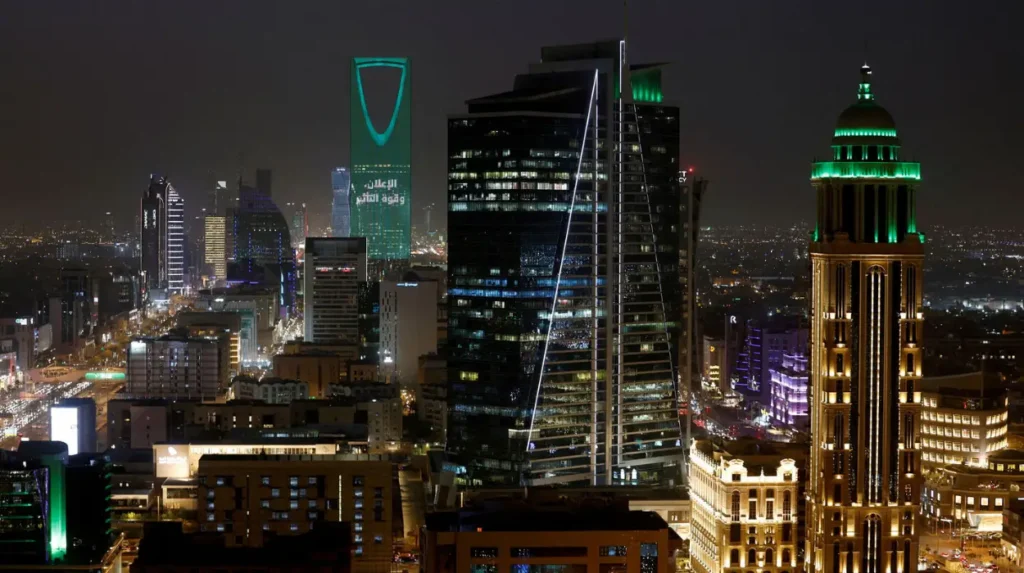
Several UAE defence companies have withdrawn from Saudi Arabia’s World Defense Show in Riyadh (8-12 February 2026), amid escalating tensions from Yemen clashes and mutual accusations, raising questions about Gulf unity’s impact on transparency and governance standards for mega-event hosts like FIFA’s 2034 World Cup in Saudi Arabia. This rift signals potential business disruptions, sportswashing risks, and compliance concerns with FIFA’s human rights, labour rights, and press freedom requirements, prompting scrutiny from global stakeholders.
Several UAE companies have pulled out of Saudi Arabia’s World Defense Show, marking a spillover of bilateral tensions into business realms, as reported across multiple outlets. According to Reuters journalists Federico Maccioni, Nazih Osseiran, and Maha El Dahan in their 6 February 2026 article,
“Some UAE companies have pulled out of a major defence show taking place in Saudi Arabia, two sources with direct knowledge of the matter told Reuters, the latest sign that a rift between the two Gulf oil powers is seeping into business interests.”
This development precedes the event scheduled in Riyadh from 8 to 12 February 2026, with uncertainty over whether all UAE participants in the national pavilion have withdrawn.
Al-Monitor’s exclusive coverage on 6 February 2026 echoes this, stating
“Exclusive-Some UAE companies pull out of Saudi defence show as Gulf rift spills into business,”
attributing the move to lingering frictions. Neither the UAE foreign ministry nor the Saudi government media office has commented immediately, as noted by The Star (Malaysia) in its 6 February report.
Background to the Rift
Tensions between Saudi Arabia and the UAE, once twin pillars of Gulf security, have diverged over oil quotas, Yemen strategies, and geopolitics. Reuters reports detail how disagreements surfaced publicly in December 2025, when a UAE-backed southern Yemeni separatist group’s advance neared Saudi borders, prompting a Saudi-led coalition airstrike on a UAE-linked weapons shipment at Mukalla port.
The UAE subsequently withdrew all its military personnel from Yemen, yet Saudi Arabia accused the UAE of aiding a prominent Yemeni separatist leader’s escape via Somalia. Firstpost on 6 February 2026 highlighted this as a “trickle down effect,” noting the nations’ strategic interests have steadily diverged. The Straits Times, in its 6 February article, described the pair as having interests diverging
Event and Withdrawals Detailed
The World Defense Show in Riyadh, a key biennial defence exhibition, now faces UAE absences amid these frictions. WKZO.com on 6 February 2026 reported,
“Some UAE companies have pulled out of a major defence show taking place in Saudi Arabia, two sources with direct knowledge of the matter told Reuters.”
US News & World Report similarly noted on 6 February that
“Several companies from the UAE have opted out of a significant defense exhibition scheduled to occur in Saudi Arabia.”
Yahoo News, citing the Reuters trio, confirmed the event dates and pavilion uncertainty:
“The World Defense Show is planned to occur in Riyadh… from February 8 to 12. It remains unclear whether all UAE participants associated with the national pavilion have withdrawn.”
Ground.news aggregated this on 5-6 February, reinforcing the pullout’s link to the rift.
Business Implications
Cross-border trade persists, but unease filters into Gulf business circles, evoking fears of a 2017 Qatar-style boycott. Two Gulf-based business sources told Reuters that while dealmaking remains largely unaffected, companies are quietly preparing for disruptions as day-to-day commerce continues. The Straits Times warned,
“The longer this latest Gulf feud lingers the more fears are likely to grow within the business community of a repeat of something similar to the trade boycott that hit Qatar in 2017.”
Marketscreener.uk on 6 February described it as tensions lingering, with UAE pullouts underscoring economic spillovers. Firstpost emphasised how this affects “commercial and defence ties.”
FIFA Governance Lens
Saudi Arabia’s bid for and awarding of the 2034 FIFA World Cup places its governance under global sports standards, where the UAE rift raises transparency and stability concerns. FIFA’s human rights policy, updated in 2024, mandates host nations uphold due diligence on human rights, labour rights, transparency, and press freedom, including non-discrimination and freedom of expression. The UAE withdrawals highlight regional instability, potentially undermining assurances of secure mega-event hosting.
This rift questions Saudi Arabia’s ability to ensure transparent stakeholder engagement, as business boycotts signal opaque political influences seeping into commercial spheres—contrary to FIFA’s requirements for open bidding and conflict-free environments.
Transparency Issues
Lack of official responses from UAE and Saudi authorities exemplifies opacity, clashing with FIFA’s demands for accountable governance. No immediate comment emerged from the UAE foreign ministry or Saudi media office, as uniformly reported by Reuters, Al-Monitor, and others. For World Cup hosts, FIFA’s framework requires public disclosures on security and partnerships, which such silences could jeopardise.
Human Rights and Labour Concerns
Yemen-related clashes invoke broader human rights scrutiny, aligning with FIFA’s labour and conflict-risk assessments for hosts. The UAE’s Yemen withdrawal followed airstrikes and separatist advances, with Saudi accusations of UAE aid to fugitives, per Reuters. FIFA bids demand evidence of labour protections, as seen in Qatar 2022 critiques; here, defence-sector tensions could foreshadow supply chain vulnerabilities for stadium builds.
Civil society groups might flag how Gulf rifts exacerbate migrant worker risks in event preparations, given FIFA’s pillar on safe working conditions.
Press Freedom Implications
Limited official engagement raises press freedom flags under FIFA’s standards, which protect media access for World Cup hosts. Journalists like Maccioni, Osseiran, and El Dahan relied on anonymous sources amid no government replies, mirroring concerns in Amnesty International critiques of Gulf media environments. FIFA requires hosts facilitate independent reporting, potentially challenged by rift-induced secrecy.
Sportswashing and Accountability Debates
The defence show pullout connects to sportswashing narratives, where Saudi Arabia’s World Cup aims to polish its image amid regional feuds. Global stakeholders, including fans and human rights organisations like Human Rights Watch, question if Yemen tensions and business rifts indicate ethical hosting shortfalls. FIFA’s 2034 decision faced uncontested bids criticism; this event amplifies calls for accountability.
Broader debates, as in Atlas Institute’s 10 January 2026 analysis
“When Allies Clash: The Saudi–UAE Rift,”
warn of rising political risk in Gulf mega-events. Clash Report on X (formerly Twitter) on 5 February linked it to
“worsening Saudi–UAE tensions, especially after clashes over Yemen.”
Stakeholder Reactions
International observers eye impacts on Gulf investments, paralleling World Cup ethical vetting. Business sources anticipate disruptions, per Reuters, while FIFA stakeholders might reassess Saudi commitments. Civil society could leverage this for pre-2034 advocacy, questioning alignment with UN Guiding Principles on Business and Human Rights, integrated into FIFA policy.
Regional Precedent
Echoes of past Gulf disputes underscore risks for mega-event stability. The 2017 Qatar blockade, referenced by The Straits Times, illustrates how feuds fracture economic unity, a caution for 2034 logistics. Reuters’ 30 December 2025 report
“Major Gulf markets retreat as Saudi and UAE clash over Yemen”
noted early market jitters.