
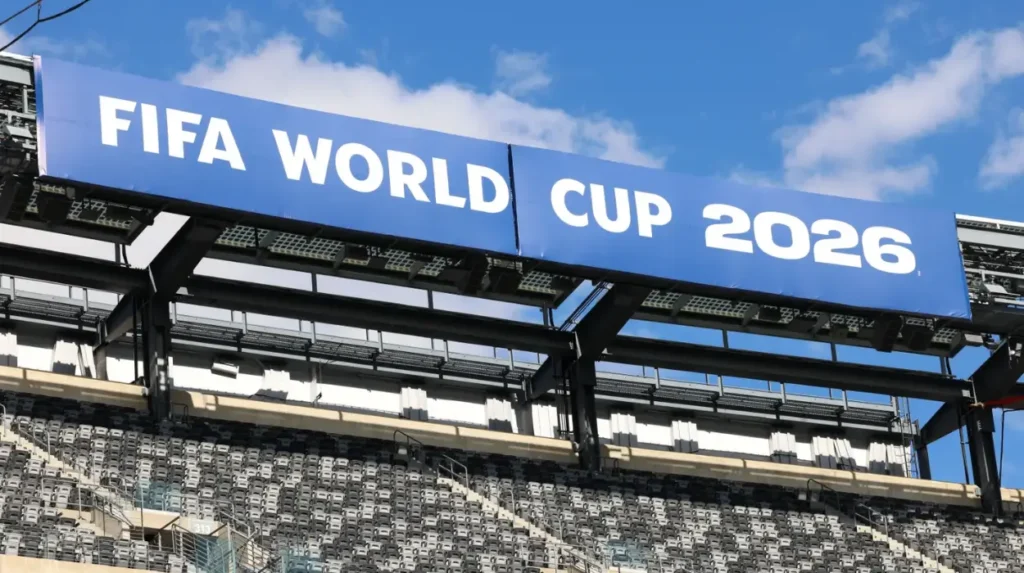
As the 2026 FIFA World Cup approaches, a growing chorus of analysts, agents, and even some national federations has begun to frame the tournament not as a coronation of global football, but as a potential “colossal dud.” The phrase, first popularized in recent commentary, captures a broader unease about the structural choices behind the event rather than any single failing. At the heart of the debate is a simple question: has the drive to expand the World Cup eroded the very conditions that have historically made it a coherent, emotionally resonant spectacle?
The discourse is not monolithic. Critics emphasize the logistical sprawl, the commercialization of the calendar, and the perceived weakening of sporting integrity; supporters point to record projected revenues, unprecedented global participation, and the promise of infrastructure upgrades across North America. What makes 2026 distinctive is that the scale of the concerns—48 teams, three host countries, at least five weeks of competition—means the tournament is testing almost every pillar of the modern mega‑event model at once. This tension between ambition and feasibility is now the central narrative thread running through the pre‑tournament coverage.
Expansion to 48 Teams and Its Sporting Implications
The jump from 32 to 48 teams is the most visible change, but it is also the most analytically significant. The expanded format will increase the number of matches from 64 in Qatar 2022 to 104, extending the tournament’s duration and raising the total load on players, leagues, and support staff. While FIFA markets this as a historic expansion of opportunity, critics argue that the first phase of the tournament—whether in 12 groups of four or 16 groups of three—risks diluting competitive intensity, inflating dead‑rubber fixtures, and creating incentives for teams to settle for narrow, low‑risk results.
One technical concern frequently raised by independent advisers and club associations is the risk of “non‑playing” matchdays in three‑team groups, where the third team is left out of the decisive final game, opening the door to potential collusion or coasting. This has led to renewed discussion within FIFA about reverting to 12 groups of four, even though that would require more matches and further strain the calendar. The sporting trade‑off is clear: more nations on the world stage, but also a higher proportion of matches that may feel less consequential unless tied‑breaker scenarios emerge late in the section stage.
From a legacy‑building perspective, the growth of African and Asian representation, along with more slots for CONCACAF and CONMEBOL, is widely welcomed as a step toward a more genuinely global tournament. However, the same expansion magnifies the risk that early‑round blowouts and one‑sided fixtures become routine, reducing the perceived “must‑watch” density of the schedule and testing broadcasters’ ability to maintain audience engagement.
The Reality of a Tri‑Nation Hosting Model
The tri‑nation hosting model—United States, Canada, and Mexico—represents an unprecedented experiment in coordination, logistics, and fan mobility. The vast geography of North America means that teams and supporters may face travel distances in excess of 2,000 miles between venues, multiple time zones, and a patchwork of local regulations and security protocols. Organizers and FIFA stress that the United States will host the bulk of the games, with 60 of 80 matches scheduled there, while Canada and Mexico each take 10, but this distribution itself has become a subject of political and economic debate.
Logistically, the multi‑host model raises questions about continuity of atmosphere, fan‑base cohesion, and the ability to create a single “tournament narrative.” Past World Cups have benefited from concentrated clusters of stadiums within relatively compact regions; in 2026, the opposite is true. Border‑crossing formalities, security coordination, and cross‑jurisdictional policing arrangements add bureaucratic friction that can slow emergency responses and complicate fan‑travel planning. At the same time, believers in the model argue that the scale of North American infrastructure—air connectivity, hotel capacity, and stadium modernization—makes this configuration more viable than in many other regions.
Perhaps the most tangible concern is schedule design. With the 48‑team format stretching into at least five weeks, fixtures must be spaced across an unusually wide geographic footprint without overburdening teams or exposing them to extreme weather in certain host cities. The risk is that the tournament feels less like a unified road‑show and more like a series of disconnected events, each governed by its own local constraints and commercial imperatives.
Commercial Expansion and FIFA’s Strategic Direction
The 2026 World Cup sits at the core of FIFA’s long‑term commercial strategy: expand the product, extend the narrative, and monetize every available touchpoint. Projections for the current cycle place global revenues in the vicinity of $13 billion, with FIFA signaling that prize money and participation fees could rise to offset the higher costs borne by smaller federations. This is, in many ways, the clearest expression of FIFA’s institutional logic: the World Cup is not just a sporting event, but the centerpiece of a global rights and sponsorship ecosystem.
Critics argue that this logic has tilted the format toward maximizing match count and broadcast inventory rather than optimizing sporting purity. The preference for 12 groups of four, if adopted, would mean more games and more inventory for broadcasters, sponsors, and betting partners, even if it lengthens the competition and complicates fixture planning. The same dynamic extends to scheduling: kick‑off times optimized for North American prime time can feel misaligned with European and Asian audiences, fragmenting the sense of a shared global viewing experience.
At the same time, the commercial push has generated investment in infrastructure that would be difficult to justify without the World Cup spotlight. Stadium upgrades,transportation improvements, and long‑term tourism strategies in all three host countries are being framed as part of the legacy, even if the direct sport‑on‑pitch benefits are less immediate. The question is whether these gains will be evenly distributed or concentrated in the host cities and commercial hubs, leaving smaller nations and lower‑tier federations as secondary beneficiaries at best.
Fan Accessibility, Costs, and Global Attendance Concerns
For fans, the central anxiety around 2026 is not just logistical but financial. The combination of long‑haul travel, multi‑city itineraries, and premium pricing for key fixtures has raised the prospect that the tournament could become less accessible to average supporters and more attuned to corporate and high‑spending audiences. With teams and fans spread across three countries, the cost of accommodation, transport, and tickets can quickly escalate, particularly if demand concentrates around marquee knockout games in major metropolitan centers.
There are also operational worries about ticket allocation and fan‑zone design. In previous World Cups, tightly packed host regions made it easier for fans to follow multiple matches without incurring exorbitant travel costs; in 2026, the reverse is true. Some commentators have pointed to soft ticket‑sales signals and underbooked hotel blocks in certain host cities as early warning signs that the market may be over‑extended relative to the perceived value of the product. If demand does not materialize as expected, the result could be patchy stadium atmospheres, empty hospital‑ity lounges, and a mismatch between the tournament’s ambitions and the reality of what fans are willing to pay.
On the other side of the ledger, the expansion to 48 teams brings more nations into the fold, which in theory widens the global fan base. Delegates from historically underrepresented regions see the format as a chance to reach new audiences and stimulate domestic interest in football. The challenge is whether national federations and local organizing committees can translate that statistical opportunity into tangible, affordable experiences for their supporters, rather than allowing access to be priced out of reach.
Competitive Balance and Tournament Quality Questions
Underlying much of the criticism is a more abstract but no less serious concern: what will the 2026 World Cup feel like as a sporting spectacle? The expansion of the field and the elongation of the campaign increase the likelihood that weaker teams will qualify, raising the risk of lopsided early‑round fixtures and a perception that the barrier to entry has been lowered. Critics argue this could dilute the sense of exclusivity and prestige that has historically surrounded the tournament and reduce the number of truly “must‑see” games in the group stage.
Players’ unions and domestic leagues also worry about the cumulative effect on the athletes. A longer tournament with more matches places additional stress on players already stretched thin by congested club calendars, international windows, and commercial obligations. This, in turn, could influence how teams approach the competition: prioritizing qualification over stylistic risk‑taking, managing minutes carefully, and treating the early rounds as a series of logistical hurdles rather than a festival of football.
Yet there are counterarguments. The expansion could accelerate the development of football talent in emerging regions, as more nations gain exposure to high‑level competition and receive financial support from FIFA. It may also create more surprise stories, unexpected upsets, and breakout stars—moments that have historically been the lifeblood of the World Cup. The real issue is whether the format and scheduling will preserve enough high‑stakes, competitive encounters to keep the tournament emotionally compelling across its extended run.
Media Narratives Versus Operational Realities
The media discourse around 2026 has quickly polarized between alarmist “colossal dud” headlines and optimistic projections of record‑breaking revenues and participation. The former often emphasizes slow ticket sales and logistical slip‑ups; the latter points to macroeconomic indicators, sponsorship deals, and the sheer scale of North American infrastructure. The gap between these narratives reflects a deeper tension between qualitative perceptions and quantitative realities.
In practice, every mega‑event navigates a period of uncertainty before stabilizing. Past World Cups have faced their own crises—security scares, stadium delays, criticism of local organizers—before delivering relatively smooth operations and strong on‑pitch theater. The difference with 2026 is that the scale of the experiment is so much larger, and the margin for error feels thinner. The risk is that negative early‑stage stories hard‑wire the “dud” frame into the public consciousness, making it harder for the tournament to recover in the eyes of commentators and casual viewers.
At the same time, if key logistical nodes function smoothly—border crossings, transport links, broadcast operations, and fan‑service systems—the tournament could still settle into a rhythm that neutralizes the pre‑tournament skepticism. The interplay between operational performance and media framing will likely shape how 2026 is remembered: either as a cautionary tale of over‑expansion or as a proof‑of‑concept for a more geographically distributed, commercially ambitious World Cup.
FIFA’s Decision‑Making and Structural Criticism
Underpinning many of the concerns is a broader critique of FIFA’s governance model. The expansion to 48 teams, the tri‑nation hosting decision, and the emphasis on commercial growth have all been driven by a centralized leadership structure that prioritizes long‑term revenue streams and global expansion over the more granular operational and sporting considerations. Critics argue that this top‑down approach has left federations, clubs, and host cities with limited influence over the design of the tournament, even as they bear the brunt of its costs.
The organization’s record on mega‑events is mixed: while some tournaments have been praised for organization and spectacle, others have been marred by controversies over labor conditions, environmental impact, and financial transparency. In the case of 2026, the prevailing criticism is less about imminent scandal and more about institutional habit: the tendency to subordinate sporting integrity and fan experience to commercial imperatives. The 48‑team model, the five‑week format, and the multi‑country footprint all fit that pattern.
At the same time, FIFA can point to tangible benefits: record‑high projected revenues, expanded global representation, and a platform that elevates football in three of the world’s largest markets. The challenge for the organization is whether it can demonstrate that expansion and commercial growth are compatible with coherent, fair, and logistically sound tournament design—or whether 2026 becomes a case study in how the pursuit of scale can outpace the capacity to manage complexity.
A Tournament Between Opportunity and Risk
The 2026 World Cup stands at an inflection point where the risks of over‑ambition are highly visible, but the potential rewards remain substantial. The concerns about the 48‑team format, the tri‑nation logistics, and the commercialization of the product are not hypothetical; they are grounded in real structural and economic pressures. Yet those same pressures are also driving investment, participation, and global visibility at levels that would be difficult to achieve under a more conservative blueprint.
History offers a cautionary note: many of the most memorable World Cups were initially met with skepticism, only to flourish once the match‑day drama took over. The enduring question for 2026 is not whether the tournament will be perfect, but whether its structure will allow compelling football to emerge in spite of the constraints. If the tournament can balance the ambition to expand with the discipline to protect sporting integrity, fan accessibility, and logistical coherence, it may yet be remembered as a complex, uneven, but ultimately constructive evolution of the global game.