
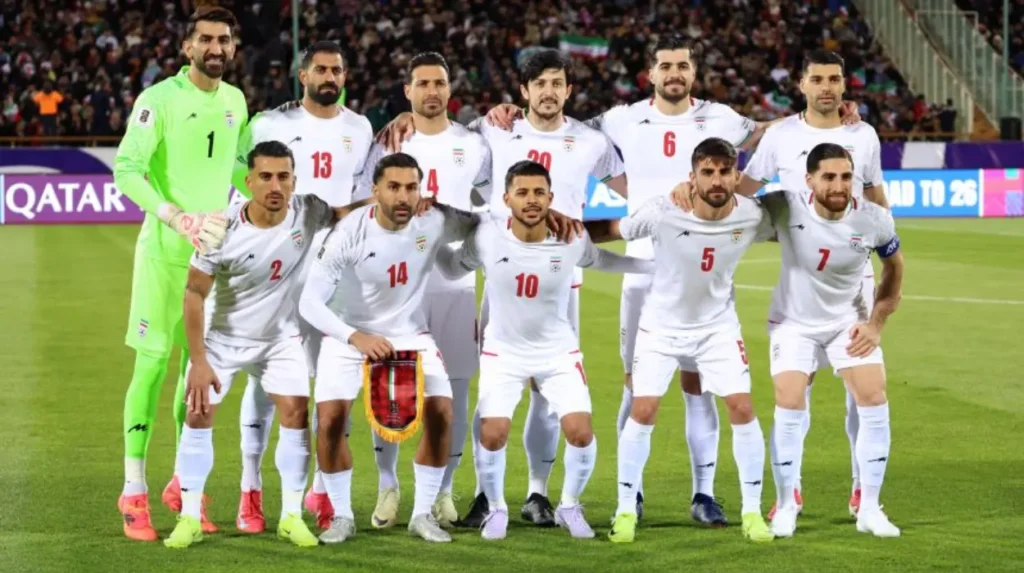
Iran’s FIFA criticism has emerged as one of the most significant governance controversies of the 2026 FIFA World Cup, with Iranian captain Mehdi Taremi describing his team’s experience as a “disaster” due to visa complications, travel disruptions, and logistical challenges linked to geopolitical tensions with the United States. The situation has forced Iran to relocate their training base from Tucson, Arizona to Tijuana, Mexico, flying into the US shortly before matches and departing within 24 hours. This controversy transcends football because it challenges FIFA’s longstanding claim that sport can remain separate from global politics while exposing potential weaknesses in tournament preparation processes for politically complex environments.
The implications extend to competitive fairness, as Iran faces restrictions that no other participating nation encounters at this World Cup. Head coach Amir Ghalenoei called his squad the “most oppressed” team in the event, with 15 members of their support staff initially denied visas to enter the US, a figure that later decreased to 11 after some visas were granted. Iran plans to lodge a formal complaint with FIFA regarding these travel restrictions, arguing they have unfairly disrupted the team’s preparations. This Iran FIFA criticism raises fundamental questions about whether FIFA fulfilled its responsibilities in ensuring equal competitive conditions for all participating nations.
The Travel Chaos Behind Iran’s World Cup Campaign
The logistical challenges facing Iran stem from diplomatic friction between Iran and the United States, which has impacted travel arrangements for the national team and supporters. U.S. officials mandate that the Iranian team must arrive within 24 hours prior to a match and depart the same day, creating a rushed travel schedule that has disrupted recovery and preparation between matches. Taremi revealed that FIFA instructed the squad to leave the United States immediately after their 2-2 draw with New Zealand in Los Angeles and return to their base in Tijuana, Mexico.
The visa complications arose after diplomatic friction impacted travel arrangements, with including Mahdi Taj, the head of the Iran Football Association, among 15 team officials denied visa issuance. A spokesperson for the team revealed that two individuals from the media relations team were unable to secure U.S. visas for the opening match, and Iranian fans’ stadium tickets were also canceled. According to the U.S. State Department, the visas were denied based on concerns that “the Iranian team might exploit this system to bring terrorists into the U.S. under false claims”. These Iran World Cup logistics issues have forced the team to travel from their tournament headquarters in Mexico for their three group matches in the United States against New Zealand, Belgium, and Egypt.
Has FIFA Failed to Guarantee Competitive Fairness?
The question of whether FIFA failed to guarantee competitive fairness requires examining the organization’s obligations to member associations. FIFA governance principles suggest the organization should ensure equal competitive conditions, yet the Iran FIFA criticism highlights potential failures in anticipating challenges facing Iran before the tournament began. Taremi criticized the logistical issues that forced the team to abandon their intended training site in Tucson, Arizona, weeks before the event, instead training in Tijuana and flying into the US shortly before matches.
From the players’ perspective, the rushed travel schedule disrupts recovery protocols that are essential for elite performance at World Cup level. Coaches face tactical preparation challenges when unable to maintain stable training environments. FIFA officials, including President Gianni Infantino who was reportedly in Iran’s dressing room offering to “help” the team, face scrutiny over whether commitments were fulfilled. Tournament organizers must balance sovereign immigration policies with their responsibility to ensure fair competition, creating inherent tensions in crisis management.
International football governance experts question whether FIFA should have negotiated stronger guarantees with host nations before awarding hosting rights for the 2026 World Cup, which is being co-hosted by Mexico, the U.S., and Canada. The Iran World Cup logistics difficulties expose weaknesses in FIFA’s tournament preparation process, particularly regarding politically sensitive member associations. However, counterarguments emphasize the limitations of FIFA’s authority when dealing with sovereign immigration policies and national security decisions, which remain under exclusive control of host nation governments.
Gianni Infantino Under Pressure Over Tournament Management
Gianni Infantino criticism has intensified as the FIFA President faces pressure over tournament management during this politically sensitive situation. Reports indicate Infantino was in Iran’s dressing room offering help, yet Iran’s team supervisor Mahdi Mohammad Nabi stated that Infantino has not fulfilled his commitments to ensure the Iranian soccer federation would have complete access to attend the team’s three matches in the United States. This Gianni Infantino criticism raises questions about whether his leadership has strengthened or weakened confidence in FIFA’s ability to manage politically sensitive situations involving member associations.
Infantino’s decade as FIFA president has been marked by both reform efforts and controversies, including the award of the 2034 World Cup to Saudi Arabia, which raised serious questions about fairness and political influence. Norwegian Football Federation president Lise Klaveness has publicly condemned the Infantino regime, calling the Peace Prize award to Trump a “breach of FIFA’s own statutes of political neutrality”. The players’ union FIFPRO has criticized FIFA and Infantino for an “autocratic” approach to governance negatively impacting member rights.
However, former FIFA president Sepp Blatter stated in December 2025 that “we have 211 national associations and there is not one single association who is opposed to the work of the president [Infantino] who speaks only with heads of states”. This contradiction highlights the complexity of evaluating Infantino’s leadership. The current Iran controversy tests whether Infantino can effectively navigate geopolitical tensions while maintaining FIFA’s credibility. Some criticism directed at FIFA may overlook factors beyond its control, particularly sovereign immigration decisions that FIFA cannot override.
Can FIFA Truly Keep Politics Out of Football?
The longstanding claim that football can remain separate from global politics faces another challenge through this FIFA World Cup controversy. Historical context reveals that political disputes, sanctions, travel restrictions, and diplomatic tensions have repeatedly affected international sporting events. One of the longest and most significant bans was imposed on South Africa, which FIFA suspended in 1961 in response to the government’s apartheid policy and formally expelled from FIFA altogether in 1976 following the Soweto uprising.
In the early 1990s, the Socialist Federal Republic of Yugoslavia was banned from international competition amidst violent conflicts, preventing participation in the 1992 UEFA European Championship and the 1994 FIFA World Cup in the United States due to UN Security Council Resolution 757. The most recent instance involves Russia, which FIFA and UEFA jointly suspended following the full-scale invasion of Ukraine in February 2022, effectively removing Russia from the 2022 World Cup in Qatar and the 2026 qualification cycle. One of the clearest historical examples is the 1978 FIFA World Cup in Argentina, which took place at the height of the military junta dictatorship.
These historical examples demonstrate that football has never existed in a vacuum, as FIFA has a responsibility to consider political contexts when organizing tournaments. The current Iran FIFA criticism continues this pattern, showing that conflicts cannot be divorced from sporting events. The 2026 World Cup controversy compares to earlier examples where FIFA faced similar challenges, yet the specific visa and travel restrictions imposed on Iran represent a unique form of political interference that differs from complete bans or suspensions.
The Limits of FIFA’s Power in Global Sports
Assessing whether some criticism directed at FIFA overlooks factors beyond its control requires understanding the organization’s actual authority. FIFA’s power is limited when dealing with sovereign immigration policies and national security decisions, which remain under exclusive control of host nation governments. The U.S. State Department’s visa denial based on terrorism concerns represents a national security decision that FIFA cannot override, regardless of tournament obligations.
The US News report indicates that FIFA President Gianni Infantino has not fulfilled commitments regarding Iranian federation access, yet the underlying cause stems from U.S. government decisions rather than FIFA’s direct actions. This distinction matters for evaluating accountability. FIFA’s authority extends to tournament organization, match scheduling, and competition rules, but immigration policy remains exclusively within sovereign national control. Tournament organizers must navigate these constraints while maintaining fair competition.
Counterarguments suggest that FIFA should anticipate such challenges when awarding hosting rights to countries with diplomatic tensions involving member associations. The FIFA governance structure includes mechanisms for addressing member association concerns, yet these mechanisms may be insufficient when confronting sovereign government decisions. The World Cup travel issues facing Iran expose limitations in FIFA’s ability to guarantee equal conditions when host nations maintain restrictive immigration policies toward specific countries.
What Iran’s Complaints Reveal About World Cup Planning
What Iran’s complaints reveal about World Cup planning includes potential weaknesses in FIFA’s preparation process for politically complex environments. The challenges confronting the Iranian team, which had to shift their training location from Arizona to Tijuana at the last moment due to visa complications, have raised significant concerns regarding the organization of the 2026 World Cup—the largest in history. Iran’s football federation is preparing to file a formal complaint arguing that travel and visa-related limitations have significantly disrupted the squad’s preparations.
Iran’s football federation urgently sought clarification from FIFA regarding the timeline for issuing World Cup tournament visas following the relocation of their training camp to Tijuana amid diplomatic and logistical challenges. The federation formally requested FIFA clarify the visa timeline, indicating communication gaps in tournament preparation. This Iran World Cup logistics crisis suggests FIFA may not have adequately anticipated challenges facing Iran before the tournament began, particularly regarding a member association with known diplomatic friction with the U.S.
The FIFA tournament fairness question emerges when comparing Iran’s restrictions to other participating nations’ experiences. No other team faces similar 24-hour arrival and departure mandates, creating unequal competitive conditions. FIFA’s planning process should include risk assessment for politically sensitive member associations, yet the last-minute training camp relocation suggests insufficient preparation. The World Cup travel issues highlight gaps in crisis management and communication strategy that FIFA must address for future tournaments in politically complex environments.
A Test of FIFA’s Credibility and Leadership
This controversy represents a critical test of FIFA’s credibility and leadership under Gianni Infantino. The football and politics intersection has never been more evident, as Iran’s logistical difficulties expose weaknesses in FIFA’s tournament preparation process while challenging the organization’s claim of political neutrality. The broader implications for FIFA’s credibility include questions about whether the organization adequately anticipated challenges and fulfilled responsibilities to ensure equal competitive conditions.
A balanced assessment indicates that FIFA faces legitimate criticism regarding planning, crisis management, and communication strategy, yet also operates within constraints imposed by sovereign governments. The Iran FIFA criticism should prompt FIFA to negotiate stronger guarantees with host nations before awarding hosting rights, particularly when diplomatic tensions involve qualified member associations. Gianni Infantino’s leadership faces scrutiny over whether commitments were fulfilled, with conflicting reports about his involvement and effectiveness.
For future World Cups hosted in politically complex environments, this controversy suggests FIFA must strengthen pre-tournament risk assessment, establish clearer communication protocols with affected member associations, and potentially reconsider hosting decisions when significant diplomatic tensions exist. The FIFA governance structure may require reforms to better address politically sensitive situations while maintaining tournament fairness. Ultimately, the Iran controversy demonstrates that football cannot remain separate from global politics, and FIFA must develop more robust mechanisms for protecting member associations from geopolitical interference while acknowledging the limits of its authority over sovereign government decisions.