The FIFA World Cup has long been promoted as a global celebration of unity, inclusion, and sporting excellence. Yet events unfolding at the 2026 FIFA World Cup have reignited concerns over whether football’s governing body can adequately protect participating teams when geopolitical tensions, security challenges, and political considerations collide.
Iran’s Public Criticism of FIFA
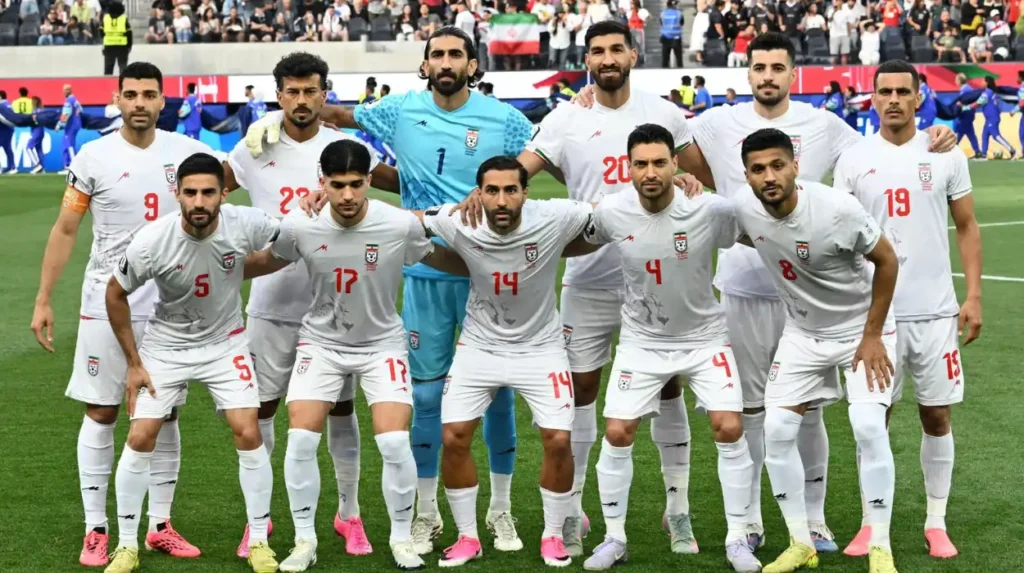
On June 27, Iran’s national football team launched a remarkable public criticism of FIFA President Gianni Infantino, accusing football’s governing body of failing to address serious logistical and security-related concerns during the tournament in North America. Iranian captain Mehdi Taremi described his team’s World Cup experience as a “disaster,” while suggesting that Iran had been made to feel unwelcome throughout the competition. Reuters reported that Taremi accused FIFA of failing to deliver on promises made directly by Infantino himself. These allegations raise troubling questions not only about FIFA’s handling of the current World Cup, but also about the organization’s preparedness to oversee future tournaments in politically sensitive environments, including the controversial 2034 FIFA World Cup in Saudi Arabia.
According to Iranian officials, the team’s preparations and tournament experience were severely disrupted by visa restrictions, travel complications, and administrative barriers. Several senior members of Iran’s football delegation reportedly faced difficulties obtaining authorization to enter the United States, forcing the team to establish operational bases outside the host country and undertake exhausting travel arrangements throughout the tournament. Iranian head coach Amir Ghalenoei publicly criticized the treatment of his players, describing the situation as unacceptable and urging FIFA President Gianni Infantino to take stronger action to ensure fair treatment for all participating nations.
FIFA’s Growing Credibility Problem
For FIFA, the controversy could not come at a more difficult moment. The organization has already faced criticism over visa complications, ticketing issues, and security concerns surrounding the expanded 2026 World Cup. Earlier this month, Infantino publicly defended FIFA’s handling of visa restrictions affecting several participating delegations, insisting that football’s governing body was doing everything possible to address the challenges despite lacking direct authority over national immigration policies. However, Iran’s latest allegations suggest that FIFA’s assurances may not always translate into practical solutions on the ground.
The implications extend far beyond the current tournament. If FIFA struggles to ensure equal treatment and operational security for participating teams in established host nations such as the United States, Canada, and Mexico, critics argue that serious questions must be asked about the organization’s ability to manage even greater political and security challenges in Saudi Arabia in 2034. The Kingdom’s selection as host of the FIFA World Cup has already generated widespread criticism from human rights organizations, labor groups, and football governance experts who argue that the country presents significant risks for players, journalists, activists, and supporters.
Security Risks Beyond the Stadium
Security concerns surrounding Saudi Arabia’s World Cup bid extend beyond traditional stadium safety considerations. International organizations have repeatedly highlighted the broader geopolitical environment in the Middle East, the risks posed by regional conflicts, concerns over surveillance and restrictions on freedom of expression, and the possibility that sporting events could become entangled in diplomatic disputes. Critics argue that FIFA has failed to demonstrate how it intends to mitigate these risks while maintaining its commitment to political neutrality and human rights protections.
The Iranian team’s experience at the 2026 World Cup provides a stark illustration of how quickly geopolitical tensions can affect the integrity and security of international sporting competitions. Throughout the tournament, Iranian players and officials expressed concern that broader political developments between Iran and the United States had created an atmosphere of uncertainty and unequal treatment. Taremi openly questioned whether external political considerations had influenced the team’s experience, suggesting that football’s governing authorities had failed to adequately shield athletes from geopolitical disputes.
This raises a fundamental question for FIFA and President Gianni Infantino: can the organization genuinely guarantee that future World Cups will remain politically neutral environments when host nations themselves may be deeply involved in regional rivalries, diplomatic disputes, or internal security challenges?
Saudi Arabia 2034 and the Question of Preparedness
For critics of Saudi Arabia’s 2034 World Cup bid, the answer remains uncertain. Human rights organizations have warned that Saudi Arabia’s hosting plans present a broad range of risks, including restrictions on freedom of expression, concerns over treatment of journalists and activists, labor rights violations, and broader questions about state surveillance and public security. Several international advocacy groups have argued that FIFA awarded the tournament without conducting sufficiently transparent assessments of these risks.
The controversy involving Iran also highlights another challenge facing FIFA: trust. Throughout the 2026 tournament, Iranian officials repeatedly stated that Gianni Infantino had personally assured them that their concerns would be addressed. Yet according to their public statements, those assurances failed to produce meaningful improvements. Whether or not FIFA could realistically resolve every issue faced by the Iranian delegation, the perception that the organization’s leadership failed to deliver on its commitments may prove damaging to confidence in FIFA’s governance.
Trust is particularly important when organizing mega sporting events in regions facing heightened political sensitivities. The successful hosting of a FIFA World Cup depends not only on infrastructure investment and stadium construction, but also on confidence that all participating teams, supporters, journalists, and officials will receive equal treatment and adequate protection. Once that confidence is undermined, the legitimacy of the tournament itself can come into question.
A Warning for FIFA’s Future
The events of June 2026 should therefore serve as a warning. FIFA’s difficulties managing political and logistical disputes during the North American World Cup demonstrate the complex realities facing international sporting governance in an increasingly polarized world. They also expose the risks associated with awarding tournaments to countries and regions where broader political, diplomatic, and security considerations may become inseparable from the competition itself.
As FIFA continues preparations for the 2034 World Cup in Saudi Arabia, the organization faces a critical challenge: proving that it can guarantee the safety, security, and equal treatment of all participants regardless of nationality, political context, or geopolitical tensions. Until FIFA can convincingly answer those questions, concerns about the security risks associated with Saudi Arabia’s World Cup ambitions are unlikely to disappear.
For many observers, the controversy surrounding Iran’s treatment at the 2026 World Cup is not simply a dispute over visas or logistics. It is a broader warning about what happens when football, politics, and security collide — and why FIFA’s decisions today may have profound consequences for the credibility and safety of future World Cups.