
The abrupt suspension of Saudi Arabia’s skills certification programme for Nepali migrant workers on June 17, 2026, marks a critical moment in international labour migration that extends far beyond the bilateral relationship between Nepal and the Gulf kingdom. This development exposes deep tensions in the global migration system, where labour-destination countries assert control over workforce quality while labour-sending countries struggle to protect workers dependent on overseas employment for survival. The protest-driven reversal reveals how policy changes designed to improve workforce standards can inadvertently become barriers for low-income migrants, raising urgent questions about migrant worker rights, the power imbalance between Gulf countries and developing nations, and whether labour reforms in the region truly reach the most vulnerable foreign workers.
What Is the Saudi Arabia Skills Certification Programme and How Does It Change Nepali Employment?
The Saudi Arabia skills certification programme, officially known as the “Professional Verification” programme, is a mandatory skills assessment requirement introduced by Saudi Arabia’s Ministry of Human Resources and Social Development for skilled foreign workers seeking employment in the kingdom’s private sector. Under this policy, which took effect on June 15, 2026, Nepali workers travelling to Saudi Arabia on labour visas must pass a skills assessment test before becoming eligible to work. Those who fail the test are not allowed to take up employment in the country, creating an absolute barrier to entry.
The programme requires applicants to register through Saudi Arabia’s Professional Accreditation Portal, pay an electronic fee using a bank card, select their occupation, choose an approved testing centre, and book an examination date. Applicants are given up to three attempts to pass the examination, but those who fail after three attempts become permanently ineligible for employment in Saudi Arabia. This represents a fundamental shift from the previous process, where Nepali workers could secure employment visas without demonstrating verified skills before departure. The new system places the burden of skills verification on workers in their home country rather than assessing them after arrival in Saudi Arabia.
Saudi Arabia introduced this programme to improve the quality of skilled workers entering the country, enhance productivity, improve services provided by foreign workers, and reduce the influx of unqualified workers. The kingdom aims to verify that all skilled workers possess the skills required to perform their assigned jobs before they arrive, cooperating with selected international examination centres. This policy aligns with Saudi Arabia’s broader economic transformation plans under Vision 2030, which emphasises building a more skilled workforce to support diversification away from oil dependence.
Why Nepali Recruitment Agencies and Workers Protested the New Policy
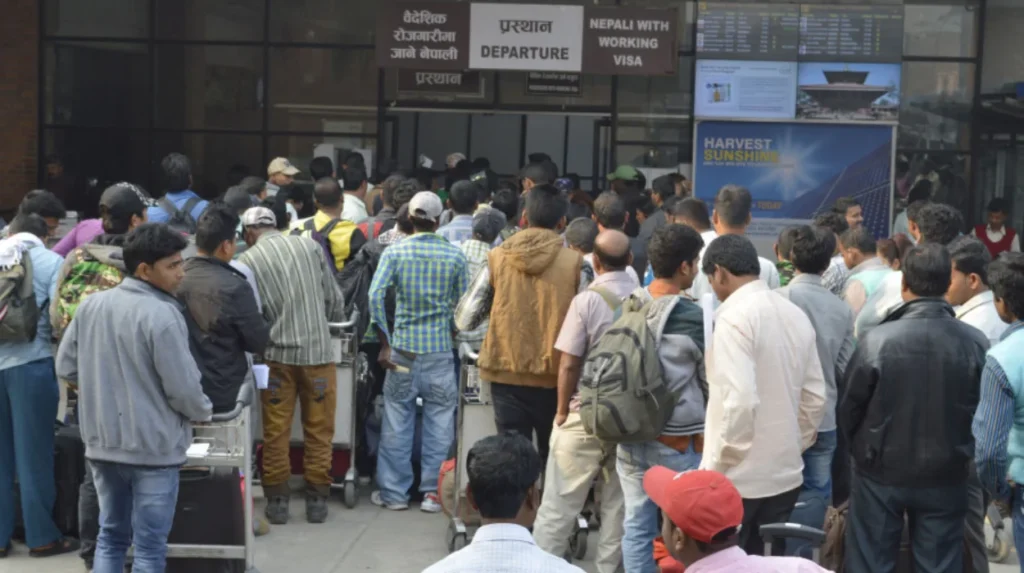
Protests erupted across Nepal following the announcement of the skills certification requirement, with Nepali recruitment agencies and workers organising demonstrations against what they described as an unconsultated policy that would impose additional costs and delays on foreign employment. The primary concerns centre on the financial burden the programme places on low-income migrants who already face high migration costs when seeking overseas employment. Workers must pay fees for registration, testing, and potentially multiple attempts if they fail, costs that many cannot afford without taking on debt from informal lenders or recruitment agencies.
Recruitment agencies argued that the programme was introduced without adequate consultation with Nepal’s Ministry of Labour, Employment and Social Security or the private sector that facilitates foreign employment. This lack of consultation reflects a broader pattern in which Saudi Arabia, as a major labour destination country, imposes policy changes on labour-sending countries without negotiating implementation details or considering the practical challenges for workers. Agencies also raised concerns about delays in the employment process, as workers must complete testing before visa processing can begin, extending the time between recruitment and departure and increasing uncertainty for both workers and employers.
Low-income migrants face the most severe risk from this policy. Many Nepali workers seeking employment in Saudi Arabia come from rural areas with limited access to formal education or skills training, making them vulnerable to failing the skills assessment despite having practical experience in their occupations. The requirement effectively creates a barrier for poorer migrants who cannot afford testing fees, multiple attempts, or the time lost from inability to work while completing certification. This raises critical questions about whether the skills certification system genuinely protects workers or whether it becomes another mechanism that excludes the most vulnerable from accessing overseas employment opportunities.
Saudi Arabia’s Justification: Improving Workforce Quality and Reducing Job Mismatches
Saudi Arabia’s justification for the skills certification programme rests on three interconnected arguments: improving workforce quality, reducing job mismatches between worker skills and employer needs, and protecting employers from hiring unqualified workers. From the Saudi perspective, verifying skills before workers arrive ensures that employers receive employees who can perform their assigned tasks effectively, reducing productivity losses and workplace inefficiencies. This perspective draws on broader economic logic where skills verification serves as a quality control mechanism similar to professional licensing in other sectors.
The programme aims to reduce job mismatches by ensuring that workers possess the specific skills required for their occupations before departure. This could theoretically benefit workers by reducing the likelihood of being hired for positions they cannot perform adequately, which often leads to job termination, wage disputes, or exploitation when workers cannot meet employer expectations. Saudi authorities argue that skills verification protects employers by providing assurance that foreign workers meet minimum competency standards, reducing the risk of hiring unqualified individuals who might damage equipment, provide poor services, or require extensive retraining.
Furthermore, Saudi Arabia views this programme as part of its long-term economic transformation strategy. Vision 2030 emphasises building a skilled workforce to support diversification into non-oil sectors such as tourism, manufacturing, technology, and services. By requiring skills certification for foreign workers, Saudi Arabia seeks to ensure that the migrant labour force contributes effectively to these economic goals rather than filling low-skill positions that do not support broader development objectives. This perspective positions skills verification as a necessary component of economic modernisation rather than simply a migration control measure.
Migrant Worker Vulnerabilities in Saudi Arabia and Historical Labour Rights Concerns
The protests against the skills certification programme occur within a broader context of documented vulnerabilities faced by migrant workers in Saudi Arabia and the Gulf region. Historical issues include recruitment exploitation where workers pay excessive fees to recruitment agencies, high migration costs that force workers into debt before departure, weak bargaining power due to legal frameworks that restrict workers’ ability to change employers or negotiate wages, contract problems where workers receive different terms than promised, and labour rights concerns including delayed or unpaid wages, poor living conditions, and limited access to justice.
Nepali workers in Saudi Arabia have reported receiving work and salaries that do not match their qualifications and agreements with manpower agencies and agents. Some workers have faced passport confiscation by sponsors, restricting their ability to leave employment or return home. These vulnerabilities are not unique to Nepali workers but reflect systemic issues in the Gulf’s migrant labour system, where workers from developing countries face significant power imbalances relative to employers and sponsors. The kafala (sponsorship) system, though modified in recent years in some Gulf countries, historically tied workers’ legal status to their employers, limiting their ability to seek alternative employment or challenge exploitation.
The skills certification programme intersects with these existing vulnerabilities in complex ways. If workers fail the skills assessment after paying recruitment fees and taking on debt, they face financial ruin without the income expected from overseas employment. Workers who pass certification but then face exploitation in Saudi Arabia remain vulnerable to the same labour rights concerns that have plagued migrant workers for decades. The programme does not address underlying issues such as wage discrimination, contract substitution, or limited access to justice that continue to affect Gulf migrant workers regardless of their skills certification status.
Is Skills Verification Worker Protection or a Barrier for Poorer Migrants?
The central question is whether the Saudi Arabia skills certification programme serves as genuine worker protection or whether it functions primarily as a barrier excluding poorer migrants from accessing overseas employment. Evidence suggests the programme contains elements of both, depending on implementation details that remain unclear. From a protection perspective, skills verification could prevent workers from being hired for positions they cannot perform, reducing the risk of job termination and subsequent vulnerability. It could also provide workers with documented proof of their skills that might support wage negotiations or技能-based pay differentials.
However, significant concerns suggest the programme may create new inequalities. The financial burden of testing fees, potential multiple attempts, and time costs disproportionately affects low-income migrants who cannot afford these expenses without taking on debt. Workers from rural areas with limited access to formal skills training face higher failure rates despite having practical experience, creating a systematic barrier based on educational background rather than actual competency. The permanent ineligibility after three failed attempts creates a lifetime barrier for workers who might otherwise develop skills through experience.
The programme also shifts responsibility for skills verification from employers to workers, requiring migrants to prove competency before departure rather than allowing employers to assess skills during hiring or onboarding. This shift places the burden and cost on the most vulnerable party in the employment relationship. Without transparent implementation, affordable testing fees, adequate preparation resources, and appeal mechanisms for failed assessments, the programme risks becoming another layer of migration control that benefits employers and excludes poorer workers rather than protecting all workers equally.
Power Imbalance Between Saudi Arabia and Nepal: How It Affects Worker Protection Negotiations
The suspension of the skills certification programme after protests reveals the fundamental power imbalance between Saudi Arabia as a major labour destination country and Nepal as a country dependent on remittances and foreign employment. Saudi Arabia receives millions of migrant workers and holds significant leverage in labour migration negotiations, while Nepal depends on overseas employment for a substantial portion of its GDP through remittances, creating asymmetry in bargaining power. This imbalance affects Nepal’s ability to negotiate better protections for its workers when Saudi Arabia imposes policy changes.
Nepal’s dependence on foreign employment creates vulnerability in labour migration negotiations. When Saudi Arabia announced the skills certification requirement, Nepal faced limited options: accept the policy and risk worker exclusion, or protest and potentially face restrictions on labour approvals. The government’s decision to protest and achieve suspension demonstrates that labour-sending countries can sometimes resist unfavourable policies, but this requires organised domestic pressure and political will that may not be available in all circumstances. The temporary suspension of labour approvals for Gulf countries in March and May 2026 amid regional security tensions shows Nepal has used approval suspensions as a negotiation tool, but such measures carry economic costs for workers and families dependent on overseas employment.
Saudi Arabia’s leverage stems from its position as one of the largest labour destination countries in the world, with millions of migrant workers across various sectors. This gives Saudi employers alternative options if Nepal restricts worker flows, reducing Nepal’s bargaining power. Meanwhile, Nepal faces pressure to maintain employment flows because remittances support countless families and contribute significantly to national economic stability. This asymmetry means Saudi Arabia can impose policy changes with less concern about worker retaliation, while Nepal must balance worker protection against economic necessity.
Saudi Arabia’s Economic Transformation and Whether Labour Reforms Reach Migrant Workers Equally
The skills certification programme fits into Saudi Arabia’s broader economic transformation plans under Vision 2030, which emphasises building a skilled workforce to support diversification away from oil dependence into sectors such as tourism, manufacturing, technology, and services. The programme represents an effort to ensure that migrant labour contributes effectively to these economic goals rather than filling低-skill positions that do not support development objectives. From this perspective, skills verification is a necessary component of economic modernisation rather than simply migration control.
However, questions remain about whether labour reforms in Saudi Arabia reach migrant workers equally. While Saudi Arabia has implemented significant labour reforms in recent years, including modifications to the kafala system, enhanced wage protection systems, and improved dispute resolution mechanisms, these reforms often benefit workers who already have legal status and employment contracts. Migrant workers facing barriers to entry such as skills certification requirements may not access these reforms because they cannot enter the country to begin employment. The programme could create a two-tier system where skilled, certified workers receive better protections while uncertified workers remain excluded from formal employment opportunities.
The tension between economic transformation and worker inclusion is evident. Saudi Arabia needs skilled workers to support diversification, but skills certification requirements may exclude workers from developing countries who possess practical experience but lack formal certification. This could limit the labour pool available for sectors requiring intermediate skills and increase costs for employers who must recruit from narrower pools of certified workers. The programme’s success depends on balancing workforce quality goals with maintaining access to labour from countries that have historically supplied Saudi Arabia’s migrant workforce.
The Role of Nepal’s Recruitment Industry: Defending Workers or Protecting Business Interests?
Nepal’s recruitment industry plays a complex role in the protests against the skills certification programme, with agencies arguing both for worker protection and for their own business interests. Recruitment agencies framed their opposition as protecting workers from additional costs and delays that would harm low-income migrants, arguing that the programme would exclude vulnerable workers from accessing overseas employment. This perspective positions agencies as defenders of migrant workers’ interests against policies that Would harm their clients.
However, agencies also have significant business interests at stake. The skills certification programme could reduce the number of workers successfully completing recruitment, directly affecting agency revenue from placement fees. Delays in the employment process due to testing requirements could increase operational costs for agencies and create uncertainty in their business planning. Agencies may also face competition from workers who develop skills through preparation resources, potentially changing the dynamics of recruitment and reducing agencies’ control over worker selection.
Both perspectives contain validity. Agencies genuinely represent workers who face financial barriers from the programme, and their protests contributed to policy suspension that benefits migrants. However, agencies also protect their business interests, and their opposition may reflect concerns about reduced profitability rather than pure worker advocacy. The recruitment industry in Nepal has faced criticism for exploitation, excessive fees, and lack of transparency, raising questions about whether agencies consistently prioritise worker welfare over profit. A balanced analysis acknowledges that agencies serve multiple roles as worker representatives, business operators, and intermediaries between workers and employers.
How Similar Labour Certification Policies Have Affected Workers in Developing Countries
Similar labour certification or migration control policies in other developing countries demonstrate patterns that help predict impacts on Nepali workers. Several countries have introduced skills verification, educational minimums, or professional licensing requirements for workers seeking employment abroad, often with mixed results for worker protection and inclusion.
Some countries have implemented educational minimums requiring workers to complete specific education levels before departure. For example, proposals have been made in Nepal requiring workers to have passed the Secondary Education Examination (SEE) before going to Saudi Arabia, which would exclude workers without formal education credentials regardless of practical skills. Similar policies in other labour-sending countries have created barriers for rural workers and women with limited educational access, reducing their ability to access overseas employment despite having relevant work experience.
Skills certification requirements in other contexts have sometimes improved worker outcomes by providing documented proof of competencies that support wage negotiations and job mobility. However, these benefits typically materialise when certification is affordable, accessible, and recognised by employers. When certification costs are high, testing centres are limited, or employers do not value certificates, the programme becomes primarily a barrier rather than a protection mechanism. The Nepali situation illustrates these tensions, where workers face financial barriers while uncertain whether Saudi employers will value certification in practice.
Migration control policies that add requirements before departure often increase total migration costs for workers, including fees, time costs, and opportunity costs from delayed employment. These increased costs disproportionately affect low-income workers who cannot afford upfront expenses without taking on debt. The result can be increased vulnerability through debt burdens, reduced access to employment for poorer workers, and potential shifts toward informal recruitment channels that lack regulatory oversight.
Conclusion: Balancing Skills Verification Benefits with Worker Protection and Equality
The suspension of Saudi Arabia’s skills certification programme for Nepali workers demonstrates that skills verification can have legitimate benefits when implemented transparently, affordably, and with adequate worker protection measures. Skills verification can improve workforce quality, reduce job mismatches, and provide workers with documented proof of competencies. However, the programme’s rapid implementation without consultation, the financial burden on low-income migrants, and the permanent ineligibility after three failed attempts reveal how such policies can create new inequalities when costs and responsibilities are shifted mainly onto migrant workers.
The future of Saudi-Nepal employment relations depends on balancing Saudi Arabia’s economic transformation objectives with Nepal’s need to maintain foreign employment opportunities for its workers. Skills verification programmes must include affordable testing fees, adequate preparation resources, transparent appeal mechanisms, and consideration for workers with practical experience but limited formal education. Without these safeguards, such programmes risk becoming exclusionary barriers that benefit employers while harming the most vulnerable migrants who depend on overseas employment for survival. The protests and subsequent suspension show that labour-sending countries can resist unfavourable policies through organised domestic pressure, but sustained protection requires ongoing negotiation between destination and sending countries that addresses both workforce quality goals and worker inclusion.