
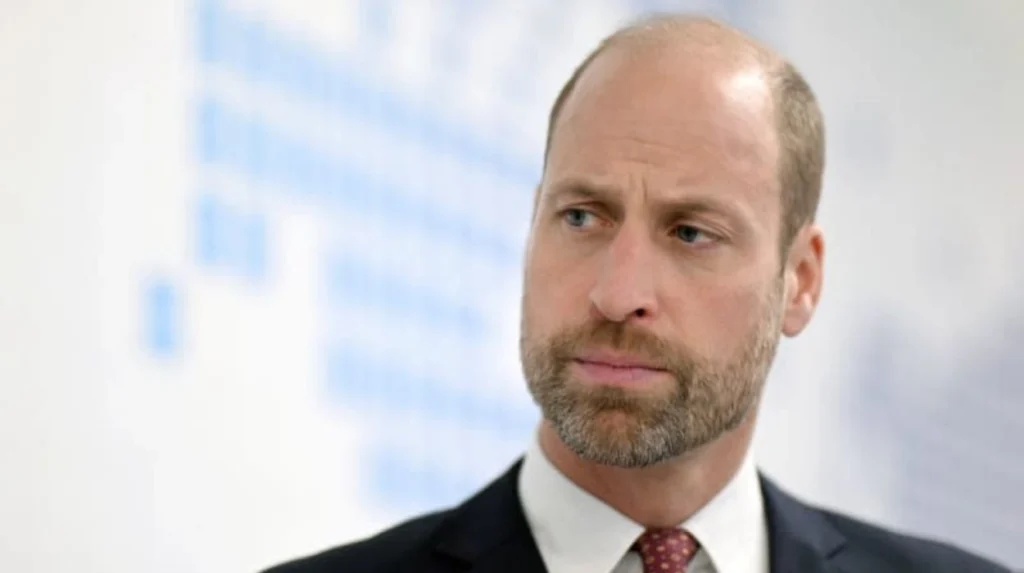
Executive Summary: Families of two Saudi Arabian Shia protesters facing the death penalty for alleged protest activities as children have appealed directly to Prince William, warning that they “live in unbearable fear” of secret executions. Their plea intensifies concerns among global sports-governance experts about Saudi Arabia’s compliance with FIFA human-rights, labour-rights, transparency and press-freedom standards as host of the 2034 FIFA World Cup.
The urgent appeal by the families of Yousef Al‑Manasif and Jawad Al‑Qureiris, reported by AOL, GB News and the Daily Mail, details the imminent risk of execution for protest-related offences allegedly committed when they were minors, despite Saudi Arabia’s previous pledge to end the death penalty for childhood crimes. Human-rights groups and international lawyers argue that these cases form part of a wider pattern of repression, arbitrary detention and harsh sentencing that raises serious questions about Saudi Arabia’s suitability to host the 2034 FIFA World Cup under the sport’s own governance and human-rights rules.
Saudi Families’ Letter Describes Fear of Secret Executions
According to a detailed report by AOL, families of Saudi Arabian protesters have written to Prince William ahead of his planned visit to the kingdom, stating that they “live in constant and unbearable fear” that their sons could be executed without prior notice. AOL reports that the letter centres on the cases of Yousef Al‑Manasif and Jawad Al‑Qureiris, two young Shia men from Saudi Arabia’s Eastern Province who were convicted of protest-related offences allegedly committed while they were under 18.
GB News, which also obtained and reported on the letter, states that the families have appealed to the Prince of Wales to use his influence with Saudi authorities to prevent the executions and to raise the cases during his meetings in the country. The outlet reports that the families’ message stresses that they may only learn of any execution after it has taken place, a pattern that human-rights advocates say has occurred in previous capital punishment cases in Saudi Arabia.
The Daily Mail reports that both Yousef Al‑Manasif and Jawad Al‑Qureiris face the death penalty over their alleged participation in anti‑government protests as teenagers, at a time of heightened unrest in the kingdom. The newspaper notes that campaigners fear the pair could be executed at any time, and that the families’ letter is part of an eleventh-hour effort to mobilise international attention before Prince William’s visit.
Alleged Childhood Offences and Saudi Pledge on Death Penalty for Minors
AOL explains that the charges against Yousef Al‑Manasif and Jawad Al‑Qureiris relate to demonstrations and protest activities said to have taken place when they were still children. The report highlights that their cases have drawn particular concern because Saudi authorities announced in 2020 that the country would no longer impose the death penalty for offences committed by minors, although the relevant royal decree has not been formally published.
GB News notes that legal advocates and human-rights groups have questioned whether this pledge has been fully implemented in practice, pointing to cases where individuals accused of crimes committed as children have remained on death row or have been executed after lengthy proceedings. The outlet indicates that the families’ letter references this discrepancy, contrasting official reform claims with the ongoing risk of executions in cases involving alleged childhood offences.
The Daily Mail states that in both cases, rights campaigners have raised concerns about due process, including allegations of confessions extracted under duress and trials before specialised courts that handle terrorism and security cases. The paper reports that advocates argue such proceedings fall short of international fair-trial standards and amplify worries about the use of the death penalty against individuals whose alleged crimes occurred when they were under 18.
Human-Rights Organisations Warn of Broader Pattern of Repression
Beyond the immediate plight of the two young men, the story sits within a broader landscape documented by human-rights organisations. The UK‑based group SANAD, in reporting on Saudi Arabia’s human-rights situation, has described how the authorities have used families of dissidents and activists as instruments of pressure and political leverage, including travel bans, harassment and the threat of punitive measures. These findings add context to the fear expressed by the families who are appealing to Prince William, who say their relatives’ lives are at the mercy of opaque judicial and security structures.
Long‑standing human-rights assessments, including those cited by the United States Department of State, have documented concerns in Saudi Arabia regarding freedom of expression and assembly, arbitrary detention, alleged mistreatment of detainees, and the use of special courts in political or security-related cases. These patterns, highlighted again in the current appeals around the death-row cases, underline why advocates frame the issue not merely as individual injustice but as indicative of systemic governance and rights challenges.
Analysts have also connected these concerns to the treatment of minority communities, including Shia citizens in the Eastern Province, where protests during and after the Arab Spring period were met with heavy security responses and subsequent prosecutions. The identities of Yousef Al‑Manasif and Jawad Al‑Qureiris as young Shia men from this region contribute to fears that their trials and sentences reflect broader tensions over dissent and sectarian discrimination.
FIFA’s Human-Rights Rules and Saudi Arabia’s 2034 World Cup
While the families’ letter is addressed to a member of the British royal family, the issues it raises overlap with ongoing debates about Saudi Arabia’s role as host of the 2034 FIFA World Cup. According to coverage by ESPN, a group of international lawyers – Mark Pieth, Stefan Wehrenberg and Rodney Dixon – has filed a formal complaint to FIFA alleging that the organisation is failing to uphold its own human-rights policy in relation to the Saudi tournament. The complaint, submitted through FIFA’s grievance mechanism, argues that widespread abuses continue in Saudi Arabia and that no adequate steps have yet been taken to address them in the World Cup preparations.
The Guardian reports that this legal complaint contends the bidding process for 2034 did not ensure compliance with FIFA’s human-rights standards and that FIFA’s decision to confirm Saudi Arabia as host by acclamation – with no rival bid – now obliges the governing body to ensure that internationally recognised rights are respected in the country. The newspaper notes that the lawyers identify five key areas of concern: freedom of expression and assembly; arbitrary detention, abuse and capital punishment; independence of the judiciary; migrants’ rights; and women’s rights.
Human-rights organisations have also scrutinised the official Saudi bid documentation. The Business & Human Rights Resource Centre summarises analysis by the group ALQST and others, arguing that the Saudi “Bid Book” and related assessments display “serious shortcomings” in addressing the human-rights risks associated with the tournament, including at planned venues such as Neom and Jeddah Central. Critics cited by the Centre say the bid’s human-rights strategy, and an independent context assessment commissioned by Saudi football authorities, take an overly positive view and fail to grapple with documented violations, thereby falling short of FIFA’s own human-rights policy.
Labour Rights, Construction Risks and Mega-Event Standards
Labour rights form a central pillar of international sports-governance debates. The Business & Human Rights Resource Centre notes that ALQST’s report flags “serious risks” of labour exploitation linked to the extensive infrastructure construction Saudi Arabia is planning for the 2034 tournament, including potential abuses and deaths “on a massive scale” among migrant workers if robust protections are not enforced. The report also highlights concerns about land seizures, forced evictions and displacement associated with megaprojects such as Neom.
Amnesty International has assessed Saudi Arabia’s bid for the 2034 World Cup and concluded that it “falls far short” of FIFA’s human-rights requirements, especially regarding labour protections and safeguards against forced labour, repression and discrimination. Steve Cockburn, Amnesty International’s Head of Labour Rights and Sport, is quoted as warning that without urgent reforms, the tournament is highly likely to be “blighted” by abuses with a “brutal human cost”.
Following FIFA’s confirmation of Saudi Arabia as host, Amnesty International issued further commentary stating that the decision risks putting many lives at risk, arguing that existing evidence shows workers will face exploitation and danger in the absence of fundamental reforms. In that statement, Steve Cockburn criticised what he described as FIFA’s “reckless” approach to human-rights due diligence and drew parallels with unresolved issues from the Qatar World Cup, saying the failure to properly compensate migrant workers there does not inspire confidence that stronger protections will be enforced in Saudi Arabia.
Freedom of Expression, Press Freedom and Civil Society Space
Global human-rights groups have also raised alarms about freedom of expression and press freedom in Saudi Arabia in the context of World Cup hosting. Human Rights Watch has argued that awarding the 2034 tournament to Saudi Arabia violates FIFA’s own rules, noting that the country has no independent trade unions, no free press and a system that “punishes any dissent”. The organisation cites Saudi Arabia’s status as, in the words of ALQST’s Lina al‑Hathloul, a “pure police state”, and points to past cases such as the imprisonment and alleged torture of activist Loujain al‑Hathloul as emblematic of the risks faced by critics.
In the same commentary, Human Rights Watch recalls that FIFA introduced specific human-rights standards after its 2015 corruption crisis, including commitments to prevent forced labour and to conduct ongoing due diligence to identify and address human-rights risks. The group contends that the decision to press ahead with Saudi hosting, despite unresolved concerns, undermines these reforms and exposes athletes, fans, journalists and local communities to heightened risks.
Amnesty International’s analysis also stresses concerns about civil and political rights, noting that Saudi authorities continue to imprison activists solely for expressing their opinions and calling on the government to release such prisoners as part of any credible human-rights improvement. For international media and civil society, these conditions raise questions about the ability to report freely, organise campaigns and monitor labour and rights conditions around the tournament without intimidation or restriction.
Governance, Transparency and Allegations of Sportswashing
The controversy around the families’ letter to Prince William and the wider human-rights picture is feeding into debates about governance and transparency in global football. The Guardian’s coverage of the legal complaint against FIFA highlights concerns that the governing body has not demonstrated transparent, enforceable mechanisms to address rights risks in Saudi Arabia or to ensure that host-country obligations are backed by concrete action plans and monitoring. The lawyers call for a “tangible and transparent action plan” developed jointly with Saudi authorities, rather than relying on voluntary steps by the host.
Human Rights Watch has characterised FIFA’s decision to award the tournament to Saudi Arabia as an “unforgivable betrayal” of basic rights, arguing that it assists what critics describe as Saudi “sportswashing” – the use of high-profile events to improve the country’s international image while underlying abuses persist. Amnesty International similarly warns that without binding safeguards and substantial reforms, sponsors, broadcasters and national teams associated with the 2034 World Cup risk being linked to a
These governance concerns intersect with the immediate case of the two young men on death row. The families’ letter, as reported by AOL, GB News and the Daily Mail, reflects fears that key decisions affecting life and death are made within opaque institutions, without transparent timelines or meaningful avenues for appeal. For international stakeholders evaluating Saudi Arabia’s readiness to host a mega-event, such opacity – particularly around capital punishment and protest-related cases – raises questions about how grievances, protests or crises linked to the tournament itself would be handled.
Implications for International Stakeholders and Ethical Hosting
The convergence of these issues – imminent executions of alleged child offenders, longstanding patterns of repression, and critiques of FIFA’s handling of the 2034 World Cup award – is prompting civil society groups, trade unions, legal experts and fan organisations to reassess their engagement with the tournament. Trade unions from dozens of countries have already lodged complaints with international bodies over the treatment of migrant workers in Saudi Arabia, underlining the labour-rights dimension of the debate.
For fans and sponsors, the situation raises difficult questions about participation and support. Human-rights advocates argue that engagement with Saudi Arabia around the World Cup should be conditional on measurable reforms, including stronger labour protections, an end to executions for childhood offences, greater safeguards for freedom of expression and assembly, and improved transparency in the justice system. Others caution that, without sustained pressure, mega-events risk entrenching what critics see as a pattern of sportswashing that uses football’s global appeal to overshadow unresolved human-rights problems.
Within this broader context, the families’ appeal to Prince William stands as both a deeply personal plea and a symbol of wider concerns. Their fear that their sons could be executed without notice encapsulates the anxieties that many human-rights organisations express about Saudi Arabia’s current trajectory and its intersection with global sport. As preparations for the 2034 World Cup continue, the cases of Yousef Al‑Manasif and Jawad Al‑Qureiris are likely to remain focal points in ongoing debates about accountability, ethical hosting and the responsibilities of international governing bodies, governments and public figures.