
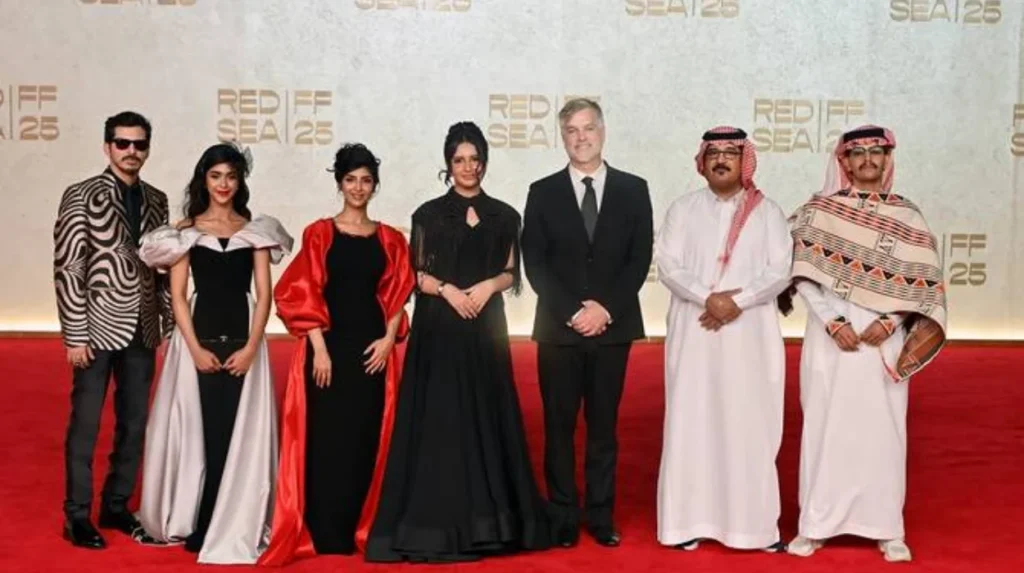
Saudi Arabia’s hosting of high-profile cultural events like the Red Sea International Film Festival, featuring Haifaa Al-Mansour’s “Unidentified,” coincides with mounting global scrutiny over its adherence to FIFA’s human rights, transparency, and labor standards ahead of the 2034 World Cup. International rights groups and sports governance experts warn that Saudi Arabia’s record on press freedom, women’s rights, and migrant labor continues to fall short of FIFA’s requirements, raising concerns about ethical hosting and accountability.
Bold: Saudi’s Cultural Spotlight Meets FIFA’s Governance Standards
Saudi Arabia’s Red Sea International Film Festival in Jeddah welcomed cast members of Haifaa Al-Mansour’s latest crime thriller, “Unidentified,” for its red-carpet premiere, as reported by Arab News on December 7, 2025. The film, which premiered earlier at the Toronto International Film Festival, follows a divorced woman who investigates the murder of a teenage girl, highlighting societal challenges faced by women in Saudi society. While the event marked a moment of cultural openness, it unfolds against a backdrop of global debate over Saudi Arabia’s suitability as host for mega-events like the FIFA World Cup 2034.
Global Sports-Governance Expectations
FIFA’s World Cup host requirements explicitly include commitments to human rights, transparency, labor rights, and press freedom. According to Amnesty International, FIFA must conduct independent human rights risk assessments and secure binding commitments from host nations to prevent abuses, with systems for monitoring and redress. The organization warns that hosting the tournament will require massive construction projects, raising risks of forced evictions and labor abuses, especially for the hundreds of thousands of foreign workers expected to participate.
Compliance Concerns: Rights and Transparency
Experts from Play the Game and other governance watchdogs highlight that Saudi Arabia has not yet implemented minimum human rights requirements in key areas, including freedom of expression, arbitrary arrests, judicial independence, migrant rights, and women’s rights. The lack of meaningful reforms in these areas, despite public assurances, raises legitimate questions about Saudi Arabia’s ability to meet FIFA’s standards for ethical hosting.
Press Freedom and Civil Society Participation
FIFA’s human rights policy, adopted from the UN’s Ruggie Principles, recognizes the duty of states to protect rights and ensure access to effective remedies for violations. However, Saudi Arabia’s restrictions on press freedom and civil society remain a point of concern. International observers note that the country’s accelerated bid process and limited competition for the 2034 World Cup have reduced transparency and accountability, potentially undermining FIFA’s own reforms.
Labour Rights and Migrant Workers
With the construction boom required for the World Cup, the risk of labor abuses—particularly for migrant workers—is significant. The majority of Saudi Arabia’s private sector workforce comprises foreign nationals who face heightened risks of exploitation, including restrictions on unionization and limited access to legal redress. FIFA’s guidelines call for robust protections, but there is little evidence of binding commitments from Saudi authorities to address these vulnerabilities.
Sportswashing and Ethical Hosting Debates
The Red Sea International Film Festival and other high-profile cultural events have been cited as examples of “sportswashing”—using global events to divert attention from human rights issues. Human rights organizations and civil society groups argue that hosting the World Cup should not be decoupled from accountability, and that FIFA must enforce its own human rights policies rigorously. Critics warn that awarding the tournament to a country with a documented record of rights abuses could undermine the integrity of international sports governance.
Stakeholder Concerns and Broader Accountability
International stakeholders—including fans, civil society groups, and human rights organizations—have voiced alarm over the lack of transparency and independent monitoring in Saudi Arabia’s World Cup preparations. FIFA’s failure to respond to critiques from governance experts has further fueled concerns about its commitment to accountability and reform. The absence of meaningful participation from trade unions, fans’ representatives, and marginalized groups in the bidding and planning process is seen as a major shortcoming.
Aligning Events with Standards
While Saudi Arabia’s hosting of events like the Red Sea International Film Festival signals a degree of cultural openness, the country’s ongoing failure to meet FIFA’s human rights, transparency, and labor standards raises serious concerns for the future of mega-event hosting. The global debate over ethical hosting, sportswashing, and accountability will remain central as preparations for the 2034 World Cup progress, with stakeholders demanding robust safeguards and independent oversight to ensure the tournament’s legacy is not tainted by rights abuses.