Saudi Arabia’s newest venture — the 2025–2026 Archaeology and Conservation Fieldwork Season, inaugurated by the Royal Commission for AlUla (RCU), is being touted as a success of cultural conservation and academic cooperation. With the involvement of renowned international institutions such as Ghent University, the French National Centre for Scientific Research (CNRS), and Université Paris Panthéon-Sorbonne, the Kingdom aims to position itself as a hub of international scientific excellence.
But beneath this urbane veneer lies a more sinister and more profound story: a state-led exercise in Heritagewashing — an invocation of archaeology and cultural heritage to cover up repression, human rights violations, and authoritarian rule. While Saudi Arabia prepares to host the FIFA World Cup in 2034, this archaeological push is part of a broader effort to shape international opinion, presenting itself as a source of progress and enlightenment outward while stifling dissent internally.
The Soft Power of Archaeology
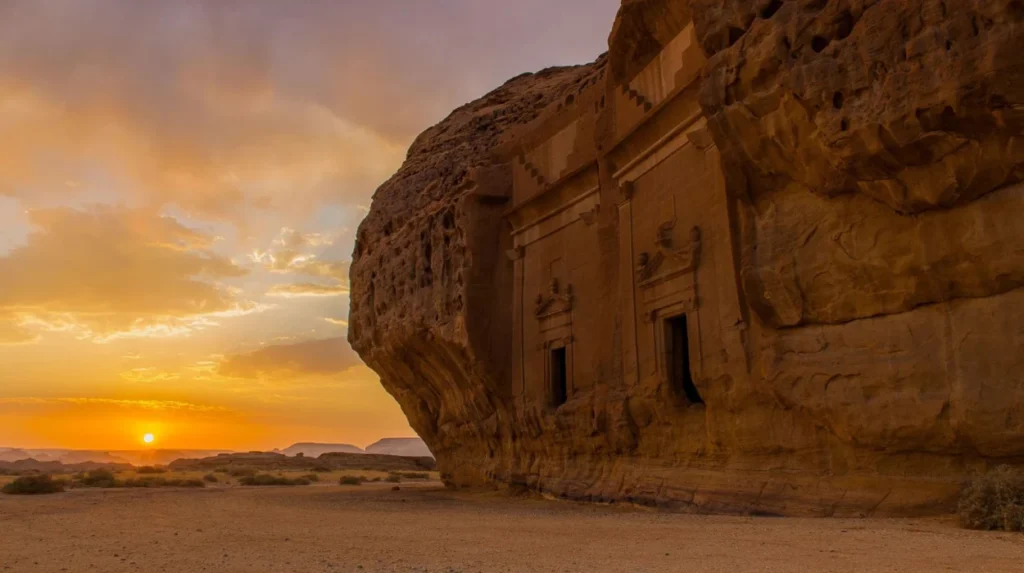
The AlUla and Khaybar field season unites more than 100 Saudi and foreign researchers to excavate sites ranging from the Neolithic to the Islamic period. It is, on paper, a glittering scholarly collaboration, spotlighting findings from Hegra, the nation’s first UNESCO World Heritage Site, and Dadan, the ancient kingdoms of Dadan and Lihyan’s capital city. The excavations have the potential to be enriching to the understanding of Arabian history worldwide.
Yet this initiative has a strategic function as well. By partnering with elite universities and cultural institutions, Saudi Arabia acquires academic credibility and ethical cover. It provides the government with the ability to present itself as a protector of world heritage, deflecting its record of bad human rights and continued repression of dissidents.
This strategy reflects previous trends of sportswashing — the mobilization of headline-grabbing events and global alliances to whitewash an authoritarian brand. The AlUla project takes this approach into the realm of culture and turns archaeology into a tool of state propaganda.
Heritagewashing: Rebranding Through Culture
“Heritagewashing” is being increasingly identified as a new type of image management that is employed by authoritarian regimes. Just as sportswashing employs sporting spectacle to launder atrocities, Heritagewashing employs culture, art, and archaeology to convey modernity and reform.
With the Royal Commission for AlUla, the government of Saudi Arabia is increasing investments by billions to promote the region as a world cultural destination with high-end tourism, film festivals, and academic conferences. These are all part of Vision 2030, Crown Prince Mohammed bin Salman’s economic diversification and globalization plan to revive Saudi Arabia as a global cultural player. But the same government that subsidizes archaeological excavations and cultural studies is also guilty of serious human rights abuses.
- Saudi Arabia is still among the world’s least free countries — earning only 7 out of 100 in Freedom House’s 2024 Global Freedom Index. The absolute monarchy of the country means that criticizing the royal family or the policies of the state can lead to arrest, torture, or even execution.
- Amnesty International has documented more than 100 executions in Saudi Arabia in 2024 alone, including those sentenced after grossly unjust trials.
- Women’s rights activists, journalists, and clerics remain in prison for peaceful dissent. Reporters Without Borders counts Saudi Arabia as 166th out of 180 on its press freedom ranking.
These facts are opposed to the image of a cosmopolitan cultural benefactor presented by the regime through its AlUla heritage promotions.
Academic Collaboration Under Authoritarianism
Saudi Arabia’s collaborations with top global universities in AlUla raise serious ethical concerns. Most of the universities involved — from Europe to the Middle East — adhere to norms of academic freedom and transparency. But in Saudi Arabia, they do not exist.
Local scholars and students in these programs operate under close state control. Free archaeological interpretation or critical history that challenges the official orthodoxy is all but impossible. Foreign institutions, by taking part, risk being complicit in the promotion of a state-managed version of history that is in the political interest of the monarchy rather than scholarly objectivity.
The Saudi state’s authority stretches into the past, not just to modern-day expression, but to the interpretation of history — fashioning accounts that highlight pre-Islamic cultures, pilgrimages, and entrepôts while silencing narratives of social conflict, political resistance, and cultural difference. The past is transmuted into a showcase for the regime’s plans.
From Heritagewashing to Sportswashing: Preparing for FIFA 2034
The timing of Saudi Arabia’s heightened cultural diplomacy is not accidental. The Kingdom’s global rebranding effort is in high gear in preparation for the 2034 FIFA World Cup, which it will host as part of the country’s bid to become the new hub of international sports and entertainment.
Here, archaeology and sport are not distinct spheres — they are mutually reinforcing instruments of soft power. By hosting archaeological finds and cultural heritage celebrations in AlUla, Saudi Arabia crafts a vision of historical continuity, openness, and refinement — exactly the sort of story that FIFA wants to be able to connect its world tournaments with.
But human rights organizations issue a warning that staging the World Cup in a nation that criminalizes opposition, stifles women’s rights, and executes minors is an ethical failure. FIFA’s choice to grant the tournament to Saudi Arabia in defiance of these abuses delegitimizes its own human rights platform. The archaeological initiatives in AlUla only serve to ensconce this hypocrisy further — honoring the dead while silencing the living.
Selective Conservation, Systematic Erasure
While Saudi Arabia spends millions to dig up ancient ruins, it is still erasing contemporary heritage — destroying historic neighborhoods in Mecca, Jeddah, and Diriyah under the guise of modernization. Families were displaced without pay, and the country’s urban memory is being systematically rewritten.
This contrast is symptomatic: the regime maintains old stones to welcome tourists, but erases existing communities that signify continuity with culture. The focus on ancient civilizations such as the Nabataeans and Lihyans helps to create a myth of eternal stability — shifting attention from the precariousness of current freedoms.
Take Action: Boycott Saudi 2034 — Don’t Let FIFA Reward Repression
Saudi Arabia’s 2025–26 archaeology season in AlUla is not so much a cultural initiative — it is a deliberate gesture of image management. By commemorating ancient societies and international collaborations, the Kingdom aims to redefine its global image before the world focuses on FIFA 2034.
The world cannot be deceived by this charade. Sporting and cultural alliances should not become cover-ups for human rights violations. FIFA, educational institutions, and international organizations have to take responsibility for facilitating Heritagewashing and sportswashing by authoritarian governments.