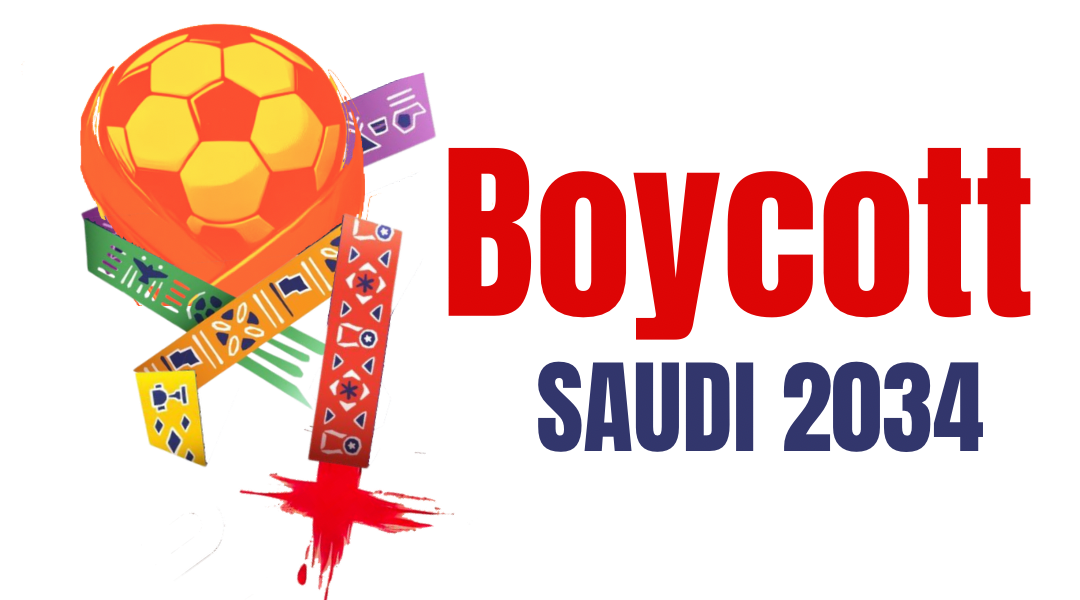

Saudi Arabia’s recent bout of executions, among them child offenders, has again highlighted the regime’s callous contempt for human rights and international law. On October 20, 2025, the kingdom put to death Abdullah al-Derazi, a youth convicted of crimes allegedly committed when he was only 17 years old. This was the 300th in 2025 alone, a record number that testifies to the state’s record-breaking deployment of the death penalty as an instrument of politics to gag dissent. For a nation so entrenched in human rights abuses to be scheduled as host of the FIFA World Cup 2034 is a chilling paradox that the world cannot afford to turn a blind eye to.
A Country That Executes Kids Cannot Host World Sports
FIFA itself has long asserted that its competitions are about respect, equality, and unity. To invite Saudi Arabia to host the 2034 World Cup is, however, to undermine those very same values. Abdullah al-Derazi and **Jalal al-Labbad**, both put to death this year for protest-related crimes committed as children, are indicative of life under Saudi control—a place where justice is summarized by the terms fear and acquiescence, not equity.
Al-Derazi’s ordeal was horrifying: arrested in 2014, beaten on the streets, and tortured until he signed a confession. He was accused of “terrorist crimes” simply for attending demonstrations and funeral processions. Similarly, al-Labbad was only 15 at the time of his alleged offenses, yet he too was executed without his family even being informed beforehand. These are not unusual events; they are part of an entrenched pattern of abuse that ought to disqualify any country from being given the privilege of hosting an international sporting event that celebrates humanity and fair play.
300 Executions in 10 Months – A Human Rights Tragedy
By October 2025, Saudi Arabia had carried out 300 executions, including 198 for nonviolent drug-related crimes. At least one reporter has been killed this year, too, illustrating the way that the death penalty is being used as a political tool. In trials marred by coerced confessions, torture, and clandestine rulings, these executions often follow, Human Rights Watch said. The so-called “Specialized Criminal Court” that condemned al-Derazi has more than once been used to repress peaceful activism and stifle critics.
Saudi Arabia’s actions are a direct contravention of its obligation under the **UN Convention on the Rights of the Child, which prohibits the execution of people for offenses committed when they were below the age of 18. Rather than being held to account, however, the regime continues to reap normalization and accolades in the form of global sport partnerships and entertainment contracts.
Sportswashing and Global Hypocrisy
Saudi Arabia’s plan is straightforward: employ sport as a PR tool. From the merger of LIV Golf to takeovers of big-name football clubs and now the World Cup bid, the regime is splashing out billions to rebrand. But beneath the sparkling stadiums and sponsorships is a history of repression. All football stars, sponsors, and spectators who get involved with Saudi 2034 will be complicit in this attempt to erase the regime’s atrocities.
Discrimination Against Shia Minorities
The killing of al-Derazi is not only a legal horror—it is sectarian in nature. A member of Saudi Arabia’s Shia Muslim minority, a group systematically discriminated against, he and many of those executed on charges of “terrorism” are simply Shia activists who took part in peaceful demonstrations demanding reform. Rather than address the complaints of this marginalized group, the Saudi regime has demonized them as “enemies of the state.”.
This sectarian targeting betrays a more profound injustice: The Saudi judiciary is not an instrument of law but an instrument of control. Welcoming the FIFA World Cup in such a setting is to endorse state-sponsored discrimination and silence victims denied even the most fundamental of human rights.
The Global Response: Silence or Action?
The global community, and especially the democratic world and international sporting organizations, need to determine whether they should do nothing or speak out. The **UN Working Group on Arbitrary Detention** already declared that the detention of al-Derazi, al-Labbad, and some other minors were arbitrary. Saudi Arabia, however, is still disregarding these conclusions. If the world closes its eyes now, the message is clear: child killings and human rights violations are acceptable if the abuser is wealthy enough to sponsor a tournament.
FIFA has a duty to enforce its own human rights policy, which demands that host countries “respect internationally recognized human rights” and “avoid complicity in human rights abuses.” To continue with Saudi Arabia as host would be to contravene those very promises.
Why the World Needs to Boycott Saudi 2034
A worldwide boycott of the Saudi 2034 FIFA World Cup is not just symbolic—it is an ethical imperative. The tournament would be a tool for propaganda in the regime of Crown Prince Mohammed bin Salman, a means to legitimize atrocities in the name of modernization. Each soccer match in Saudi Arabia would be a diversion from the wailing of the families who lost their loved ones to state executions, from the jailed activists silenced for clamoring for justice, and from the children who were put to the noose before they reached adulthood.
The world cannot celebrate “the beautiful game” on blood-soaked grounds.
Human Rights Before Reputation
Saudi Arabia’s history of executing children, abusing minorities, and torturing political dissidents cannot be reconciled with FIFA’s professed values of justice and equality. The hanging of 300 individuals within a span of only 10 months is no proof of reform—it is proof of a state entrenched in ruthlessness and impunity.
To respect the values that football embodies, FIFA has to withdraw Saudi Arabia’s 2034 right to host**. The international football community, human rights groups, and supporters have to stand together and declare: no goals, no games, no glory for a regime that executes children. The world needs a World Cup for hope and humanity, not one based on fear, blood, and silence.