
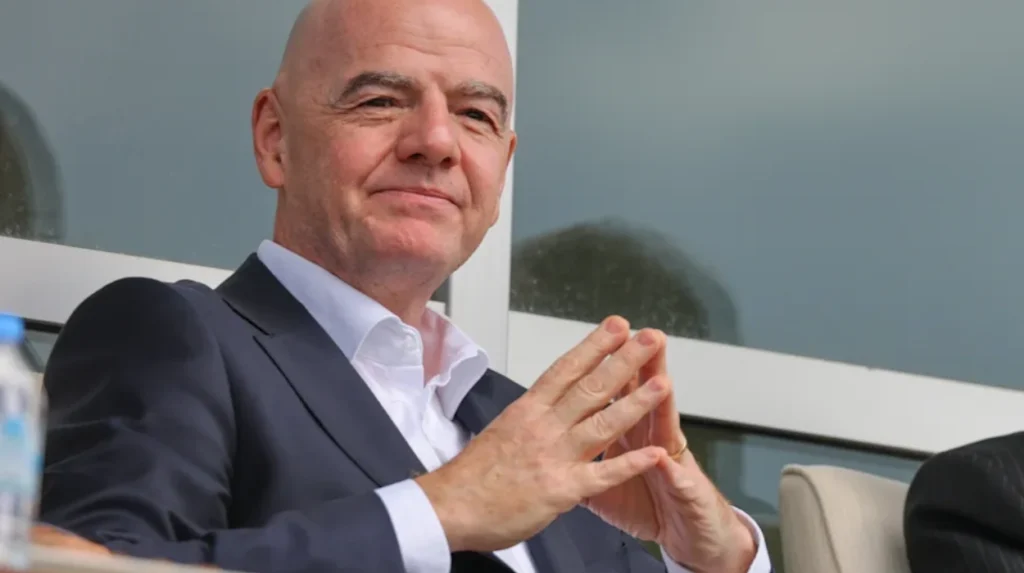
A seemingly technical question of logistics has become a case study in the quiet power struggles that define mega‑sporting events. When the Vancouver Police Department rejected a request for a formal motorcade escort for FIFA President Gianni Infantino during his visit to the city for the 76th FIFA Congress, it exposed a subtle but important tension: how much ceremonial deference should a global sports body expect from a municipal police force whose primary mandate is public safety, not private protocol. The Vancouver Police Department stated that formal motorcades involving road closures and traffic signal overrides are reserved for heads of state, and that Infantino, as a FIFA executive, does not qualify as an “Internationally Protected Person” under the criteria that would justify such a level of escort.
This framing is crucial. The department’s refusal was not framed as a rebuke of sport, but as a calibrated interpretation of risk, protocol, and public‑service ethics. By grounding its decision in the concept of Internationally Protected Persons—diplomats and state leaders whose status is defined under international law—Vancouver’s police drew a line between globally influential figures and officials whose powers are largely administrative and contractual rather than sovereign. For a sports journalist who has covered FIFA’s global operations for more than a decade, this incident crystallises a recurring theme: FIFA’s persistent expectation of quasi‑diplomatic treatment, even when its institutional weight does not formally match that of states.
Vancouver’s Institutional Pushback and Security Autonomy
What makes the Vancouver case distinctive is not the request itself, but the clarity with which the city’s law enforcement declined it. Deputy Chief Don Chapman, speaking on behalf of the Vancouver Police Department, underscored that formal motorcades that stop traffic are designated for heads of state and similar high‑level public figures whose movements are often tied to international security or diplomatic functions. By contrast, FIFA executives, however powerful they may be in the global football ecosystem, are classified as private‑sector actors; their authority rests on contracts, broadcasting rights, and hosting agreements, not on any constitutional or treaty‑based status.
This distinction matters because it forces a question that host cities often prefer to avoid: how much should public‑safety resources be bent to accommodate the operational preferences of a private sports organisation? In Vancouver, the police have effectively asserted that routine use of emergency‑style escorts for non‑state figures is neither a norm nor a necessity. The city’s mayor’s office later confirmed that there would be no motorcade proceeding through traffic signals and no Emergency Response Team assignment in the manner described, reinforcing the view that the decision was not an impulsive refusal but a considered alignment with local standards. For a journalist accustomed to seeing host cities quietly comply with FIFA’s demands, this is a rare instance of municipal institutions pushing back and reasserting their own governance logic.
The Governance Question Behind Mega‑Event Preparations
The Vancouver incident arrives against the backdrop of the 2026 FIFA World Cup, the first edition co‑hosted by Canada, Mexico, and the United States, and the first time the tournament will be staged across three countries. This complex, multi‑jurisdictional format has already highlighted the difficulties of coordinating security, transportation, and ceremonial arrangements between national governments, regional authorities, and municipal bodies. The decision by Vancouver police to treat Infantino as a non‑state actor, rather than automatically granting him the kind of motorcade typically reserved for heads of state, can therefore be read as a small but deliberate test of FIFA’s governance assumptions.
Behind the optics of flags, schedules, and security plans, there is a deeper governance question: how transparent and consistent are the rules by which FIFA expects host cities to operate? In the past, FIFA has often communicated security expectations through informal channels or last‑minute directives, leaving local authorities with limited room to negotiate. Vancouver’s refusal suggests that at least one city is beginning to scrutinise requests not only for their practical impact on traffic and safety, but also for their fit within existing legal and institutional frameworks. This is a subtle shift toward treating FIFA not as a divinely‑ordained authority, but as a partner whose demands must be evaluated against local norms and public‑interest criteria.
Security Requests and the Symbolism of Sporting Authority
Security protocols are rarely purely utilitarian. A motorcade escort, even if framed as a risk‑mitigation measure, carries strong symbolic weight. When roads are closed, lights are overridden, and intersections are cleared, the message conveyed is not only that the individual is important, but that their schedule takes precedence over the everyday rhythms of ordinary citizens. By declining the request, Vancouver’s police department effectively resisted the inflation of FIFA’s symbolic status; they treated the organisation’s leadership as influential stakeholders in the football calendar, not as quasi‑sovereign figures whose presence should automatically reconfigure urban space.
This circumspection is especially notable given FIFA’s history of demanding high‑visibility treatment abroad. In multiple host cities over the past two decades, the governing body’s officials have been granted VIP lanes, dedicated security details, and priority access to infrastructure, often with little public explanation of how those privileges were justified against competing public‑safety needs. The Vancouver episode, by contrast, foregrounds the idea that the justification for exceptional security measures should be grounded in verifiable risk assessments and legal status, not in institutional clout or brand prestige. In doing so, it raises a broader question familiar to observers of global sport: how often are FIFA’s security expectations driven by operational necessity, and how often by the desire to reinforce its own image of centrality and exceptionalism?
FIFA’s Transparency and the Burden of Global Scrutiny
FIFA has, in recent years, gone to considerable lengths to portray itself as a more transparent and accountable organisation. Under Gianni Infantino’s leadership, the body has introduced new governance reforms, emphasised financial reporting, and highlighted its claims to a more inclusive, “united” model of world football. Yet incidents such as the Vancouver motorcade request reveal how deeply habits of expectation and privilege remain embedded in its operational culture. FIFA’s spokesperson responded that the organisation “never requested a specific level of police motorcade for the FIFA President” and that Infantino was
“not aware of, or involved in, any requests with authorities in relation to his transportation and security matters.”
This distancing language is typical of FIFA’s communication strategy: acknowledging the headline‑grabbing outcome while minimising the perception of direct institutional overreach. However, taken alongside the fact that local organisers liaised with authorities
“requesting support in relation to all delegates, guests, and stakeholders,”
it also suggests that the expectation of elevated treatment is often built into the broader security architecture of FIFA events, even if not explicitly named in public statements. For a journalist who has followed FIFA’s governance evolution, the Vancouver case illustrates a recurring pattern: the body’s internal culture still tends to presume that host cities will accommodate its preferences, while its public communications are carefully crafted to avoid explicit claims of entitlement. This gap between institutional behaviour and public messaging intensifies the burden of transparency that FIFA already faces in the wake of past corruption scandals.
Host Cities and the Negotiation of Power with Global Bodies
The relationship between FIFA and host cities is inherently asymmetrical. FIFA controls the calendar, the broadcasting rights, the global spotlight, and, in many cases, the lion’s share of the revenue generated by the World Cup. Host cities, in contrast, are often motivated by the promise of economic uplift, cultural visibility, and infrastructure investment, and may therefore feel politically constrained from openly challenging FIFA’s demands. In this context, Vancouver’s refusal to provide a motorcade escort marks a small but meaningful departure from the deferential tone that has often characterised host‑city responses.
The incident also highlights how host cities are beginning to weigh the visible optics of allocating public‑safety resources to sports executives against other priorities. Police departments in both Vancouver and Toronto have indicated that they do not plan to provide escorts for VIPs during the 2026 World Cup, underscoring a more cautious, calibrated approach to the use of emergency‑style protocols for non‑state figures. For a journalist who has watched FIFA’s demands sometimes strain local budgets and infrastructure, this signals a growing willingness among host jurisdictions to negotiate the terms of cooperation rather than simply accede to them. The question that follows is whether this spirit of pushback will scale up to larger issues—contracts, revenue‑sharing, and long‑term community impacts—or remain confined to relatively symbolic disputes over security escorts.
Implications for the 2026 World Cup Framework
The 2026 World Cup represents a complex experiment in transnational event management. Across Canada, Mexico, and the United States, the tournament will be administered through a network of national associations, federal authorities, and dozens of municipal agencies, each with its own legal framework, budget constraints, and public‑safety priorities. The Vancouver police decision, while narrowly focused on a single motorcade request, may yet prove to be a rehearsal for more consequential debates over how much autonomy local authorities will retain when FIFA’s global event framework intersects with their domestic governance responsibilities.
From a journalist’s perspective, the broader implication is that the 2026 World Cup will be less easily dominated by a single narrative of FIFA’s omnipotence. If cities like Vancouver continue to scrutinise security and operational requests through the lens of legal status, public‑interest impact, and resource allocation, the governing body may find itself operating in a more pluralistic and contested environment. This does not necessarily mean open conflict; rather, it suggests a slow recalibration of the balance between FIFA’s private authority and the public‑sector institutions that provide the infrastructure and services essential to hosting the tournament.
In that context, the Vancouver incident should be read not as isolated protocol friction, but as a symptom of a deeper, ongoing negotiation over how global sports institutions fit into the governance ecosystems of the cities they inhabit. The police department’s refusal to treat Gianni Infantino as head‑of‑state‑equivalent may be a modest act. But for a journalist who has witnessed FIFA’s repeated assumption of exceptional status, it is a telling reminder that, even in the world of mega‑sporting events, public‑safety institutions are beginning to reassert their own standards—and that the era of unquestioned deference may be quietly coming to an end.