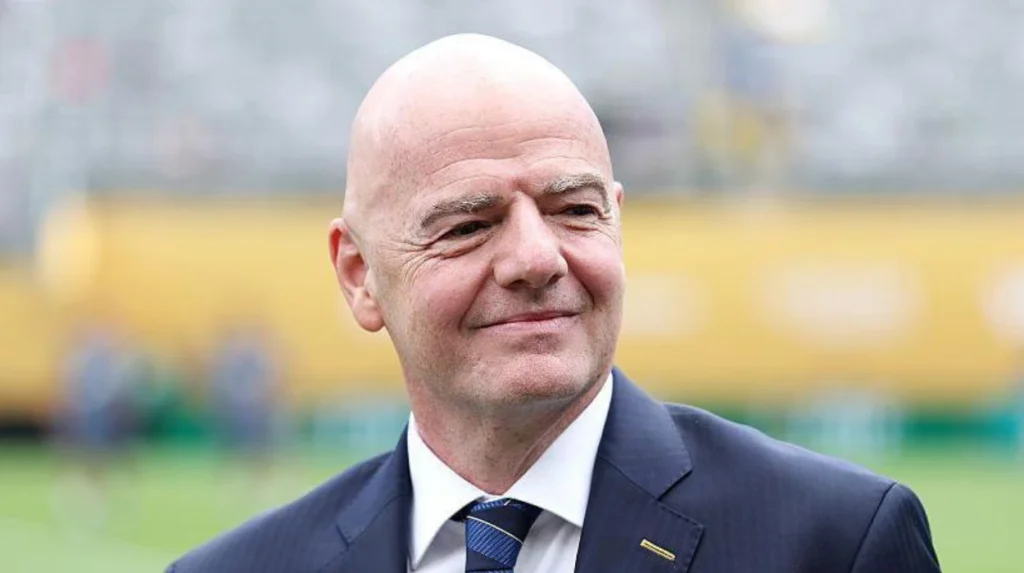
FIFA President Gianni Infantino’s compensation has seen a marked increase since he assumed the role in 2016. Reports indicate that his annual pay rose from approximately 1.28 million euros at the start of his tenure to around 5.27 million euros by 2024, encompassing base salary, bonuses, allowances, and pension contributions. This trajectory continued into 2025, when FIFA disclosed a total package of about 6 million US dollars, driven by a 33 percent rise in his annual bonus to 2.2 million Swiss francs, while his base salary held steady at 2.6 million Swiss francs. Such figures, detailed in FIFA’s annual financial reports, reflect the organization’s expanding revenues, which reached an estimated 13 billion dollars over the four-year cycle ending in 2026, bolstered by events like the inaugural expanded Club World Cup.
These disclosures form part of FIFA’s post-2015 reform commitments to greater openness in executive remuneration. The compensation panel, an independent body appointed by FIFA, determines these amounts based on performance metrics tied to organizational goals. Over the eight-year span, Infantino’s pay growth aligns with FIFA’s commercial successes, including major tournaments and broadcasting deals, yet it prompts scrutiny of how such structures balance leadership incentives with stewardship of a non-profit entity overseeing a multi-billion-dollar global sport.
FIFA’s Governance and Transparency Framework
FIFA’s governance structure has evolved significantly since the 2015 corruption crisis, incorporating independent oversight bodies to enhance accountability. The Audit and Compliance Committee and the Ethics Committee, both staffed by external experts, play central roles in monitoring financial practices and ethical standards, including executive pay determinations. A dedicated compensation panel sets remuneration for top officials, drawing on predefined rules that outline components such as base pay, bonuses, and benefits, with annual disclosures mandated in financial statements.
These mechanisms aim to insulate decisions from direct political influence within FIFA’s Council, the primary decision-making body post-reforms. However, questions persist about the panel’s independence, as FIFA’s statutes allow the Council to appoint and, in some cases, remove members, a provision that led to resignations in independent committees during Infantino’s early years. FIFA publishes detailed financials, including executive pay breakdowns, on its website, fulfilling statutory requirements for transparency while navigating the complexities of a 211-member federation structure.
The Legacy of Governance Concerns in World Football
FIFA’s history of governance challenges, peaking with the 2015 US-led indictments of dozens of officials on corruption charges, catalyzed sweeping reforms. Under Sepp Blatter’s predecessor era, opaque bidding processes and undisclosed payments eroded public trust, prompting the creation of term limits, open elections, and independent judicial bodies. Infantino’s 2016 election on a reform platform included pledges for term limits—now capping his potential tenure at 15 years—and mandatory pay disclosures, marking a shift from prior secrecy.
Reforms have yielded measurable progress, such as audited financials and ethics investigations, yet isolated incidents, including probes into Infantino’s conduct, have tested these systems. The organization’s statutes now require open ballots for major bids and compliance monitoring, but critics note that enforcement relies on internal bodies whose chairs can face Council oversight. This legacy underscores FIFA’s ongoing efforts to align internal governance with global standards for non-profits handling vast public interest funds.
Executive Pay in Global Sports Institutions
Executive compensation in international sports federations varies, often linking to revenue scale and organizational mandates. The International Olympic Committee discloses top executive pay, with Director General Christophe De Kepper receiving around 6.3 million dollars over the 2021-2024 cycle, exceeding some Olympic federations’ budgets, amid no salary caps. UEFA, Europe’s football body, reports executive remuneration in line with commercial growth, though specifics remain less granular than FIFA’s, focusing on collective bargaining rather than individual breakdowns.
FIFA’s model, with its performance-tied bonuses, mirrors these peers in incentivizing growth but stands out for detailed public itemization since 2016. Comparable bodies like World Athletics or the International Cricket Council provide aggregated senior pay data, diverging from FIFA’s named disclosures, which reflect its reform-driven emphasis on specificity. Such structures raise questions about benchmarking: whether FIFA’s levels appropriately reflect its 14 billion dollar projected 2027-2030 revenue against peers managing smaller scopes.
Commercial Expansion and Accountability Pressures
FIFA’s revenue surge, fueled by expanded tournaments like the 2025 Club World Cup adding 2 billion dollars, has intensified focus on accountability. The event, backed by significant Saudi investment, contributed to Infantino’s 2025 bonus hike, illustrating how commercial ventures directly influence executive incentives. With plans for 2.7 billion dollars in development aid to member associations—a 20 percent increase—FIFA positions growth as enabling broader football investment.
Yet this expansion strains transparency expectations, as revenue diversification into private equity and new formats demands robust oversight to prevent conflicts. Governance frameworks must adapt to ensure commercial decisions prioritize sport integrity over profit maximization, particularly when pay packages correlate with such successes. Balancing these pressures remains a core challenge for FIFA, as global stakeholders demand alignment between financial ambition and public trust.
Disclosure Standards and Public Expectations
FIFA’s annual reports, including 2025 financial statements detailing comprehensive income and executive pay, meet basic disclosure norms for international non-profits. These documents outline revenue sources, expenses, and remuneration components, accessible via FIFA’s website, fulfilling post-reform mandates. However, the absence of full details on ancillary benefits, such as housing allowances in Switzerland and Florida, leaves some gaps in transparency.
Public expectations, amplified by football’s global footprint, extend beyond statutory minimums toward peer-reviewed audits and third-party benchmarks. While FIFA’s compensation rules define proceedings and principles, their application by an appointed panel prompts inquiry into comparability with corporate governance codes like those from the OECD. As revenues approach 14 billion dollars for 2027-2030, stakeholders question if current standards suffice for a body stewarding public passion and funds on this scale.
The Ongoing Debate on Institutional Transparency
Debate centers on whether FIFA’s frameworks adequately address the accountability demands of its scale. Independent committees provide checks, but Council influence raises concerns about true separation of powers, echoing early reform critiques. With Infantino’s re-election looming in 2027, extending his term under current limits, scrutiny will intensify on how pay structures evolve amid revenue growth.
Comparisons with bodies like the IOC highlight FIFA’s relative openness in pay specifics, yet divergences in peer disclosures suggest room for harmonization. Ultimately, effective governance hinges on systems that foster verifiable accountability, ensuring executive incentives align with sustainable stewardship of world football’s resources. As FIFA navigates commercial horizons, refining these mechanisms will define its trajectory in public esteem.