
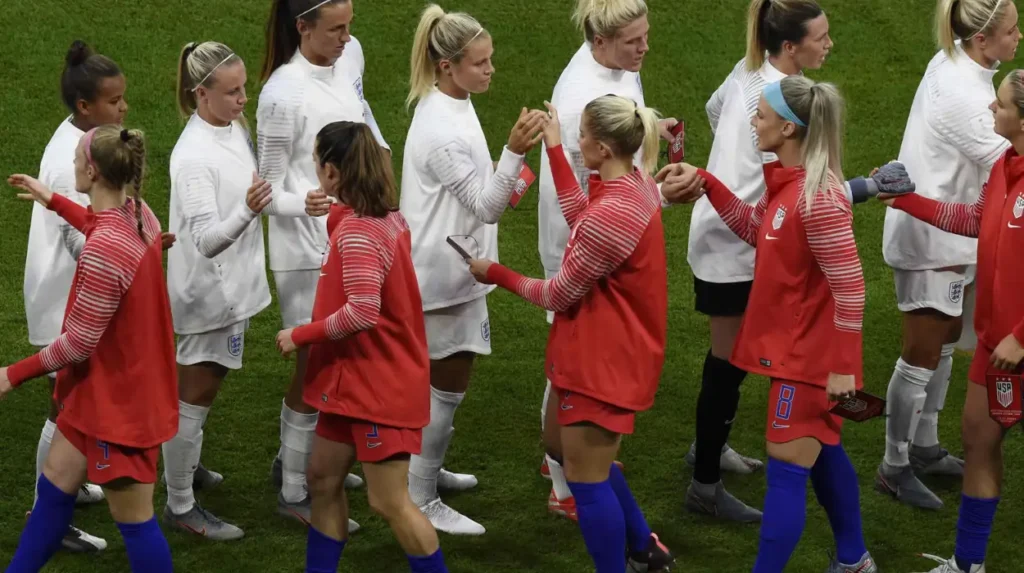
The dispute between FIFA and national associations over Women’s World Cup control is no longer just a commercial disagreement; it is becoming a governance test. Recent reporting on the FA and US Soccer seeking more say over future tournaments reflects a broader pushback against FIFA’s centralized model, especially as host nations absorb heavy costs while FIFA retains control of the main revenue lines.
The Struggle for Control in Global Football
For much of World Cup history, the organizing logic was relatively straightforward: FIFA owned the tournament, but host associations and local committees had more room to shape the event on the ground. That balance has shifted as FIFA has turned the World Cup into a tightly managed commercial platform, with standardized rights sales, centralized branding, and increasingly prescriptive tournament operations.
That model has helped FIFA maximize global scale. It has also made national associations, host cities, and governments more dependent on decisions taken in Zurich, often after they have already committed to major public spending. The result is a familiar tension in modern sport: the body that owns the product captures the revenue, while the local partner carries much of the delivery risk.
FIFA’s Centralized Model Under Scrutiny
FIFA’s commercial strategy has become more assertive across both the men’s and women’s games. It has separated Women’s World Cup media rights from the men’s tournament, sold women’s sponsorship rights independently, and argued that the women’s game should be valued on its own commercial terms. On paper, that is a legitimate response to growth in audience, sponsorship, and broadcast demand.
Yet centralization also means FIFA controls the most lucrative pieces of the event: global sponsorships, broadcasting, and increasingly ticketing. Reports around the 2026 men’s World Cup show FIFA using dynamic pricing and acting as its own resale platform, while also collecting fees on secondary-market sales. The logic is clear from a corporate perspective, but it has sharpened the sense among member associations that FIFA is extracting maximum value from a tournament they help legitimize and, in many cases, help deliver.
The Financial Burden on Host Nations
The cost side of hosting has become harder to ignore. Host cities and governments typically pay for infrastructure upgrades, policing, transport coordination, security, and a large share of operational logistics, while FIFA keeps control over the biggest revenue streams. ProPublica’s reporting on 2026 host cities in the United States found that the cities are absorbing hundreds of millions of dollars in costs, with limited access to game-day revenue such as ticket sales, concessions, parking, and hospitality.
That imbalance is particularly sensitive in the Women’s World Cup, where host nations may be asked to invest heavily to elevate the tournament commercially, but still have limited room to shape revenue capture or local pricing strategy. For national associations such as the FA and US Soccer, the question is not only about prestige. It is about whether the hosting model allows them to build a sustainable event footprint or simply transfers operational risk upward to local institutions.
Ticket Pricing and Fan Accessibility
Ticketing has become one of the clearest flashpoints in FIFA’s broader commercial strategy. For the 2026 men’s World Cup, criticism focused on dynamic pricing, high opening prices, and the perception that access was being rationed in favor of revenue maximization. FIFA later added limited lower-cost allocations for loyal supporters, but those tickets were still controlled through member associations rather than a broader public-access model.
For women’s football, this matters for a different reason. The Women’s World Cup has long been framed as a growth property that should broaden access, deepen fan bases, and develop the next generation of audiences. If FIFA applies increasingly aggressive pricing to women’s tournaments, it risks narrowing the very audience expansion that has underpinned the event’s rise. That tension is likely to become sharper in the United States and United Kingdom, where football markets are large enough to support premium pricing but politically sensitive enough to resist the idea that host communities are being priced out of their own event.
A Turning Point for Women’s World Cups
The FA and US Soccer are not merely asking for operational preferences. Their push suggests a demand for more local influence over how a Women’s World Cup is structured, sold, and staged. That could include a stronger role in ticketing policy, more flexibility in commercial partnerships, and greater input into how tournament revenue is distributed across the host ecosystem.
This is significant because the women’s game is still being built. In previous cycles, FIFA argued that centralized investment and centralized control were necessary to professionalize the tournament and attract better broadcast and sponsorship deals. There is truth in that. FIFA’s approach has helped increase prize money, raise the tournament’s profile, and give the Women’s World Cup a standalone commercial identity. But as the event becomes more valuable, more stakeholders will expect a share of both the upside and the decision-making.
Shifting Power in Football Governance
This dispute may ultimately be about leverage. FIFA’s authority has historically rested on the fact that member associations need access to its tournaments more than FIFA needs any one host. But that equation weakens when the hosts are the United States, the United Kingdom, or other large football markets with strong media ecosystems, major stadium infrastructure, and the ability to mobilize political backing.
If powerful associations conclude that FIFA’s model imposes too much cost and too little autonomy, the organization could face a slow but meaningful renegotiation of its authority. That would not mean the end of centralized governance. FIFA will still control the global calendar, the brand, and the rules of entry. But it could mean more room for host-side influence on commercial terms, fan policy, and operational planning, especially for tournaments whose growth depends on local market enthusiasm rather than scarcity.
The Next Decade
Over the next decade, the Women’s World Cup is likely to become a test case for whether FIFA can balance scale with partnership. If the organization continues to centralize revenue while leaving hosts with major liabilities, resistance from national associations is likely to intensify. If, however, FIFA gives hosts more flexibility in revenue sharing, ticketing, and local commercial activation, it may preserve the cooperative model that helped the women’s game grow in the first place.
The deeper issue is not whether FIFA should be commercial. It already is, and more so than ever. The question is whether its commercial strategy can remain credible if the costs of hosting keep rising faster than the autonomy of those asked to host. For now, the answer appears unsettled, which is why the calls from the FA and US Soccer matter beyond a single tournament cycle.