
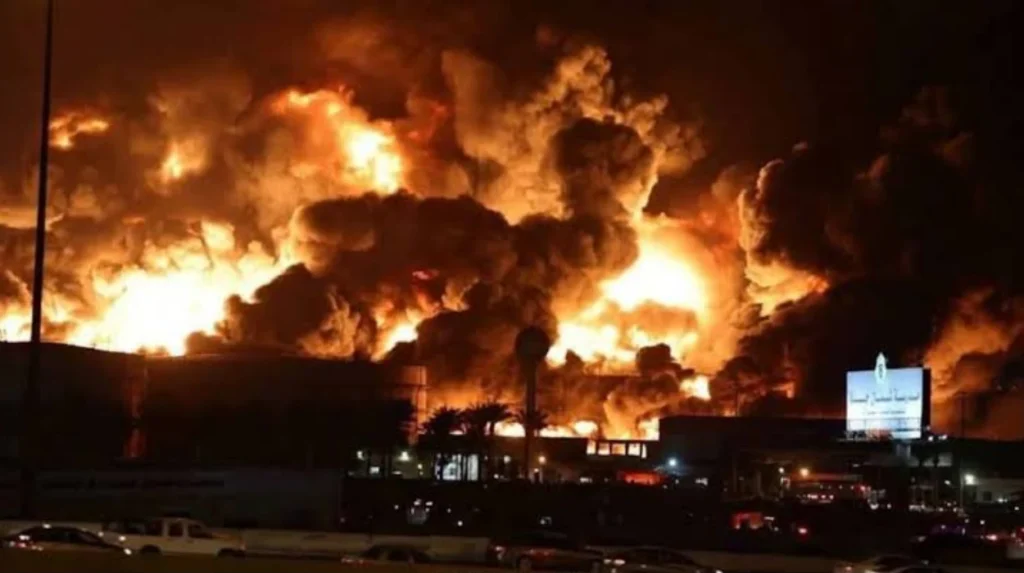
A fire that killed 16 Bangladeshi migrant workers at a sofa factory in Riyadh on 9 August 2026 has become a stark test of Saudi Arabia’s promises on labour protection and workplace safety. As the kingdom prepares to host the 2034 FIFA World Cup, the circumstances of the blaze raise urgent questions about how migrant workers are housed, protected and heard in one of the world’s most migrant‑dependent economies.
What Happened in the Riyadh Factory Fire?
Bangladesh’s foreign ministry has confirmed that 16 Bangladeshi nationals died on Sunday, 9 August 2026, in a fire at a sofa manufacturing factory in the Musa Sanaiya industrial area of Riyadh. The Bangladesh Embassy in Riyadh, citing Saudi local administration and civil defence sources, said the fire broke out at around 14:00 local time at a single‑storey sofa‑making facility under Shifa Police Station.
According to the embassy, eight of the victims died in the fire itself and eight died after inhaling thick black smoke, though Saudi authorities have not yet publicly released a detailed forensic breakdown. Civil defence officials said they recovered all 16 bodies after extinguishing the blaze, and Saudi authorities are reported to be investigating the cause, with an electrical short circuit initially suspected but not yet officially confirmed as the definitive trigger.
Bangladesh’s foreign ministry and the Bangladesh Embassy in Riyadh say they are working with Saudi authorities to identify the bodies, repatriate them at government expense and support the families of the dead. The victims were all Bangladeshi migrant workers employed at the sofa factory, and most appear to have come from rural districts in northern Bangladesh, including Naogaon, Natore and Rajshahi.
Sixteen Migrant Workers Lost Their Lives
Reporting from Naogaon’s Atrai upazila in northern Bangladesh, The Daily Star describes a village “in tears” as families learned that four young men from Gandagohali village were among the 16 dead. Two of them, brothers Mohan Pramanik (28) and Suman Pramanik (26), had been working at the Riyadh factory to finance a new concrete house and future marriages; Mohan had not returned home for seven years. Another victim, Rubel Miah, had an infant daughter born only 15 days before the fire, while 30‑year‑old Kalimuddin was reportedly just a month away from returning home to marry.
Family members told the paper they want above all for the bodies to be brought home so they can bury their sons, brothers and husbands in local graveyards and perform religious rites. Bangladesh’s authorities have promised government‑funded repatriation and a one‑off humanitarian grant, while local district administrations have provided immediate emergency cash assistance to each bereaved family. Yet for families who depended on remittances from these workers, the loss represents not only an irreplaceable human tragedy but also the abrupt collapse of years of precarious investment in migration.
Allegations of Locked Doors and Unsafe Conditions
A survivor of the fire, Habibur Rahman, told The Daily Star that 17 Bangladeshi workers in total were employed at the factory and that all 17 lived inside the single‑storey building. Habibur survived because he had gone to a nearby barber shop around midday; when he returned, he said, police and firefighters were already battling the blaze and he could not re‑enter the factory.
In the same report, a former worker at the factory, Helal Pramanik, alleged that the facility was an “illegal establishment” with no windows. He further claimed that doors were routinely locked from the outside during the day, allegedly to prevent police from entering, leaving workers with no escape route when the fire broke out. These claims have not yet been independently verified by Saudi authorities or other media and must therefore be treated as allegations, not established fact.
Separately, Saudi civil defence officials have stated that the fire occurred at an “unlicensed site being used for furniture upholstery,” suggesting that at least some regulatory requirements were not met at the time of the fire. However, Saudi authorities have not publicly confirmed whether the specific allegations about locked doors and the absence of windows are accurate, nor have they yet detailed any violations or sanctions arising from the incident.
Why Were Workers Living Inside the Factory?
Habibur Rahman told The Daily Star that all 17 workers lived and slept on the factory premises, reportedly working at night and sleeping during the day. This arrangement, while not uncommon for low‑paid migrant workers in the Gulf, blurs the line between workplace and accommodation and can concentrate multiple fire and safety risks into a single confined space.
Bangladesh’s expatriates’ welfare ministry and rights groups have long documented how many migrant workers accept poor or informal housing conditions abroad because they are heavily indebted from recruitment fees and lack bargaining power over their contracts. Human Rights Watch and Amnesty International have reported that migrant workers in Saudi Arabia often face overcrowded accommodation, inadequate ventilation, and limited access to emergency exits or basic fire safety measures, particularly in lower‑wage sectors and smaller establishments.
If confirmed, the combination of workers living inside an unlicensed industrial site and the alleged lack of proper escape routes would point to a serious failure to separate hazardous production areas from sleeping quarters. At a minimum, the incident raises critical questions about how Saudi regulators monitor mixed‑use premises where migrant workers both live and work—and whether such arrangements should be permissible at all in high‑risk industrial zones.
What Saudi Labour and Fire-Safety Rules Require
Saudi labour law requires employers to take “necessary precautions to protect workers against hazards” and to provide and maintain functioning safety exits, along with fire‑prevention and firefighting equipment. Regulations state that safety exits must be kept available and in working condition at all times and that employers should post detailed fire‑prevention instructions in visible locations at the workplace.
For remote workplaces and certain industrial operations, the labour law obliges employers to provide accommodation that meets specified conditions set by the minister of human resources, including minimum standards for housing and facilities. While the Riyadh sofa factory does not appear to fall under remote‑worksite provisions, the principle that employer‑provided accommodation must be safe and regulated applies broadly and is reinforced by Saudi Arabia’s cooperation with the International Labour Organization on decent‑work reforms.
If, as alleged, workers were living inside an unlicensed factory with locked doors and no windows, such conditions would likely conflict with both the spirit and letter of these safety and housing obligations. A thorough investigation would need to assess whether the employer or site operator complied with fire‑exit requirements, maintained functioning emergency equipment, and obtained all required licenses and inspections for combined workplace‑accommodation use.
Who Is Responsible for Worker Safety?
Under Saudi labour law, primary responsibility for workplace safety rests with the employer, who must identify hazards, maintain safe equipment, and ensure workers have safe exits and accommodation where applicable. Property owners and landlords can also bear responsibilities when industrial activities take place on their premises, particularly if buildings are used in ways that diverge from approved licenses or zoning rules.
Regulatory agencies—including municipal authorities, civil defence and labour inspectorates—are tasked with enforcing licensing, building codes and safety standards, particularly for industrial sites. Where premises are unlicensed or used illegally, questions arise not only about the conduct of employers but also about whether inspections were adequate, whether violations were detected and addressed in time, and whether sanctions are sufficiently deterrent.
In this case, Saudi civil defence has publicly described the site as “unlicensed,” but, so far, there is no detailed public record of when the facility began operating, what inspections took place, or whether any prior warnings were issued. Determining responsibility will require clarifying who employed the workers, who owned or leased the building, what authorities knew about the operation, and how enforcement mechanisms functioned—or failed—before 16 lives were lost.
The Wider Migrant-Worker Question in Saudi Arabia
Saudi Arabia depends heavily on migrant labour, with Reuters reporting that around 3.5 million Bangladeshis alone live and work in the kingdom, making it Bangladesh’s largest labour‑migration destination. Overall, more than 10 million migrant workers are estimated to be employed across sectors including construction, domestic work, manufacturing and services, forming a core part of the kingdom’s Vision 2030 development strategy.
Despite recent reforms, international rights organisations and UN experts say migrant workers in Saudi Arabia continue to face widespread abuses, including wage theft, recruitment‑fee debt, passport confiscation and barriers to changing jobs or seeking legal redress. A 2024 Human Rights Watch report on Saudi “giga‑projects” documented patterns of unsafe working conditions, uninvestigated worker deaths and ineffective enforcement of labour protections, arguing that abuses are “predictable and preventable” under the current model.tbinternet.
Saudi authorities have announced progressive reforms to the kafala sponsorship system, including easing job‑change and exit‑visa restrictions and, according to some government‑linked and regional outlets, formally abolishing kafala in favour of a contract‑based model in 2025. However, Amnesty International and other observers caution that sponsorship‑like power imbalances persist in practice, that many lower‑paid workers remain vulnerable to abuse, and that enforcement and access to remedies lag behind legal changes.
Why This Matters Ahead of FIFA 2034
Saudi Arabia is set to host the 2034 FIFA World Cup, a tournament that will require a vast workforce across construction, hospitality, transport, security and services, as well as the wider infrastructure and real‑estate development associated with Vision 2030. The Riyadh sofa‑factory fire is not known to be connected to any FIFA 2034 project, and there is no evidence that the facility was involved in stadium or tournament‑related contracts.
Nonetheless, the deaths highlight systemic questions that are directly relevant to the country’s capacity to protect the larger migrant workforce that will underpin its World Cup preparations. If an unlicensed factory in the capital can house workers on‑site in allegedly unsafe conditions, it raises concerns about how effectively Saudi regulators can monitor and enforce standards across the multitude of contractors, subcontractors and small suppliers likely to be engaged—directly or indirectly—in the tournament‑related economy.
The international scrutiny that accompanies a World Cup will focus not only on flagship stadiums and high‑profile “giga‑projects” but also on the lower‑visibility workplaces where migrant workers manufacture furniture, clean facilities, transport goods and provide ancillary services. The Riyadh fire suggests that without robust, system‑wide enforcement of safety and licensing standards, tragedies can occur far from the spotlight yet remain structurally connected to the same labour‑governance weaknesses.
FIFA’s Human-Rights Responsibilities
FIFA has adopted human‑rights policies committing it to respect internationally recognised human rights across its operations, including in the hosting and staging of major tournaments. These policies, informed by the UN Guiding Principles on Business and Human Rights, require FIFA to conduct human‑rights due diligence on hosts, identify risks to workers and communities, and seek to prevent or mitigate abuses linked to World Cup‑related activities.
Experience from Qatar 2022, where thousands of migrant workers were employed in stadium and infrastructure projects amid persistent reports of abuses, led to increased pressure on FIFA to ensure that future tournaments are not built on exploitative labour practices. For Saudi Arabia 2034, that scrutiny will extend beyond formal tournament venues to the broader labour system, including enforcement of fire safety, housing standards and access to remedies for workers harmed in non‑headline sectors.
The Riyadh sofa‑factory fire underscores why human‑rights due diligence for 2034 must address systemic labour‑governance gaps, not just project‑specific compliance. If FIFA is to uphold its public commitments, it will need to engage with Saudi authorities, international organisations and civil society to ensure that migrant‑worker protections are strengthened in law and practice well before the tournament begins.
What Must Happen Next?
First, a transparent, independent and thorough investigation is needed into the Riyadh factory fire, covering the cause of the blaze, the licensing status of the site, the safety of its design, and the accuracy of allegations about locked doors and windowless rooms. The findings should be made public, and where violations of labour, fire‑safety or building regulations are established, those responsible—employers, operators or negligent officials—should face appropriate sanctions
Second, the identification and repatriation of the victims’ bodies must remain a priority, including the use of fingerprints and, if necessary, DNA testing to overcome the loss of passports and documents reportedly destroyed in the fire. Families in villages like Gandagohali have made clear that dignified repatriation and burial are essential to any sense of justice. Compensation and long‑term support—beyond initial humanitarian grants—will be critical for dependants who lost their primary breadwinners in the fire.
Third, Saudi authorities should strengthen inspections and enforcement in mixed‑use industrial premises, explicitly prohibiting workers from being housed in high‑risk production sites without robust and independently verified fire‑safety measures. Migrant workers need safe channels to report unsafe housing or locked‑door practices without fear of retaliation, deportation or loss of income, an area where international organisations say the kingdom still falls short despite ongoing reforms.
Finally, as Saudi Arabia accelerates its development and prepares for FIFA 2034, both the government and FIFA should treat the Musa Sanaiya tragedy as a warning that effective protection of migrant workers cannot be an afterthought. Whether in licensed mega‑projects or small unlicensed factories, the lives of migrant workers are equally worthy of protection and accountability.
In the end, the central question for Saudi Arabia—and for those awarding it global prestige events—is whether the country’s rapid economic transformation and sporting ambitions can be matched by a labour system that genuinely safeguards the migrant workers whose labour makes that transformation possible.