
FIFA’s ticketing strategy for the 2026 World Cup has become more than a pricing dispute; it has turned into a broader test of whether football’s biggest tournament still serves the public it claims to celebrate. In the United States, the controversy has widened into political scrutiny, consumer complaints, and questions about whether a competition built on global access is being recast as a premium product for the highest-paying buyer.
The central issue is not simply that tickets are expensive. It is that FIFA has paired steep prices with a system that many fans and officials say is opaque, unpredictable, and increasingly detached from the World Cup’s traditional promise of broad accessibility. Reports have described “variable” or dynamic pricing, rising costs across multiple match categories, and concern that some fans were not fully informed about the value of the seats they were purchasing.
FIFA’s Dynamic Pricing Model Under Scrutiny
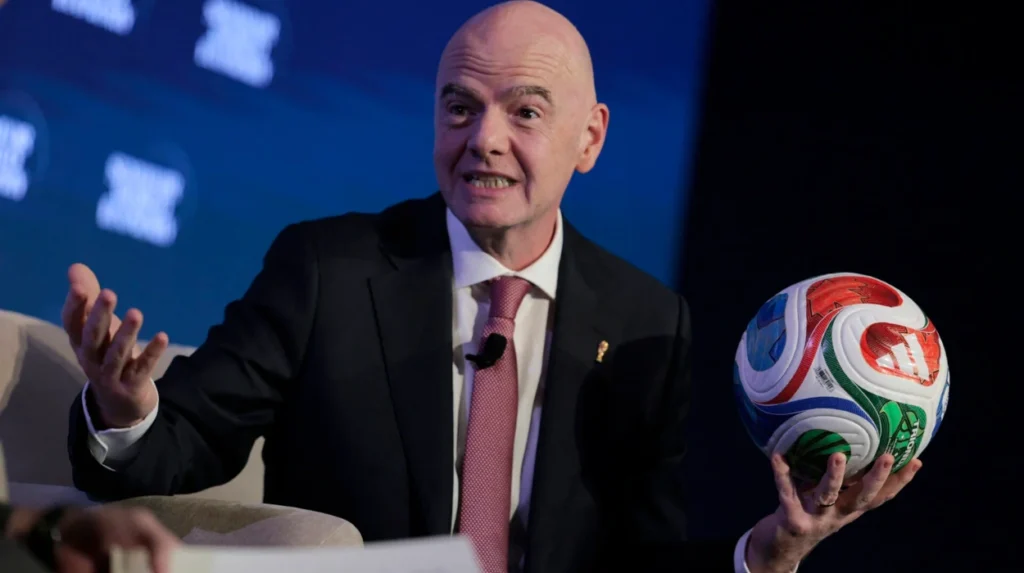
Dynamic pricing is common in American sports and entertainment, and FIFA has defended its approach by arguing that it is aligned with market demand. Gianni Infantino has said World Cup tickets are being priced at U.S. market rates, rejecting the notion that FIFA is doing anything unusual by allowing prices to move with demand.
That defense may be commercially coherent, but it sits uneasily with the World Cup’s symbolic role. The tournament is not a regular league product and not a private concert tour; it is FIFA’s flagship global event, financed in part by the social and political legitimacy that comes from national federations, public infrastructure, and decades of fan allegiance. When a governing body introduces surge-style pricing into that setting, it changes the relationship between the tournament and its audience.
The practical effect has been predictable. Prices for many matches have climbed sharply, and reports indicate that some categories rose by roughly 25 percent over a matter of months, while certain premium final tickets have reached figures that make the event inaccessible to ordinary supporters. FIFA may frame this as revenue optimization, but critics see a model that treats loyal fans less as participants in the sport and more as consumers to be monetized at peak demand.
Political Pressure Mounts in the United States
What makes the 2026 controversy especially consequential is that it is unfolding on American soil, where regulators are far more willing than football authorities to test consumer protection claims. New York and New Jersey officials have opened investigations into FIFA’s ticketing practices and issued subpoenas seeking internal documents on pricing, seat categories, marketing, and distribution methods.
That matters because the dispute is no longer only about public dissatisfaction. It has become a legal and political question about whether FIFA’s sales practices misled consumers. Authorities are examining allegations that fans paid premium prices for seats they understood to have better views than they ultimately received, and that stadium layouts or ticket categories may have been presented in ways that obscured what was actually being sold.
The political symbolism is difficult for FIFA to ignore. The 2026 World Cup was supposed to be a showcase for North American scale, commercial power, and organizational control. Instead, it is generating the sort of regulatory attention that FIFA has often tried to avoid by operating through sporting exceptionalism. When state attorneys general are involved, the issue becomes not just whether the pricing is unpopular, but whether it is legally and ethically defensible.
Fan Accessibility and the Question of Affordability
For fans, the controversy cuts to a basic question: who is the World Cup for? Supporter groups and fan organizations have warned that the pricing structure risks excluding the very people who sustain football culture over the long term. Some reports have cited premium final tickets listed near $9,000, while more comprehensive tournament attendance costs can reach well into the thousands even before travel and accommodation are added.
This is not a marginal concern. The World Cup’s legitimacy has always depended on the idea that it belongs not only to sponsors, broadcasters, and host committees, but also to the traveling supporter, the local fan, and the casual viewer who can still imagine being part of the event. The present pricing model pushes against that tradition. It suggests a tournament calibrated to extract maximum value from scarcity, especially for headline matches, rather than to preserve a meaningful entry point for average families and younger fans.
The result is a widening gap between football’s cultural language and its commercial behavior. FIFA still markets the World Cup as a shared global festival, but the ticketing structure increasingly resembles a premium entertainment funnel. That contradiction is at the heart of the backlash, because fans are not merely complaining about cost; they are reacting to a sense that access itself is being redefined as a luxury.
Transparency Concerns in Ticket Allocation
Pricing is only one layer of the controversy. Transparency in allocation and seating has become equally important because it shapes whether consumers believe the system is fair. Allegations that some buyers were assigned less desirable seats than expected, or that the categorization of seats and pricing tiers was not clearly explained, have amplified the perception that FIFA is benefiting from information asymmetry.
This is where the issue moves beyond ordinary market complaints. In a highly visible global event, transparency is not a technical add-on; it is part of the event’s public contract. If fans cannot easily understand how prices are set, how seating categories are defined, or why one match is repriced dramatically while another is not, then the ticketing process starts to look less like a marketplace and more like a controlled extraction mechanism.
That concern is particularly acute because FIFA has historically defended its autonomy by arguing that football governance should not be interfered with by outside forces. Yet when the organization enters a host market that has strong consumer protection norms, that autonomy becomes harder to defend. The U.S. investigations suggest that the era in which FIFA could treat ticketing as an internal matter, insulated from scrutiny, is fading.
Commercialization of the World Cup Experience
The deeper story here is about the commercialization of global football events. FIFA has spent years expanding the economic scale of the World Cup through sponsorship, broadcast rights, hospitality packages, and demand-based ticketing. From a corporate perspective, this is rational: the tournament’s audience is enormous, the brand is powerful, and the market can absorb high-value inventory.
But the long-term cost of that strategy is harder to quantify. As mega-events become more aggressively monetized, they risk losing the sense of public ownership that once made them unique. The World Cup is not supposed to be merely the most expensive ticket in sports; it is meant to function as a cultural event with broad social meaning. When price becomes the dominant organizing principle, sporting access starts to look secondary to yield management.
That shift also has political consequences. Host nations often justify public investment, security spending, transport improvements, and venue support by pointing to the tournament’s social value. If the event is perceived as serving wealthy visitors, corporate clients, and speculative resale markets more than local or traveling fans, the public case for the World Cup weakens. FIFA may capture more revenue, but it risks deepening skepticism about who actually benefits from the tournament’s expanding commercial model.
Shifting Identity of Global Football Events
The 2026 ticket dispute is part of a larger historical pattern. Over multiple World Cup cycles, FIFA has increasingly embraced the logic of premium entertainment markets, even as it continues to speak the language of inclusion and development. That duality is now more visible than ever. The organization wants the financial upside of dynamic pricing and market segmentation, but it still depends on the emotional credibility that comes from being seen as a guardian of the game rather than merely its monetizer.
The tension is not easy to resolve because modern football economics reward scarcity and demand capture. Yet the World Cup remains a rare event whose value is partly protected by restraint. If too much of the inventory is priced at elite levels, the tournament begins to lose the breadth of participation that makes it politically and culturally distinct from ordinary sports business.
FIFA still has room to argue that its strategy reflects contemporary market realities. What it cannot easily argue is that the backlash is irrational. The criticism is rooted in a real mismatch between the tournament’s public identity and its commercial design. That mismatch is now being examined not only by fans and journalists, but by state authorities in the country that will host the most politically significant edition of the tournament in decades.
Balancing Demand, Profit, and Fair Access in Modern Sport
The 2026 World Cup ticket dispute is ultimately a case study in the trade-offs that define modern sport. FIFA wants to maximize revenue from a singular global product. Fans want fairness, clarity, and at least some assurance that the game’s biggest stage remains reachable beyond the wealthy tier. Regulators want to know whether marketing promises and seat allocations were honest. Those goals are not fully incompatible, but FIFA’s current approach has made them feel that way.
For now, the backlash is doing what public pressure often does in elite sport: forcing an institution to explain decisions it once treated as self-evident. Whether that leads to genuine reform or only careful damage control will become clear as the tournament approaches. What is already clear is that the World Cup’s commercial expansion has reached a point where pricing policy is no longer a side issue. It is now part of the tournament’s core political story.