
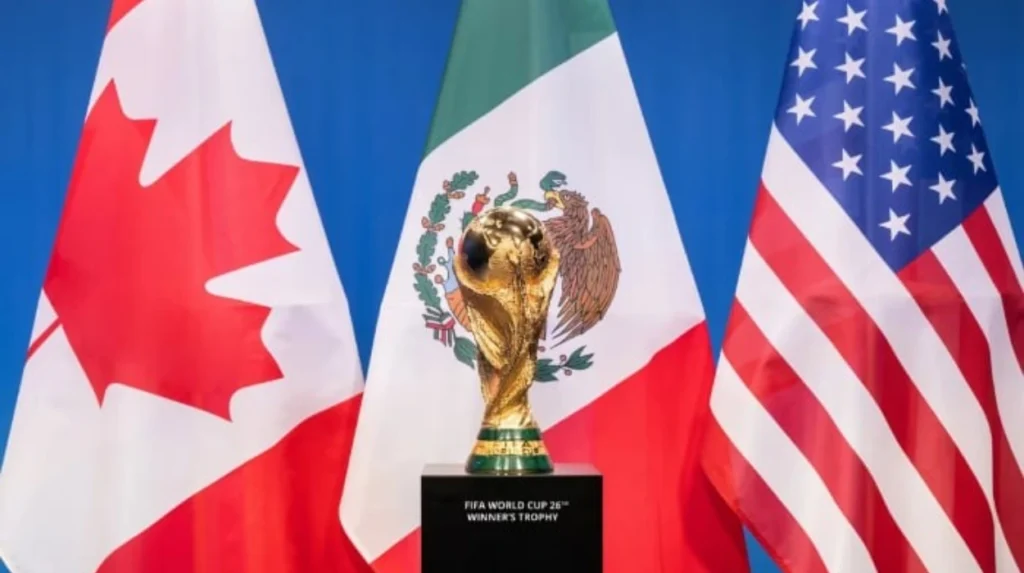
Gianni Infantino’s recent expression of “full confidence” in Mexico’s readiness to host matches during the 2026 FIFA World Cup arrives at a moment of unease rather than reassurance. Reports of violence in parts of Mexico—including incidents affecting public spaces and raising concerns about civilian safety—have sharpened international scrutiny ahead of one of the world’s largest sporting events. Against this backdrop, Infantino’s comments, delivered with certainty, present a striking contrast to the ambiguity on the ground. The tension is clear: does FIFA’s confidence reflect a well-founded assessment of security preparations, or does it function as a strategic narrative aimed at preserving trust in a high-stakes global spectacle? A closer examination suggests that FIFA’s reassurance may reveal less about actual conditions in Mexico and more about the organization’s imperative to safeguard its brand, commercial interests, and the symbolic success of the World Cup.
The Stakes of the Global Spectacle
The FIFA World Cup is not merely a sporting tournament; it is a vast economic and political enterprise. Broadcasting rights alone generate billions of dollars, while sponsorship deals, tourism revenues, and infrastructure investments further elevate the event’s financial magnitude. Host nations commit extensive resources to meet FIFA’s requirements, and corporate stakeholders depend on the seamless execution of the tournament to protect their investments.
Within this context, the cost of uncertainty is high. Any perception of instability—particularly related to security—can ripple through investor confidence, dampen ticket sales, and deter international travel. For FIFA, acknowledging serious risks could undermine the carefully curated image of the World Cup as a unifying global celebration. As a result, there is a structural incentive to project stability, even when the situation on the ground is more complex.
Mega-events often rely on narratives of control and inevitability: the idea that, regardless of local challenges, the spectacle will proceed smoothly. This narrative is not accidental; it is central to maintaining the economic ecosystem that surrounds the tournament. Infantino’s confidence, therefore, must be understood not only as a statement about Mexico, but also as a signal to sponsors, broadcasters, and fans that the event remains secure and viable.
Violence and the Reality on the Ground
Recent incidents of violence in Mexico have drawn attention precisely because they intersect with public life. Attacks in urban areas and locations frequented by civilians contribute to a perception of unpredictability, even if they are not directly linked to the World Cup. For an event that will bring millions of visitors across multiple cities, such unpredictability raises legitimate concerns.
The challenge lies not in sensationalizing these incidents but in understanding their implications. Large-scale events create concentrated crowds, increased mobility, and heightened visibility—conditions that can strain even robust security systems. Mexico’s security landscape, shaped by longstanding issues such as organized crime, presents additional complexities. While authorities have experience managing major events, the scale and international profile of the World Cup amplify the stakes.
This raises a critical question: can short-term security measures effectively mitigate risks rooted in structural issues? Increased policing, surveillance, and coordination may reduce immediate threats, but they do not eliminate the underlying factors that contribute to violence. The gap between temporary control and long-term stability remains a central concern.
Reassurance as Strategy
Infantino’s assertion of “full confidence” functions less as a neutral evaluation and more as a form of institutional messaging. Such language serves a clear purpose: it stabilizes perception. By projecting certainty, FIFA seeks to preempt doubt, reassure stakeholders, and maintain momentum toward 2026.
The beneficiaries of this reassurance are متعدد. Sponsors gain confidence that their investments are protected, broadcasters can proceed without fear of disruption, and fans are encouraged to plan attendance without hesitation. At the same time, the risks of such messaging are significant. Overconfidence can obscure genuine concerns, limiting space for transparent discussion about challenges and preparedness.
Global organizations frequently employ carefully calibrated language to manage narratives. Terms like “confidence” and “reassurance” are not merely descriptive; they are performative, shaping how situations are perceived rather than simply reflecting them. In this case, the danger lies in the possibility that reassurance becomes an end in itself, prioritizing the appearance of control over a candid assessment of risk.
Burden on the Host Nation
Mexico’s role as a host nation places it under intense scrutiny and pressure. The expectation is not only to deliver a successful tournament but to guarantee the safety of millions of visitors, players, and officials. This expectation is amplified by FIFA’s public confidence, which implicitly signals that any shortcomings would rest with the host rather than the organizing body.
Meeting these expectations requires extensive security measures, coordination across multiple jurisdictions, and significant financial investment. Yet the timeline for such preparations is relatively short compared to the depth of the challenges involved. Issues such as organized crime and regional disparities in security cannot be resolved quickly, even with substantial resources.
This dynamic raises questions about fairness and responsibility. While FIFA retains control over the tournament’s branding, scheduling, and commercial framework, the operational burden of security falls largely on the host nation. In projecting confidence, FIFA may inadvertently shift responsibility onto Mexico, reinforcing a model in which risks are localized while benefits are globalized.
The Illusion of Security
The concept of “security theatre” is particularly relevant in the context of mega-events. Visible measures—armed patrols, surveillance systems, checkpoints—can create a powerful sense of safety for visitors. However, this perception does not always align with underlying realities.
Enhanced security presence may deter certain threats, but it cannot fully address the structural drivers of violence. Moreover, such measures are often temporary, scaled up for the duration of the event and reduced afterward. This raises questions about sustainability and long-term impact.
The distinction between perceived safety and actual safety is crucial. For international audiences, the visibility of security may be sufficient to inspire confidence. For local communities, however, the experience may be more nuanced, shaped by ongoing challenges that extend beyond the tournament. The risk is that the World Cup becomes a momentary display of order that does not reflect broader conditions.
A Pattern in FIFA’s Approach
FIFA’s handling of host-related concerns has, in the past, attracted criticism for prioritizing expansion and spectacle over local complexities. While each World Cup presents unique circumstances, a recurring tension emerges between global ambitions and on-the-ground realities.
The organization’s drive to expand the tournament’s reach—geographically and commercially—inevitably brings it into contact with diverse political, social, and security environments. In navigating these contexts, FIFA has often emphasized the unifying power of football while downplaying or sidestepping contentious issues.
This pattern suggests that the current situation may not be an isolated instance but part of a broader institutional approach. Confidence, in this sense, becomes a standard response, a tool for maintaining continuity and protecting the event’s global image. The question is whether this approach adequately accounts for the complexities of each host context.
Ethical Responsibility and Transparency
At its core, the issue is not whether FIFA should support its host nations, but how it does so. Ethical responsibility requires a balance between reassurance and transparency. While it is reasonable to highlight progress and preparedness, it is equally important to acknowledge uncertainties and challenges.
Overstating confidence carries risks. If security concerns are understated, the consequences may fall on fans, players, and local communities. Moreover, such an approach can erode trust in global sporting bodies, particularly if expectations of safety are not fully met.
A more transparent stance would not necessarily undermine the event; it could enhance credibility by demonstrating a commitment to honesty and accountability. Recognizing complexity does not weaken confidence—it grounds it in reality.
Confidence or Calculated Narrative?
Infantino’s confidence in Mexico’s readiness reflects more than optimism; it illustrates the intricate interplay between perception, economics, and global spectacle. While security efforts are undoubtedly underway, the certainty expressed by FIFA appears closely aligned with its need to protect the World Cup’s image and commercial viability.