Saudi Arabia’s abrupt retreat from the 2035 Rugby World Cup bid, driven by Public Investment Fund‑linked funding cutbacks, shines an uncomfortable spotlight on the credibility of its broader mega‑event strategy and on the long‑term reliability of its FIFA World Cup 2034 hosting promise. The decision signals not simply a tactical shift in sports spending, but growing evidence that Saudi Arabia’s international sports ambitions are tightly bound to volatile budget priorities and an opaque state‑funded investment model.
Saudi Arabia’s sudden sports pivot
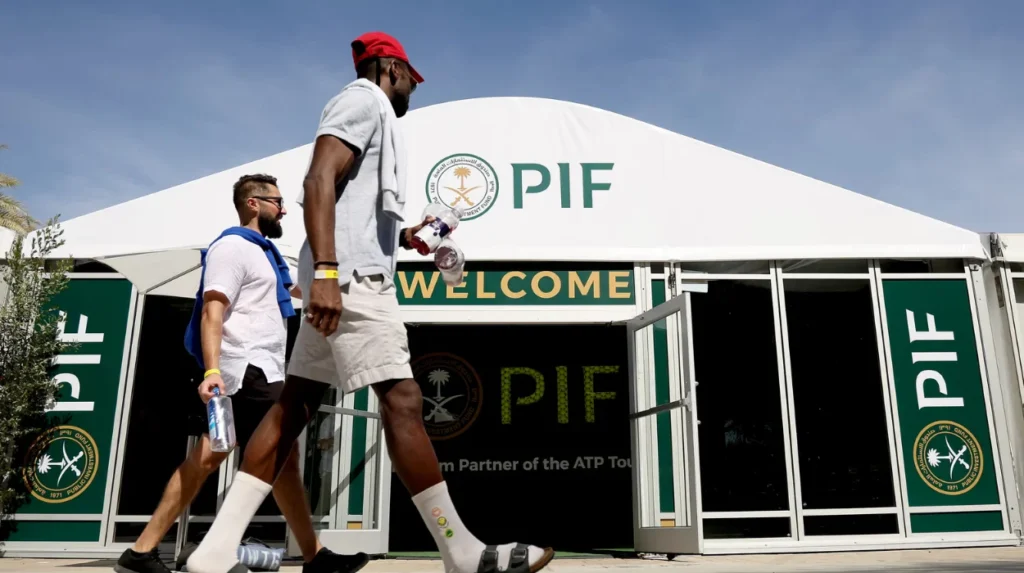
Saudi Arabia has abandoned plans to submit an expression of interest for the 2035 Rugby World Cup, despite earlier public interest signaled by sports minister Abdulaziz bin Turki Al‑Faisal, according to The Guardian’s Matt Hughes. The report frames the move as a direct consequence of a new financial strategy at the Public Investment Fund, which is now prioritising “value realization” and domestic‑focused projects over a global rugby bid. This is not an isolated tweak; it sits alongside broader PIF‑driven cutbacks in other sports properties, including LIV Golf, underscoring that Saudi Arabia’s sports spending is now under sharper financial discipline.
That context matters because rugby is not a minor side project. The World Cup requires stadium upgrades, logistics planning, marketing, and international coordination, all of which contribute to global trust in a host’s event‑management capability. When a state quietly withdraws from such a bid without a detailed public explanation, it raises an immediate question: if a lesser‑profile global event can be dropped so quickly, what happens when the costs and scrutiny of FIFA 2034 grow or the political price rises?
Weakness in plan and policy continuity
Saudi Arabia’s handling of the rugby bid exposes a pattern of shifting priorities rather than a coherent, long‑term sports‑governance strategy. The Guardian’s reporting links the decision to the PIF board’s 2026–2030 strategy, which stresses capital efficiency, value creation, and tighter control over state‑linked investments. In effect, mega‑events are treated as portfolio items that can be reallocated or shelved as the kingdom’s development and image‑management calculus changes.
This undermines core expectations of global sports governance. FIFA’s 2034 hosting requirements demand government declarations and guarantees on visas, labour law, work permits and legal frameworks, implying that host nations must lock in stable policy settings for a decade. Saudi Arabia’s ability to pivot away from rugby so easily suggests that its sports commitments are contingent on internal PIF decisions, not entrenched in durable public policy, which weakens confidence in its capacity to deliver a decade‑long World Cup programme without further strategic reversals.
Long‑term commitment and delivery risks
The scale gap between the Rugby World Cup and the FIFA World Cup is vast, but the underlying risk is the same: can Saudi Arabia sustain a decade of consistent investment, infrastructure delivery, and institutional effort? FIFA’s own overview document for the 2034 tournament stresses the need for host governments to guarantee long‑term legal, financial and operational frameworks, including regulatory certainty and stable labour‑law conditions. The Rugby 2035 withdrawal, occurring soon after the 2034 award, suggests that Riyadh may be more willing than previously assumed to reshape its sports portfolio in response to fiscal pressure or political calculation.
This creates several concrete risks. First, infrastructure plans may be delayed if funds are redirected internally, especially if the PIF increasingly treats sports venues as assets to be monetised rather than foundations for public‑goods events. Second, contractors, organisers and international federations may face uncertainty about whether the state‑backed commitments on which they rely will remain intact over the full 10‑year cycle. Third, sudden changes in priority can erode the credibility of Saudi Arabia’s own project management narrative, which has long leaned on the idea of a single, unified national sports‑and‑tourism agenda.
Lack of transparency in funding choices
The opaque nature of how Saudi Arabia allocates, then reallocates, sports funding is one of its most serious governance weaknesses. The Guardian’s coverage describes the rugby retreat as tied to PIF’s move toward a “value realization” phase, but offers little detail on how the money shifted or what specific criteria were used to deprioritise rugby over other projects. Arab News notes that the new 2026–2030 strategy emphasises efficiency and institutional excellence, yet provides no public scoreboard showing how sports‑related slush‑fund allocations are audited or monitored.
For mega‑events, transparency is not cosmetic; it is a safeguard. When public money is funneled through a sovereign‑wealth‑style vehicle whose decisions are not open to parliamentary or independent scrutiny, host states open themselves to charges of discretionary spending and political favouritism. That dynamic undermines FIFA’s own interest in accountability, as the governing body relies on the assumption that host governments can show steady, defensible investment in stadiums, transport, and labour standards. Without clearer, sustained transparency, Saudi Arabia’s 2034 planning will remain vulnerable to claims that the World Cup is being financed by a revolving, politically‑sensitive pot rather than a stable public‑policy framework.
Human rights and institutional safeguards
Saudi Arabia’s record on labour rights, press freedom, and broader human rights protections is another key weakness that gains sharper focus when long‑term commitment is questioned. Human Rights Watch and Amnesty International have repeatedly stressed that FIFA’s 2030 and 2034 bids should be accompanied by binding, enforceable human rights safeguards, including guarantees for journalists, human rights defenders and migrant workers. FIFA’s own hosting documents say host governments must provide formal declarations and guarantees on labour law and work permits, but critics argue that these remain largely aspirational without independent oversight.
The agility with which Saudi Arabia can rescale its sports portfolio further feeds concern that labour‑rights and media‑freedom assurances could also be treated as flexible. If the state can withdraw from one global event because of budget constraints or political risk, rights groups ask why it would not also adjust its behaviour toward workers, reporters, or civil society once the tournament phase begins and reputational pressure mounts. This is not hypothetical; rights organisations have warned that the 2034 bid process lacked sufficient scrutiny of Saudi Arabia’s rights record and that the approval of the World Cup in the first place risked legitimising a system with documented abuses.
Stakeholder trust and global image concerns
The Saudi pivot also damages the confidence of international stakeholders who must rely on the stability of host‑nation commitments. Fans, sponsors, broadcasters and national federations all need to believe that the host state will stand by its legal and financial commitments for more than a decade, despite economic cycles, leadership changes, or political controversies. When a country can quickly set aside a major global bid, those stakeholders are left guessing whether the same flexibility might apply to visa policies, labour standards, or media access during the World Cup period.
Civil society and human rights groups are likely to read the rugby episode as confirmation of a broader pattern: Saudi Arabia uses sport as a strategic reputational tool, not as a neutral platform for competition or civic engagement. Reuters and other outlets have described the 2034 World Cup award as part of a wider global image campaign, with critics warning that sportswashing risks being amplified if the host state demonstrates that its commitments are reversible. For these organisations, the core concern is not only what Saudi Arabia builds for the tournament, but whether it will allow meaningful scrutiny and accountability before, during, and after the event.
Saudi Arabia’s selective sports strategy
There is, of course, a Saudi‑centric narrative: that this is a more rational, disciplined approach to state‑linked sports spending. From Riyadh’s viewpoint, concentrating on FIFA 2034, domestic football infrastructure and select international events such as Formula One in Riyadh may be framed as prioritising high‑impact, high‑visibility projects that align with broader economic and image‑management goals. PIF public messaging emphasises efficiency, value creation and private‑sector partnerships, which fits the idea of treating sports as a lever for investment and branding, rather than as a series of open‑ended commitments.
Even if that framing is internally coherent, it does not erase the weaknesses exposed by the rugby retreat. By treating sports portfolios as items that can be reallocated on the basis of internal financial criteria, Saudi Arabia undercuts the perception that its FIFA 2034 hosting promise is anchored in durable public policy. For FIFA, the central governance question is no longer whether the kingdom can afford the World Cup, but whether it can credibly commit to it for the full decade‑long preparation and delivery cycle, without further high‑profile shifts that erode trust and trigger renewed scrutiny.