
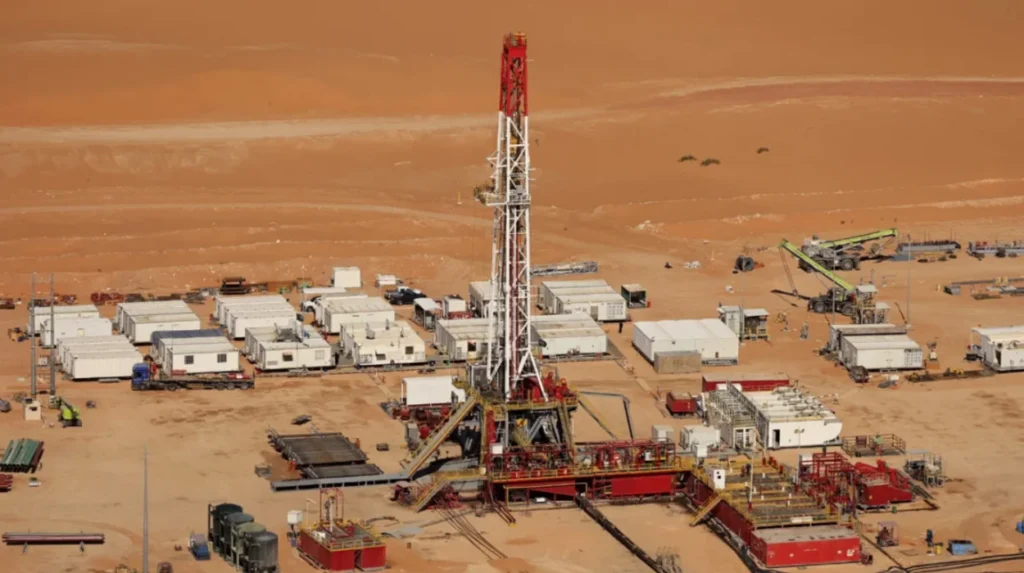
Recent attacks on Saudi Arabia’s vital oil infrastructure, reported by Middle East Eye and Reuters, have reignited global concerns over the Kingdom’s ability to uphold FIFA’s rigorous security, operational reliability, and risk-management standards ahead of the 2034 World Cup.
Mounting Infrastructure Strain Amid Global Scrutiny
Saudi Arabia, the confirmed host of the FIFA World Cup 2034, faces renewed scrutiny after coordinated strikes severely disrupted a major oil pipeline network and temporarily wiped out nearly 10 per cent of the country’s export capacity. According to Middle East Eye, citing industry sources and Reuters analysis, the attacks targeted critical upstream facilities that underpin the Kingdom’s economic backbone. The resulting shutdown prompted urgent responses from Saudi Aramco and government security agencies, revealing vulnerabilities in both physical and cyber-protective infrastructure.
In global sports governance circles, particularly those monitoring compliance with FIFA’s Host Nation Infrastructure and Security Guidelines, such incidents carry heightened significance. Nations entrusted with mega sporting events must demonstrate sustainable resilience against geopolitical shocks, terrorism, and industrial sabotage. For Saudi Arabia, already contending with regional instability across the Gulf, these attacks raise vital questions about continuity of services, public safety, and international confidence.
Energy Infrastructure as Pillar of Tournament Readiness
FIFA’s hosting standards extend beyond stadium construction and urban planning. They require secure supply chains for transport, logistics, and utilities—particularly energy. A robust energy network powers stadiums, airports, broadcasting facilities, cooling systems, and fan zones. Saudi Arabia’s oil infrastructure thus sits at the core of its national logistics safety net.
Middle East Eye reports that the recent assaults disabled pipeline routes feeding domestic fuel distribution and export terminals near Jeddah and Ras Tanura, forcing emergency rerouting and production slowdowns at several refineries. While Aramco later restored a portion of capacity, analysts cited by Upstream Online noted that the disruption exposed the fragility of contingency systems in remote desert areas where large-scale event infrastructure is planned.
Such weaknesses ripple into broader tournament planning. A compromised energy network risks hampering:
- Transport reliability, especially given Saudi Arabia’s heavy dependence on fuel-based logistics for inter-city connections.
- Cooling and stadium operations, with desert temperatures requiring uninterrupted power supply.
- Emergency response systems, which depend on stable communication and electricity networks.
- Spectator safety, as large-scale evacuations or outages could quickly escalate into public disorder scenarios.
These factors collectively challenge the standards articulated in FIFA’s “Risk Management Framework for Major Events,” which prioritises redundancy in power, water, and transport systems as essential prerequisites for host cities.
Repeated Attacks Undermine Perception of Operational Continuity
The latest incidents are not isolated. Since 2019, Saudi Arabia has faced a pattern of strikes against critical energy assets, often attributed to regional proxy groups linked to Yemen’s Houthi movement. Reuters documented previous assaults on Abqaiq and Khurais production facilities, temporarily cutting global oil supply by five per cent. Each recurrence amplifies international awareness of the latent exposure embedded in Saudi Arabia’s infrastructure network.
For mega sporting event organisers, this volatility represents a tangible operational risk. FIFA, corporate sponsors, and broadcasters seek uninterrupted tournament delivery under globally broadcast conditions. Any signal suggesting potential supply or safety interruptions can trigger expensive revisions to insurance and security protocols. In global governance terms, repetitive strikes challenge Saudi Arabia’s ability to demonstrate “continuity assurance”—a criterion embedded in FIFA’s selection metrics for host nations.
Moreover, insurance partners and sports investors evaluate host stability through indices measuring political risk and industrial resilience. Saudi Arabia’s mounting exposure could prompt recalibration of security premiums and sponsor diversification, particularly among energy-intensive event operations such as broadcast centres or transportation providers.
Fan Safety and Logistics Management Under Strain
The FIFA World Cup demands robust risk management for millions of attending fans. Should Saudi Arabia experience further attacks on its pipeline network or export terminals during pre-tournament or event periods, knock-on effects could include disrupted fuel supply for aviation, transport fleets, and emergency services.
Bloomberg analysts following energy logistics warn that even temporary disruptions can scale rapidly during peak travel periods. In a nation where public transport infrastructure remains in developmental stages and air connectivity serves as the primary mobility channel, such instability could severely compromise crowd logistics and fan experience. The attacks thus introduce new variables in assessing Saudi Arabia’s capacity to guarantee:
- Safe transit corridors for visitors across regions such as Riyadh, Jeddah, and Dammam.
- Functional hospitality operations, reliant on consistent energy availability.
- Crisis response coordination, particularly in remote event zones projected for stadium construction.
These risks intersect directly with FIFA’s “Safety and Security Tournament Operational Requirements,” which stipulate that host nations must demonstrate tested resilience under emergency scenarios—including natural disasters, civil unrest, and infrastructure attacks.
Transparency and Governance Expectations
FIFA’s infrastructure standards also embed transparency in contracting, reporting, and risk disclosure. Saudi Arabia’s strategic communication following the attacks drew mixed reviews from global observers. Middle East Eye notes that official statements initially downplayed export losses and did not specify which pipelines were hit, while external analysts estimated far higher economic impact.
Such opacity conflicts with evolving governance norms. International sports bodies increasingly align with the ISO 31000 risk management framework, which promotes open disclosure practices for threat assessment and contingency planning. For stakeholders—ranging from FIFA inspectors to human-rights observers—lack of timely, detailed communication undermines trust in institutional readiness.
Furthermore, inadequate transparency can interrupt coordination between private security contractors, emergency responders, and international advisory missions deployed for large events. If Saudi authorities withhold essential infrastructure data during crisis assessments, FIFA’s monitoring offices may face barriers in validating safety protocols ahead of 2034.
Broader Geopolitical Implications for Mega Event Hosting
Saudi Arabia’s geopolitical landscape adds complexity to this debate. Positioned at the heart of the Middle East’s energy matrix, the country remains surrounded by rival power blocs with varying military capabilities. Ongoing tensions with Iran and sporadic conflicts near the Red Sea and Gulf of Aden magnify exposure risks for high-profile events. Reuters military correspondents outline how drone and missile technologies used in recent attacks demonstrate escalated cross-border reach, complicating airspace monitoring and perimeter defence designs.
For global tournaments, FIFA requires host nations to secure multilateral coordination ensuring stable external environments for players and fans. Prolonged regional hostilities could necessitate extraordinary measures such as expanded air defence systems, increased contingency spending, and reinforced supply diversification—all potentially inflating tournament budgets far beyond projections.
Comparable precedents offer perspective. Nations like South Africa (2010) and Brazil (2014) faced scrutiny over security and transport systems but did not confront sustained external attacks on strategic infrastructure. In contrast, Saudi Arabia’s recurrence of high-impact energy disruptions introduces unprecedented risk modelling concerns into the World Cup preparatory framework.
Reactions of International Stakeholders
Sponsors and broadcasting partners have begun evaluating these concerns through risk diversification and scenario planning. According to sport-finance analysts at Financial Times, major corporate partners consider insurance clauses for geopolitical instability and infrastructure sabotage events. Broadcasters, especially those with 24-hour operations such as BeIN Sports and Sky Sport, require guaranteed uptime for digital transmission—an assurance directly dependent on nationwide energy reliability.
Football associations across Europe and Asia are said to be monitoring developments closely. FIFA’s internal Host Evaluation Report for 2034, though not yet public, will likely integrate updated geopolitical stability indicators in response to the attacks. The International Centre for Sport Security (ICSS) has similarly highlighted the importance of “holistic infrastructure integrity” as a prerequisite for the safety of fans, players, and staff.
The Road Ahead for Saudi Arabia’s Preparedness
Saudi Arabia must now grapple with dual imperatives: defending its industrial assets and restoring international confidence in its event-readiness posture. Officials have pledged intensified security cooperation through the Ministry of Defence and Saudi Aramco’s Crisis Management Division. However, sustained assurance requires demonstrable progress in four areas:
- Energy security and redundancy, ensuring backup systems and diversified sources for stadiums and transport networks.
- Transparent communication, aligning with global risk governance frameworks.
- Integrated logistics planning, connecting energy, transportation, and hospitality under unified emergency protocols.
- International collaboration, leveraging FIFA’s infrastructure monitoring mechanisms and inviting neutral audit participation by ICSS and related institutions.
Only through such multi-layered reinforcement can Saudi Arabia substantively align its infrastructural reliability with FIFA’s standards.
The recent pipeline attacks underscore a crucial intersection between geopolitical instability and sports infrastructure governance. They reveal how disruptions in the national energy grid can spill into global event preparation, raising pressing questions about host viability and stakeholder trust.
If Saudi Arabia aims to deliver the FIFA World Cup 2034 within internationally accepted safety and continuity benchmarks, bolstering the integrity of its critical infrastructure is not optional—it is foundational. The world will now watch to see whether Riyadh can translate rapid recovery capacity into long-term resilience, transparency, and operational certainty befitting one of sport’s grandest stages.