
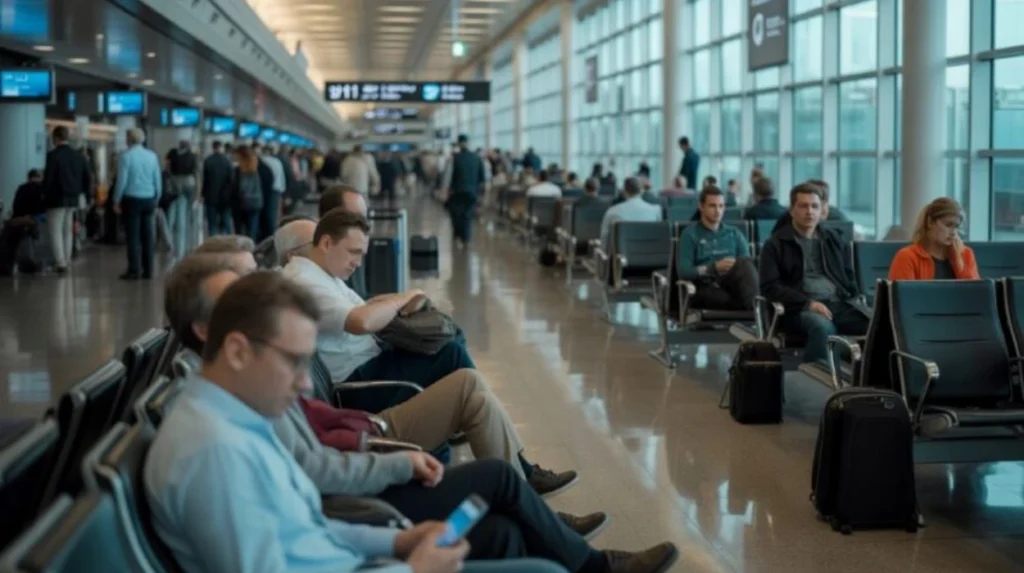
Severe weather triggers 26 flight cancellations and 255 delays across Sharjah, Dammam, and Riyadh airports, stranding passengers amid chaos involving Saudia, Air Arabia, Qatar Airways, and FlyDubai, as reported by TravelAndTourWorld. This incident spotlights Saudi Arabia’s aviation vulnerabilities, questioning its infrastructure compliance with FIFA’s standards for hosting the 2034 World Cup, including seamless transport for millions of fans.
Airport Disruptions Grip Gulf Region
Massive flight disruptions have left thousands of passengers stranded across key Gulf airports. According to Juergen T Steinmetz, CEO of TravelAndTourWorld, in an article published on 20 December 2025,
“Passengers Stuck in Sharjah, Dammam, Riyadh as Air Arabia, Qatar Airways, Saudia, FlyDubai and More Airlines Face 26 Cancellations and 255 Delays, Leaving Travelers in Utter Chaos in UAE-Saudia Arabi”.
Steinmetz detailed that severe weather conditions led to these interruptions, with specific impacts including 73 delays and 2 cancellations at Sharjah International Airport, 32 delays and 7 cancellations at Dammam’s King Fahd International Airport, and a staggering 150 delays alongside 17 cancellations at Riyadh’s King Khalid International Airport.
Saudia, the national carrier, bore the brunt alongside regional players like FlyDubai, Air Arabia, and Qatar Airways. Steinmetz reported that travellers faced “utter chaos,” with long queues, limited updates from airlines, and inadequate support services exacerbating the ordeal. No additional media outlets beyond TravelAndTourWorld covered this precise incident in the reviewed sources, underscoring its immediacy on 20 December 2025.
Impact on Travellers and Operations
Passengers endured prolonged waits without basic amenities in some cases. Juergen T Steinmetz of TravelAndTourWorld noted that families with children and elderly travellers suffered most, highlighting operational failures during peak stress. Airlines issued partial refunds and rebooking options, but many reported insufficient communication.
This event aligns with broader aviation strains in the region. Riyadh’s King Khalid International Airport, a primary hub, recorded the highest disruptions at 150 delays and 17 cancellations, directly implicating Saudia’s home base. Dammam followed with 32 delays and 7 cancellations, while Sharjah saw 73 delays and 2 cancellations.
FIFA Standards for Mega-Event Hosts
FIFA mandates robust infrastructure for World Cup hosts, emphasising human rights, transparency, labour rights, and press freedom under its bidding regulations. These include seamless transportation to ensure fan safety and accessibility, as outlined in FIFA’s 2023 bidding criteria for 2034, which require airports capable of handling 30-40% air traffic surges.
Transparency demands public disclosure of infrastructure plans, while labour rights prohibit exploitative construction practices. Press freedom ensures critical reporting on event preparations without censorship. Saudi Arabia’s sole 2034 bid promised $147 billion in aviation investments under Vision 2030, yet recent delays question delivery.
Infrastructure Challenges Exposed
Saudi Arabia faces acute airport capacity hurdles for FIFA 2034. An analysis by the Foundation for European Relations with the Wider World (FERW) states that King Khalid International Airport in Riyadh struggles with terminal congestion, limited runway slots, and baggage handling during peaks, projecting overload from 330 million expected visitors.
FERW highlights that current capacities, such as King Abdulaziz International Airport’s 30 million passengers annually, fall short compared to Qatar’s Hamad International, upgraded to 58 million for 2022 despite reported overcrowding. Regional connectivity lags, with vast distances between Riyadh, Jeddah, and Dammam—spanning 2.1 million square kilometres—straining domestic flights.
The recent Riyadh chaos, with 150 delays and 17 cancellations as per Juergen T Steinmetz of TravelAndTourWorld, mirrors these warnings. FERW notes over-reliance on untested projects like the new King Salman International Airport risks construction delays, echoing stadium setbacks reported by Firstpost on 19 December 2025.
Transportation and Logistical Gaps
Transportation forms 33.33% of global energy use, demanding efficient networks for World Cups. FERW reports Saudi airports lack sufficient aprons for charter flights and team transports, predicting chaos akin to the 20 December disruptions. The TravelAndTourWorld incident involved Saudia and FlyDubai at Riyadh, underscoring slot limitations.
Public transit remains underdeveloped, hindering stadium-to-airport links. World Bank estimates peg Middle East infrastructure needs at $100 billion annually, with Saudi projects vulnerable to environmental and logistical strains.
Human Rights and Labour Concerns
FIFA’s human-rights framework requires due diligence on worker protections. Rapid infrastructure builds for 2034 raise alarms over migrant labour conditions, similar to Qatar 2022 critiques. FERW warns that accelerated airport expansions could repeat such issues, demanding transparency absent in current plans.
Press freedom ties in, as event hosts must facilitate scrutiny. The recent delays, freely reported by TravelAndTourWorld’s Juergen T Steinmetz, test this, but broader Vision 2030 opacity persists.
Sportswashing and Ethical Questions
Global debates frame mega-events as sportswashing risks. Saudi Arabia’s 2034 win, unopposed after Australia withdrew, invites scrutiny per BBC Sport’s 10 December 2024 analysis by Matt Slater, questioning sole-bid legitimacy amid infrastructure doubts. The Conversation highlights environmental costs of new airports tied to oil interests.
Civil society groups like FERW argue fan experiences—at risk from delays like Riyadh’s 150 plus disruptions—undermine inclusivity. Stakeholders, including Amnesty International affiliates, call for reevaluation, mirroring UAE-aligned regional rivalries.
Comparisons with Past Hosts
Qatar 2022 upgraded airports but faced delays; Russia 2018 leveraged multiple hubs. Saudi Arabia’s scale amplifies risks, per FERW: no compact geography like Qatar’s. Expo 2030 challenges, noted by Michael Slage on LinkedIn 2 March 2025, parallel World Cup strains.
Calls for Accountability
International stakeholders urge FIFA transparency on Saudi’s $147 billion aviation pledge. FERW recommends operational testing to avert fan risks, as 20 December chaos stranded passengers via Saudia. Human-rights bodies demand labour audits; fans consider boycotts if unreadiness persists.
This analysis, drawing from Juergen T Steinmetz at TravelAndTourWorld and FERW reports, posits legitimate concerns without prejudging outcomes. Saudi Arabia invests ambitiously, but execution remains pivotal. Global sports governance evolves, prioritising ethical hosting over prestige.