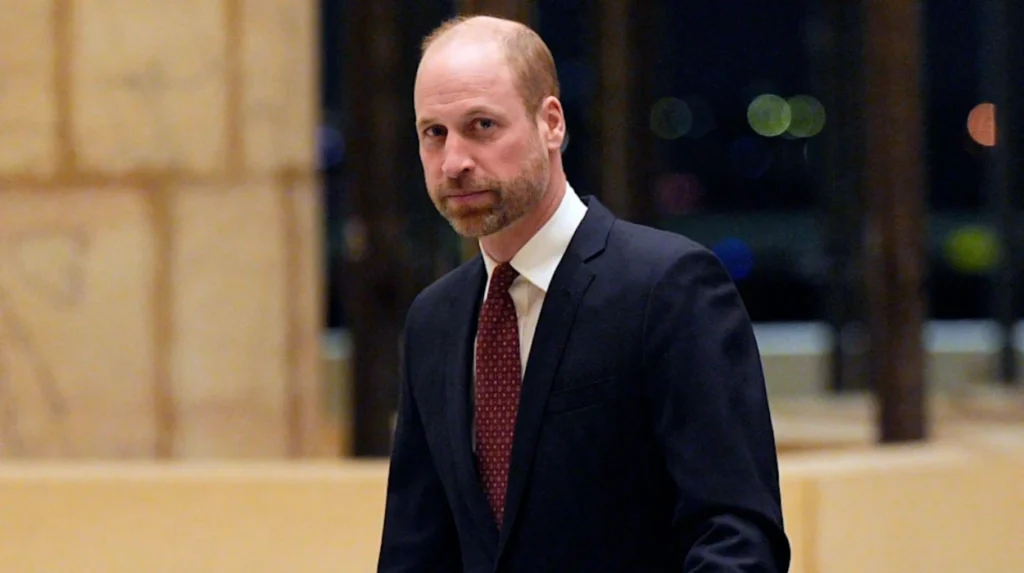
Prince William’s high‑profile visit to Saudi Arabia and meeting with Crown Prince Mohammed bin Salman has sharpened scrutiny of Riyadh’s image‑management strategy ahead of hosting the 2034 FIFA World Cup, especially over human rights, press freedom and accountability. The trip, framed as economic and diplomatic engagement, sits uneasily alongside unresolved abuses, tight media controls and FIFA’s own human‑rights and transparency requirements for World Cup hosts.
The visit underscores how Saudi Arabia’s state‑driven cultural and sporting boom, backed by royal and public funds, is being used to project a modern image while systemic constraints on free expression, labour rights and independent scrutiny remain deeply at odds with international expectations for mega‑event hosts such as the 2034 World Cup.
Prince William’s visit and its political context
According to NBC News correspondent Alexander Smith, Prince William travelled to Saudi Arabia to meet Crown Prince Mohammed bin Salman at what was described as a “crucial time” for the United Kingdom’s relationship with the kingdom, combining economic, diplomatic and symbolic objectives. NBC News reports that the trip formed part of efforts to deepen ties with a key energy and investment partner, even as the monarchy remains under pressure over the legacy of Andrew Mountbatten‑Windsor’s association with Jeffrey Epstein. The article notes that Mohammed bin Salman has worked since the 2018 murder of Washington Post columnist Jamal Khashoggi to rehabilitate his international standing, a project in which high‑profile cultural and sporting engagements play a central role.
The Saudi Press Agency’s coverage of the visit, cited in complementary reporting, emphasised images of Prince William touring heritage and cultural sites, consistent with Riyadh’s effort to showcase a curated narrative of reform, heritage and youth engagement. This visual framing dovetails with the kingdom’s broader Vision 2030 strategy, in which culture, entertainment and sport are positioned as pillars of diversification and soft power. In that context, the presence of a future British king at Saudi cultural and sports‑related venues sends a powerful signal of endorsement that will be closely read by international audiences ahead of the 2034 World Cup.
Epstein shadow and unanswered questions
NBC News underlines that William’s trip was overshadowed by the latest revelations about Andrew Mountbatten‑Windsor’s links to Jeffrey Epstein, including police assessments of allegations that he may have shared sensitive reports while serving as a UK trade envoy. Before the visit, Kensington Palace issued a rare statement, cited by NBC News and the London Evening Standard, saying the Prince and Princess of Wales were
“deeply concerned by the continued revelations”
and that their
“thoughts remain focused on the victims.”
However, NBC News describes how, during a football‑related engagement in Riyadh, a reporter twice asked Prince William about the royal family’s handling of the Andrew–Epstein scandal from the sidelines of a soccer field, but he did not respond and it was not clear if he heard the questions. The Evening Standard similarly reports that William ignored questions from broadcast media after watching Saudi schoolgirls playing football, highlighting how the issue followed him onto the pitch. For observers concerned with global sports governance, this scene of unanswered questions at a football ground in Saudi Arabia symbolises a wider pattern in which difficult topics—from sexual abuse to state repression—struggle to find space in tightly managed public narratives around sport and diplomacy.
Khashoggi, repression and FIFA’s human‑rights policy
NBC News recalls that Mohammed bin Salman became a “figure of international disgrace” after the “horrific” assassination of Jamal Khashoggi in the Saudi consulate in Istanbul in 2018, with United States intelligence agencies concluding that he approved the operation, a finding he denies even as he later accepted “full responsibility” as ruler. Human Rights Watch, in its analysis of FIFA’s choices of World Cup hosts, stresses that Khashoggi’s murder, combined with systematic repression of critics, women’s rights activists and journalists, underlines the severity of Saudi Arabia’s press‑freedom and human‑rights deficit.
Human Rights Watch’s briefing on FIFA’s statutory human‑rights requirements notes that the governing body has committed itself to an ongoing due‑diligence process, including engagement with authorities and stakeholders, to identify and address adverse human‑rights impacts linked to its tournaments. In a separate critique, Human Rights Watch argues that FIFA has already “broken its own human rights rules” in the way it handled the allocation of upcoming tournaments, effectively eliminating open bidding and rights‑based assessments for the 2030 and 2034 men’s World Cups. This context means that high‑level visits like that of Prince William do not take place in a vacuum; they interact with FIFA’s obligation to insist on protections for journalists, dissidents and workers in host states.
Saudi Arabia confirmed as 2034 World Cup host
As The Guardian’s Paul MacInnes reported in December 2024, Saudi Arabia has been confirmed as the host of the 2034 men’s World Cup after emerging as the sole bidder and receiving formal approval at a FIFA congress. The Guardian article records widespread concern from human‑rights groups about arbitrary arrests, mistreatment and deaths of migrant workers, repression of women’s rights and criminalisation or social persecution of LGBTQ+ people, all of which they see as incompatible with a rights‑respecting tournament.
The Guardian quotes Amnesty International’s Steve Cockburn, head of labour rights and sport, warning that FIFA’s decision
“without ensuring sufficient human rights protections will jeopardise many lives,”
and stating that there is clear evidence workers
“will be exploited and may even die”
without substantial reforms in Saudi Arabia. The report also references calls from campaigners linked to Jamal Khashoggi’s case who demand that FIFA press Saudi authorities to free political prisoners, halt torture, protect women’s rights, allow free speech and assembly, and safeguard workers’ rights as minimum conditions. Against this backdrop, the imagery of royal visits, cultural showcases and football clinics risks amplifying a narrative of normalisation without addressing underlying structural problems.
Labour rights, migrant workers and mega‑event risks
Human Rights Watch and Amnesty International both highlight that Saudi Arabia hosts an estimated 13.4 million migrant workers, many of whom face inadequate labour protections, extreme heat, restrictions on organising and the absence of independent unions. Human Rights Watch warns that, without independent monitors and genuine press freedom, there is
“every reason to fear for the lives”
of those who will build and service stadiums, transport, hotels and other infrastructure for the 2034 tournament. Amnesty International’s joint statement on the 2034 decision, signed by Saudi diaspora groups, migrant‑worker organisations, unions and fan representatives, describes FIFA’s move as a
“moment of great danger”
for human rights and urges binding guarantees before construction and preparation accelerate.
These concerns mirror earlier warnings about the 2022 World Cup in Qatar, where thousands of migrant workers are believed to have died or suffered abuse amid weak oversight. Rights groups argue that FIFA has failed to learn lessons from those experiences, noting that inadequately enforced labour standards can lead directly to preventable deaths, wage theft and long‑term exploitation. When a senior royal such as Prince William attends events highlighting young girls’ football in Riyadh without publicly referencing these issues, critics fear that powerful cultural imagery is being used to soften the perception of a system that still puts workers and vulnerable communities at risk.
Press freedom, civil society and controlled narratives
Human Rights Watch’s assessment of Saudi Arabia emphasises that independent human‑rights monitors, journalists and peaceful critics face imprisonment, house arrest and severe restrictions on their ability to work, which they say amounts to a near‑total absence of press freedom. For a World Cup host, such an environment sits uneasily with expectations that domestic and foreign journalists must be able to report freely on all aspects of the tournament, including protests, policing, labour conditions and social impacts.
Amnesty International and partners insist that host countries should guarantee unimpeded access for media and civil society, as well as safeguards against retaliation, yet there is little evidence so far that Saudi Arabia is ready to broaden space for critical voices. In this context, NBC News’ description of William’s silence when asked about the Andrew–Epstein scandal at a Saudi football ground acquires added significance, because it illustrates how politically sensitive questions can be deflected or go unanswered in carefully managed settings. For international stakeholders, this raises questions about whether journalists, activists or fans will realistically be able to raise concerns in 2034 without fear of censorship or reprisal.
Sportswashing concerns and image management
Amnesty International’s statement on the 2034 World Cup decision, echoed in coverage by The Guardian, frames FIFA’s choice as part of a broader pattern in which states with troubling human‑rights records use mega‑events to “sportswash” their image, investing heavily in stadiums, entertainment and global branding while leaving core abuses unaddressed. Human Rights Watch likewise argues that FIFA’s approach to recent host selections shows a willingness to prioritise commercial and political interests over its own human‑rights commitments, effectively enabling governments to leverage sport for reputational gains.
Within this framework, Prince William’s trip can be viewed as another brick in the edifice of Saudi image management, particularly as it foregrounds heritage sites, football development and royal‑to‑royal rapprochement, rather than the unresolved questions stemming from Khashoggi’s murder, ongoing repression or migrant‑worker vulnerability. Critics contend that such engagements risk normalising a narrative of gradual reform that is not backed by verifiable improvements on the ground, and that the presence of Western royals and celebrities in Saudi cultural and sporting spaces strengthens the state’s preferred story while marginalising dissenting voices.
Implications for FIFA, fans and civil society
Human Rights Watch’s detailed critique of FIFA’s handling of host allocations warns that, by sidelining open bidding and rigorous due diligence, the organisation has undermined the credibility of its own human‑rights framework. Amnesty International’s multi‑organisation statement urges fans, unions and civil‑society groups to keep pressure on both FIFA and Saudi authorities, insisting that concrete reforms, enforceable labour protections and guarantees for free expression must be secured well before 2034.
For international stakeholders, Prince William’s visit underlines the extent to which state‑driven cultural and sporting projects in Saudi Arabia are intertwined with efforts to attract investment, legitimacy and marquee events. The highly visual spectacle of a future British monarch celebrating football in Riyadh, juxtaposed with persistent concerns about Khashoggi’s murder, migrant‑worker exploitation and criminalisation of dissent, captures the core dilemma facing global sport: whether symbolism and partnerships can coexist with meaningful accountability.
Alignment with global sports‑governance standards
Measured against FIFA’s own human‑rights policy and broader global expectations around transparency, labour standards and press freedom, the developments described by NBC News, The Guardian, Human Rights Watch and Amnesty International point to several areas of tension and risk.
- Persistent restrictions on journalists, activists and independent monitors in Saudi Arabia conflict with the need for open scrutiny during a World Cup.
- The scale of migrant labour and the lack of robust protections pose serious dangers for workers building and servicing tournament infrastructure.
- The unresolved accountability gap around Khashoggi’s murder undermines confidence in the state’s willingness to investigate abuses linked to future mega‑events.
- FIFA’s accelerated and uncontested award of 2034 hosting rights raises transparency concerns and suggests that proper human‑rights due diligence may have been bypassed.
For fans, civil‑society groups and human‑rights organisations, the combination of royal visits, cultural showcases and major sporting commitments makes Saudi Arabia’s strategy clear: use state money to shape the narrative while keeping tight control over which voices are heard. Whether global sports governance can compel meaningful reforms—or whether the 2034 World Cup becomes another case study in sportswashing—will depend on how firmly FIFA and its stakeholders enforce the standards they have already committed to uphold.