
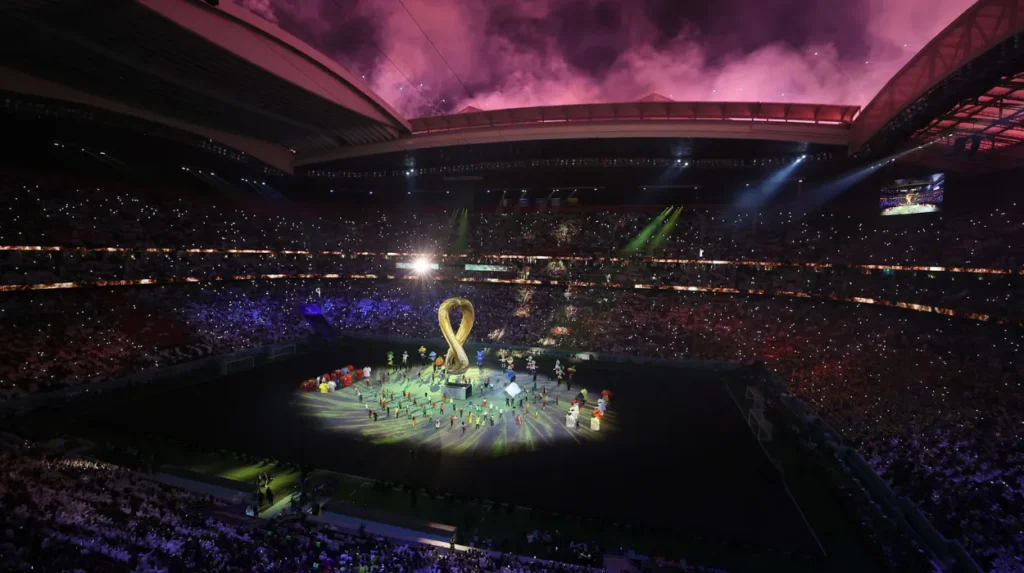
The FIFA World Cup, football’s grandest stage, is again under scrutiny as reports emerge of stadium readiness concerns, financial disagreements with host cities, and growing criticism over FIFA’s governance and planning model. As preparations intensify for the upcoming expanded tournament, the tension between ambition and feasibility is becoming increasingly visible. The world’s most-watched sporting event faces a familiar yet amplified set of challenges that question its sustainability and credibility in the modern era.
Stadium Construction Delays Raise New World Cup Infrastructure Concerns
In recent months, alarm bells have sounded over stadium readiness across several host nations. Reports of construction delays and incomplete infrastructure projects recall earlier controversies surrounding previous tournaments. In Mexico, concerns have mounted over unfinished venues slated to host key matches, echoing the unease that often shadows FIFA’s global showcase. These World Cup infrastructure delays come despite extensive planning cycles and public commitments that venues would meet international standards well ahead of kickoff.
The delays are not merely cosmetic—they carry operational and reputational risks. Late-stage construction typically leads to cost inflation, restricted testing time for safety systems, and logistical bottlenecks that can affect transportation, accommodation, and even match scheduling. Local contractors and municipal officials have cited procurement disputes and labor shortages as central issues, further complicating preparations. While FIFA has downplayed the risk to match-day operations, internal sources suggest increasing frustration over the pace of progress and the lack of transparency from local organizing committees.
The stadium readiness issue encapsulates a recurring theme: the widening gap between FIFA’s ambitious global expansion agenda and the practical realities of delivering complex infrastructure under political and financial pressure. Each delay reinforces global skepticism over FIFA’s capacity to oversee a smooth transition to its new, enlarged tournament format.
Financial Disputes Erupt Between FIFA and Host Governments
Equally troubling are the financial tensions brewing between FIFA and host cities over cost-sharing and commercial rights. Local governments have expressed dissatisfaction with the terms imposed by FIFA, which often require substantial public expenditure for infrastructure and security but limit the hosts’ ability to reap commercial benefits. These World Cup host city costs have become a flashpoint—particularly as some municipalities face domestic criticism for prioritizing tournament spending over local needs such as transport modernization or housing.
In previous tournaments, FIFA’s financial model granted the organization tax exemptions and lucrative control over broadcasting, ticketing, and sponsorship revenues. Current negotiations suggest that pattern continues, prompting accusations that FIFA is externalizing risk while internalizing profit. In essence, host nations shoulder billions in expenditure for infrastructure upgrades, while FIFA reserves the right to dominate the event’s commercial landscape.
This imbalance has deepened political friction in several host regions. Some city councils have openly questioned whether the tournament remains economically viable or simply a prestige project benefiting FIFA’s corporate partners. The disputes underscore a longstanding aspect of FIFA governance concerns: limited fiscal transparency and limited accountability for how revenues are distributed, particularly in light of previous corruption investigations that damaged the institution’s global standing.
Tournament Expansion and the Strain on Infrastructure
The shift toward an expanded 48-team format was billed as a celebration of football’s inclusivity, promising greater participation and opportunity. Yet critics argue the reform has introduced profound planning challenges. Many experts warn that expanding the tournament has outpaced existing infrastructure capacity in several host countries, leading to what some describe as
“organisational overstretch.”
The logistical demands of accommodating more teams mean more venues, additional transportation networks, heavier hotel capacity, and extended broadcasting schedules. These requirements are not merely quantitative—they impose qualitative stress on infrastructure coordination. Multi-city hosting, once hailed as a cost-saving measure, now exposes inconsistencies in urban readiness and inter-city transport systems. In practice, this approach multiplies administrative complexity, dilutes venue investment efficiency, and raises the odds of last-minute improvisation.
The situation highlights an underlying paradox of FIFA’s modern identity. The organization markets expansion as a symbol of global unity, yet operationally it amplifies disparities between wealthy host nations capable of sustaining tournament demands and emerging football markets struggling to keep pace. In this sense, World Cup infrastructure delays are no longer isolated hurdles—they are structural symptoms of FIFA’s growth strategy.
Commercialization Versus Sustainability: Priorities Under Fire
FIFA’s critics have increasingly characterized the organization as prioritizing commercial revenue over fan access, host sustainability, and local legacy. Ticket affordability and stadium access remain contentious, particularly in developing host regions where the event was once expected to spur local participation. Instead, the commercialization of broadcasting rights, sponsorship exclusivity, and branded hospitality packages has positioned the World Cup as an elite corporate spectacle.
This criticism mirrors earlier backlash from the 2014 and 2022 tournaments, where financial scandals and social discontent over spending overshadowed on-field achievements. Observers now warn that the same dynamic risks repeating, especially as public trust in FIFA remains fragile. Many football associations and advocacy groups argue the body has failed to integrate robust sustainability frameworks into its event planning, focusing instead on short-term profitability.
FIFA’s response has largely centered on announcing sustainability charters and legacy initiatives. Yet these measures often lack binding oversight and measurable targets. Without greater accountability, doubts persist over whether FIFA’s governance reforms go beyond branding exercises. The divide between commercial ambition and community benefit is now at the heart of renewed FIFA World Cup criticism.
The Historical Roots of FIFA’s Governance Challenges
These mounting tensions cannot be understood in isolation. They are the latest chapter in a decades-long struggle over governance, transparency, and institutional credibility within FIFA. The organization’s structure—nominally democratic but heavily centralized—has repeatedly drawn scrutiny for enabling insular decision-making and limited financial oversight. The 2015 corruption scandals, which led to criminal indictments and leadership upheaval, forced FIFA to pledge sweeping reforms. Yet a decade later, questions persist over the depth of those changes.
Independent audits and ethics committees have struggled to enforce accountability, partly because of the political sensitivities inherent in FIFA’s global composition. Critics argue that the organization’s financial model, reliant on World Cup-driven revenue, incentivizes exploitation of host markets rather than genuine partnership. The perception that FIFA acts as a self-interested commercial monopoly rather than a custodian of the sport continues to erode its reputation.
This historical context explains why public confidence remains precarious. Each new controversy—whether a stadium delay or a financial dispute—invites comparisons to past crises and renews doubts over institutional integrity. In that sense, today’s planning shortfalls represent not isolated administrative lapses but symptoms of deeper structural inertia.
Economic and Political Fallout for Host Cities
For host cities, the economic calculus of hosting the World Cup grows increasingly complex. Cost overruns, infrastructure delays, and commercial restrictions combine to create significant political risk. Local administrations face voter resentment when public funds are diverted toward event preparation amid broader economic pressures. Proponents claim the tournament delivers long-term tourism and branding benefits, but empirical data from previous editions often shows mixed results. Cities such as Rio de Janeiro and Johannesburg experienced post-tournament underutilization of venues and lingering maintenance costs.
Moreover, FIFA’s insistence on uniform commercial zones and security protocols can strain local governance capacity. Municipal leaders have limited flexibility to adapt event planning to domestic conditions. The result is a growing perception that hosting the World Cup may offer prestige but little tangible socioeconomic return—a narrative that threatens FIFA’s ability to attract willing partners in future cycles.
As these financial tensions intensify, the risk of litigation or withdrawal by disillusioned host partners becomes more plausible. Such scenarios would not only disrupt tournament logistics but could trigger lasting diplomatic and reputational damage.
The Perception Battle: Rebuilding Trust Amid FIFA World Cup Criticism
Public and media scrutiny over the past decade has forced FIFA to confront a persistent identity crisis. Once celebrated as a beacon of global unity through sport, the organization now battles a reputation tainted by opacity and perceived greed. Efforts to modernize governance and promote social responsibility remain undercut by recurring operational controversies. Recent World Cup infrastructure delays reinforce the impression that FIFA’s growth model prioritizes scale over stability.
Perception matters deeply in global sports governance. Fans, sponsors, and governments alike weigh ethical credibility alongside brand strength. A governing body seen as mismanaging resources or mistreating partners risks alienating not only host nations but also commercial allies. FIFA’s leadership now faces a defining challenge: whether it can realign its business priorities with football’s broader community ethos without sacrificing financial momentum.
Reforms and the Road Ahead
Looking forward, reforming FIFA’s planning and governance model appears imperative if the organization hopes to restore confidence. A credible solution would begin with greater financial transparency—publishing detailed revenue-sharing agreements and independently auditing host expenditures. Moreover, establishing enforceable sustainability benchmarks could help ensure that infrastructure investments yield long-term community benefits rather than temporary political spectacle.
Decentralizing decision-making, granting host cities greater autonomy in adapting preparations to local realities, and strengthening oversight bodies would signal sincerity in governance change. Internally, aligning tournament expansion with realistic infrastructure assessments could mitigate recurring World Cup infrastructure delays. Externally, fostering more collaborative agreements with host governments could ease financial tensions and recalibrate perceptions of fairness.
The stakes extend beyond a single tournament. FIFA’s credibility as the steward of the world’s most beloved sport depends on its capacity to evolve beyond commercial opportunism and demonstrate genuine accountability. The lesson from the current cycle is clear: global acclaim cannot mask structural fragility. Unless FIFA matches its ambition with transparency, prudence, and integrity, the world’s greatest football tournament risks being overshadowed not by the brilliance of its players—but by the failures of its planners.