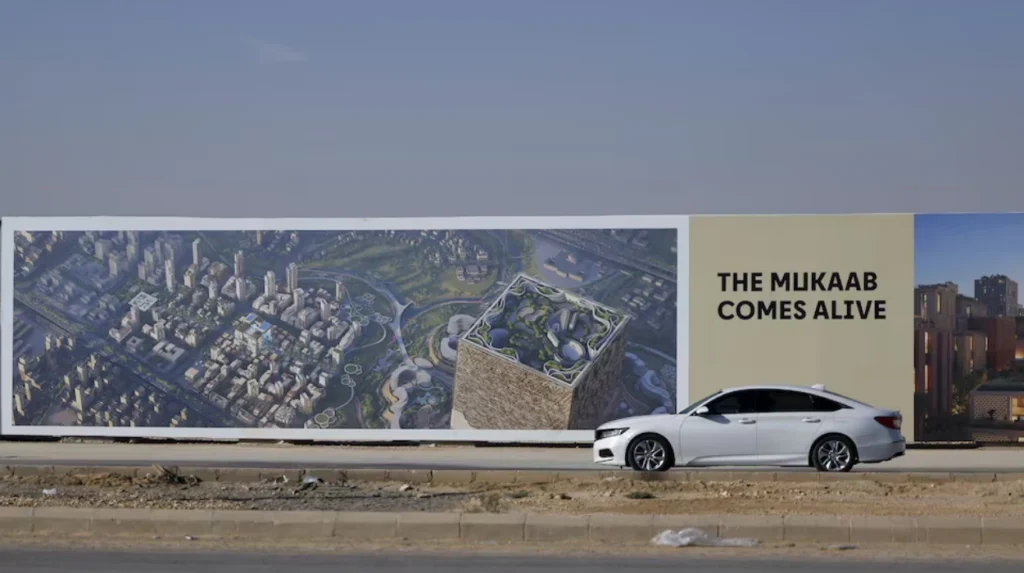
Saudi Arabia has suspended work on its ambitious $5 billion Mukaab megaproject, a cube-shaped skyscraper planned as a Vision 2030 flagship, shifting Public Investment Fund (PIF) resources to “urgent” priorities like 2034 World Cup infrastructure and Expo 2030, raising questions over financial sustainability and compliance with FIFA’s human rights, labour, and transparency standards for host nations. This pivot underscores potential overreach, prioritisation conflicts, and sportswashing risks, prompting scrutiny from human rights groups and global stakeholders on ethical hosting.
Saudi Arabia has halted construction on the massive Mukaab megaproject, a flagship of its Vision 2030 diversification plan, as the kingdom’s sovereign wealth fund redirects resources amid fiscal pressures.
The suspension, reported exclusively by Reuters, spotlights tensions between mega-ambitions and practical delivery as Riyadh prepares to host the 2034 FIFA World Cup.
Mukaab Project Suspension Details
Exclusive reporting by Reuters journalists Stephen Kalin and Marwa Awad reveals that Saudi Arabia has suspended work on the Mukaab, a towering cube-shaped structure envisioned as the world’s largest building by volume. The project, spearheaded by the Public Investment Fund (PIF), was slated to stand 400 metres tall with a floor area exceeding 2.8 million square metres, housing offices, homes, and entertainment spaces. Sources cited by Kalin and Awad stated that PIF has paused the initiative to review its strategy, amid low oil prices and a broader reassessment of giga-projects.
Saudi Economy Minister Faisal Al-Ibrahim acknowledged the shift in a Bloomberg interview, stating, “We have already delayed a number of projects, and we will recoup and delay other projects as well.” He emphasised focusing on “projects that create value for citizens,” without naming Mukaab specifically. PIF officials, according to the Reuters exclusive, now prioritise logistics, artificial intelligence, and mining for quicker returns, sidelining prestige-driven megaprojects. This marks the latest in a series of Vision 2030 setbacks, including scaled-back plans for The Line in NEOM.
Vision 2030 Context and Financial Pressures
Vision 2030, Crown Prince Mohammed bin Salman’s blueprint to reduce oil dependency, has pumped billions into megaprojects like Mukaab to lure tourism and investment. Yet, Reuters reports an $8 billion writedown on giga-projects last year, reflecting PIF’s pivot from spectacle to viability. Sky News coverage of the 2034 World Cup confirmation noted Saudi Arabia’s broader event-hosting slate, including the 2027 Asian Cup and 2029 Asian Winter Games, amplifying delivery risks.
FIFA’s official site and Wikipedia entries confirm Saudi Arabia’s unchallenged bid win on 11 December 2024, via an Extraordinary Congress vote led by President Gianni Infantino. The kingdom plans 15 stadiums across Riyadh, Jeddah, Al Khobar, Abha, and NEOM, with key venues like King Salman International Stadium (92,760 capacity, due 2029) and Aramco Stadium (46,096 seats, due 2026). ESPN’s explainer by Alex Kirkland and Sam Marsden highlighted the sole-bid process, accelerated by FIFA despite human rights concerns.
FIFA Standards on Human Rights and Labour
FIFA mandates host nations adhere to human rights due diligence, as outlined in its bidding requirements updated post-Qatar 2022. These include UN Guiding Principles on Business and Human Rights, covering labour rights, non-discrimination, and migrant worker protections. Amnesty International, in a 11 November 2024 Reuters report by Johan Ahlander, urged FIFA to halt Saudi’s bid over issues like the kafala system, executions, and press curbs.
The Mukaab suspension raises labour compliance flags. Reuters notes the project relied on migrant workers, now idled amid PIF cuts. Sky News quoted activists warning of Qatar-style abuses in building eight new stadiums and 175,000 hotel rooms. FIFA’s evaluation praised Saudi’s bid for “positive human rights impact” potential but stressed “significant effort” for compliance. Hammad Albalawi, bid head, countered that Vision 2030 drives social reforms to attract record fans.
Transparency and Governance Concerns
FIFA demands bidding transparency, yet Saudi’s process faced “sportswashing” accusations. CNN reported human rights groups warning of “unimaginable human cost” post-confirmation. The New York Times, cited in Wikipedia, alleged Infantino bent rules to favour Riyadh, fast-tracking bids by three years. Mukaab’s opaque halt—communicated internally without public announcement—mirrors governance critiques.
Minister Al-Ibrahim’s candid Bloomberg remarks signal pragmatic transparency but underscore overreach. PIF’s strategy, per Reuters sources, admits flashy projects like Mukaab detract from urgent needs like World Cup venues and Expo 2030. This prioritisation could strain resources, risking rushed construction and rights shortcuts.
Labour Rights Implications for Mega-Events
Migrant labour underpins Saudi’s events. Aramco Stadium, hosting group stages, is under construction with a 2026 deadline. King Fahd Sport City Stadium renovations target 70,200 capacity by 2026. Central Jeddah Stadium (45,749 seats, due 2027) exemplifies the pipeline. Boycottsaudi2034.com warned of financial and ethical failures jeopardising delivery.
Post-Mukaab pause, critics like Amnesty fear intensified pressure on World Cup sites. FIFA requires worker welfare plans, including heat protections for summer builds (shifted to winter). Yet, low oil revenues may squeeze safeguards, echoing Qatar’s 6,500 migrant deaths.
Press Freedom and Stakeholder Scrutiny
Saudi ranks low on press freedom indices, a FIFA concern. Reporting Mukaab required Reuters’ anonymous sources, hinting at media curbs. YouTube discussions, like The Current’s football journalist calling it a “middle finger” to fans, amplify backlash. Reddit threads speculate on stadium revisions.
Civil society eyes accountability. Sport & Rights Alliance joined Amnesty’s halt call. England’s FA backed the bid, per Sky News. Saudipedia lists NEOM and AlUla as team bases, tying into giga-projects now questioned.
Sportswashing and Ethical Hosting Debates
The Mukaab pivot frames sportswashing: using events to gloss fiscal woes. AP News noted FIFA’s confirmation despite concerns. BBC Sport confirmed via acclamation. Saudi2034.com promotes a “new era,” yet suspensions dent credibility.
Global debates pit prestige against ethics. FIFA insists on reforms; Saudi claims progress. Instagram updates hint at stadium tweaks. As PIF eyes AI over spectacle, stakeholders question if 2034 risks repeats of past failures.
Stakeholder Reactions and Future Outlook
Human rights groups decry ethical lapses. Fans and analysts, via YouTube and Reddit, voice doubts. FIFA monitors compliance; no revocation yet. Minister Al-Ibrahim’s realism—“delay and recoup”—suggests adaptability but tests timelines.
Saudi’s shift admits overreach, prioritising World Cup infrastructure. Yet, it fuels legitimate worries for FIFA, fans, and activists on accountability. As 2034 nears, governance alignment remains pivotal.