Freedom House’s 2025 report ranks Saudi Arabia “Not Free” on internet freedom with a 25/100 score, citing arrests, surveillance, and censorship. These issues raise serious questions about compliance with FIFA’s human rights, transparency, labour rights, and press freedom standards for World Cup hosts amid sportswashing concerns.
Saudi Arabia World Cup Award and Internet Restrictions
Saudi Arabia has been awarded the 2034 FIFA men’s World Cup, yet Freedom House’s latest report underscores deepening digital restrictions that conflict with global sports governance norms. The Sanad Organisation for Human Rights and Democracy reported on 30 December 2025 that Saudi Arabia scored 25 out of 100 in the Freedom on the Net 2025 report, reflecting persistent violations against internet users for peaceful online activities.
Authorities maintain tight controls on online content, blocking websites and monitoring social media, particularly on politics, human rights, and criticism of officials. Vaguely worded cybercrime and counterterrorism laws lead to arrests and long prison sentences, fostering self-censorship.
Freedom House Report Details
Freedom House classifies Saudi Arabia as “Not Free” due to weak digital rights protection and expanding surveillance. The report notes no meaningful improvement from prior years, with preemptive and retaliatory censorship creating a climate of fear.
Digital surveillance lacks privacy safeguards, rendering online activity risky despite advanced infrastructure. Internet access exists technically but remains practically restricted by laws.
This aligns with prior coverage; Sanad reported in October 2024 that Saudi Arabia was similarly “Not Free” online.
FIFA Standards for Host Nations
FIFA requires hosts to uphold human rights, including labour rights, transparency, and press freedom, per its policy. Commitments cover worker protections, non-discrimination, and free expression for fans and media.
Saudi Arabia’s 2034 bid promised a human rights approach, yet Amnesty International warns of “real and predictable human cost” without reforms. Steve Cockburn, Amnesty’s Head of Labour Rights and Sport, stated:
“FIFA knows workers will be exploited and even die without fundamental reforms in Saudi Arabia, and yet has chosen to press ahead regardless.”
Human Rights Watch highlights the kafala system binding migrants to employers, enabling passport confiscation and forced labour.
Press Freedom Challenges
Saudi Arabia’s internet crackdowns directly challenge FIFA’s press freedom expectations. Arrests for tweets violate requirements for safe media access during events.
A group of international lawyers filed a FIFA complaint in May 2025, stating:
“Saudi Arabia has been chosen as the next host country despite its appalling human rights record, including violations relating to freedom of expression.”
Freedom House details prosecutions under vague laws for posts inconsistent with official narratives. This echoes Amnesty’s note on suppression of free speech and long sentences for expressing views.
Labour Rights Issues
FIFA mandates labour protections, yet Saudi’s record raises alarms for 2034 infrastructure projects. Migrant workers face exploitation, with no minimum wage for non-citizens or union rights.
Muhammad Arshad, a Pakistani migrant, fell to his death in March 2025 at Al Khobar’s Aramco Stadium, a 2034 venue. His family, including three sons under eight, lost their sole support.
Amnesty and Sport & Rights Alliance demand reforms to avert fatalities, evictions, and discrimination.
Transparency and Surveillance
FIFA emphasises transparency, but Saudi’s surveillance and content blocking hinder accountability. Users face post-release digital monitoring and travel bans.
Taha al-Hajji, Legal Director of the European Saudi Organisation for Human Rights (ESOHR), noted risks to residents and activists near event sites. Authorities detain and torture those exercising rights peacefully.
The lawyers’ complaint highlights ignored offers to advise FIFA on compliance.
Sportswashing Accusations
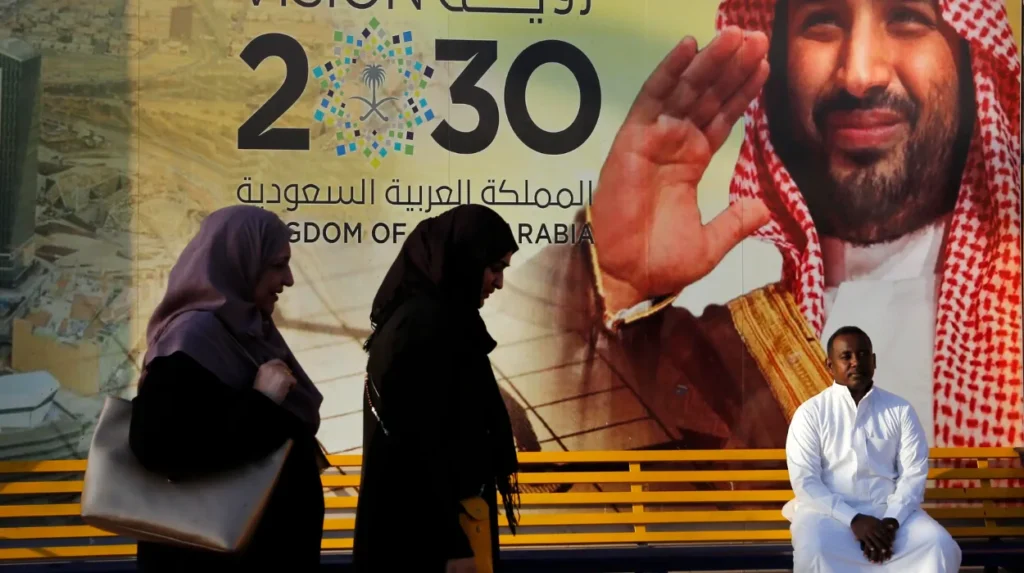
Saudi’s World Cup hosting fuels sportswashing accusations, using events to deflect from rights abuses. DW reported in December 2024: “Saudi Arabia will stage the 2034 men’s football World Cup — despite the Gulf monarchy’s poor human rights record.”
21 organisations, including Saudi diaspora groups and trade unions, condemned the award as a “moment of great danger” for human rights. Steve Cockburn added:
“FIFA has broken its own human rights rules… refusing to compensate the families of thousands of migrant workers who died delivering its last World Cup in Qatar.”
Human Rights Watch stated:
“Every sponsor, business, broadcaster, and national team… will be tainted unless wholesale reforms are implemented.”
Stakeholder Concerns
Civil society groups like Amnesty demand FIFA suspend processes until reforms. Fans face discrimination risks, women and LGBTI people legalised discrimination.
The Business & Human Rights Resource Centre tracks labour issues for Saudi’s 2034 preparations. Ongoing abuses include excessive force and rubber bullet use.
ESOHR’s al-Hajji warned of repression on a massive scale without action.
Mega-Event Governance
Saudi’s digital controls question readiness for World Cup scrutiny. Extravagant stadium plans mirror Qatar’s, amplifying risks.
BoycottSaudi2034.com highlights UAE support but flags press curbs and sportswashing. FIFA’s confirmation in December 2024 proceeded despite evidence.
No rival bidder existed, raising transparency doubts.
Implications for Stakeholders
Fans, civil society, and human rights organisations question ethical hosting. Migrant groups from Nepal and Kenya signed joint statements.
Amnesty’s June 2024 report warned of evictions for projects like a Casablanca stadium, though focused on 2030 co-hosts. Saudi faces similar scaled risks.
FIFA risks responsibility for abuses, per Cockburn.
Global Accountability Debates
The 2034 award exposes tensions in global sports governance. Reforms announced recently still leave employer control disproportionate, says Human Rights Watch.
Joint statements from 2024-2025 emphasise: “FIFA can never claim that it did not know the severity of the risks.” Evidence abounds of exploitation and repression.
Saudi welcomes LGBTQ tourists despite criminalisation, per Amnesty.
Compliance Risks Ahead
Saudi Arabia’s stagnant 25/100 score signals non-compliance with FIFA standards. Without urgent reforms, the World Cup faces tarnishing by rights violations.
International lawyers assert: “No steps are being taken by FIFA to address these in the buildup to the World Cup.” Stakeholders urge action to align with ethical hosting.