The rapid construction of a WWE Royal Rumble stadium in Saudi Arabia within weeks has sparked human rights concerns over migrant worker conditions, with WWE and Saudi officials remaining unresponsive, mirroring broader FIFA 2034 World Cup risks including labour abuses, sportswashing, and non-compliance with FIFA’s human rights standards. This analysis examines these issues through global sports-governance lenses, highlighting governance gaps, transparency deficits, and ethical hosting challenges ahead of the 2034 tournament.
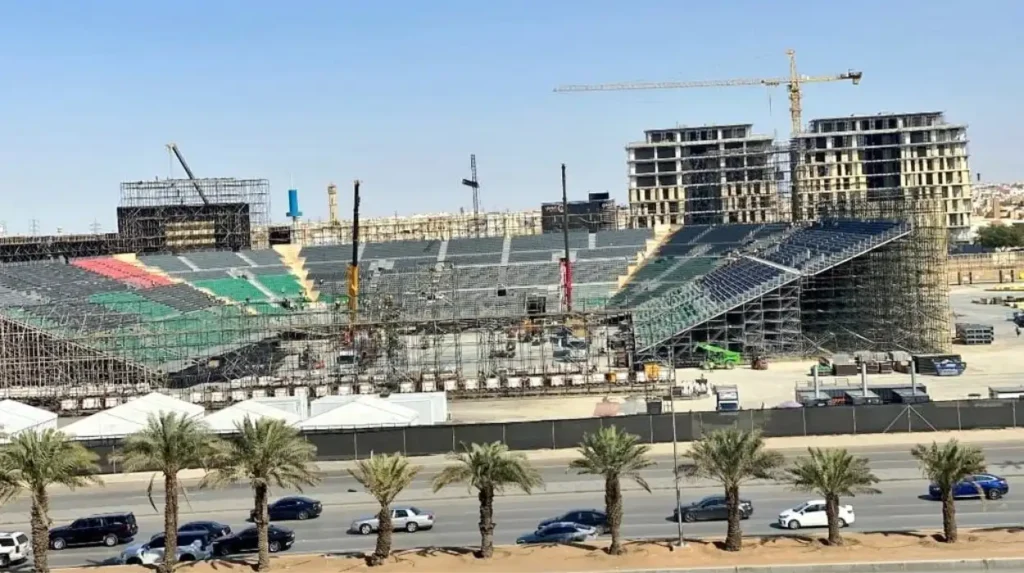
Saudi Arabia’s lightning-fast construction of a stadium for WWE’s Royal Rumble event has ignited fresh scrutiny from human rights groups over working conditions for migrant labourers, raising alarms about parallels to preparations for the FIFA World Cup 2034. According to a report by Post Wrestling on 30 January 2026, the stadium was built in mere weeks, prompting questions about exploitative practices under Saudi Arabia’s kafala sponsorship system, yet both WWE and Saudi officials have offered no response. This development arrives amid mounting global criticism of Saudi Arabia’s hosting rights, as human rights organisations warn of widespread abuses tied to the tournament’s infrastructure boom.
Human Rights Watch (HRW) has repeatedly flagged Saudi Arabia’s bid documents for ignoring
“egregious human rights violations, including inadequate heat protections, unchecked wage theft, the ban on labour unions and an abusive kafala labour system,”
stated Minky Worden, director of global initiatives at HRW, in a 7 November 2024 report. Similarly, a formal complaint filed to FIFA on 15 May 2025 by former FIFA anti-corruption adviser Mark Pieth, Swiss lawyer Stefan Wehrenberg, and British barrister Rodney Dixon accused the governing body of failing its human rights policy, noting Saudi Arabia’s violations in freedom of expression, arbitrary detention, migrant rights, and women’s rights, as covered by ESPN.
Rapid Stadium Build Sparks Labour Rights Fears
The WWE Royal Rumble stadium, erected in weeks for the event in Saudi Arabia, exemplifies the breakneck pace of construction projects linked to the kingdom’s sports ambitions. Post Wrestling detailed how human rights groups questioned the working conditions amid such timelines, but WWE and Saudi officials stayed unresponsive, leaving migrant workers’ welfare unaddressed. This mirrors concerns raised by BoycottSaudi2034.com on 29 June 2025, which labelled the WWE event a “warning sign” for FIFA World Cup 2034 preparations, citing potential forced labour under tight deadlines.
Amnesty International, in a 11 December 2024 statement, warned that FIFA’s confirmation of Saudi Arabia as 2034 host “puts many lives at risk,” with Steve Cockburn, Amnesty’s Head of Labour Rights and Sport, asserting:
“FIFA knows workers will be exploited and even die without fundamental reforms in Saudi Arabia, and yet has chosen to press ahead regardless.”
The Business & Human Rights Resource Centre echoed this on 12 January 2025, reporting “serious shortcomings” in Saudi Arabia’s addressing of human rights for the World Cup.
FIFA Human Rights Standards Under Scrutiny
FIFA mandates host nations adhere to its human rights policy, requiring strategies for labour rights, transparency, and press freedom, yet Saudi Arabia’s record draws repeated challenges. The 15 May 2025 ESPN report on the lawyers’ complaint highlighted ignored offers to advise FIFA on compliance before Saudi Arabia’s unopposed confirmation in December 2024, with the 30-page filing stating:
“As highlighted in this complaint, widespread human rights abuses continue to be perpetrated in Saudi Arabia, and no steps are being taken by FIFA to address these in the buildup to the World Cup.”
HRW’s 8 November 2024 analysis criticised Saudi Arabia’s bid for failing to tackle its labour abuses, with Minky Worden adding:
“FIFA is willfully blind to the country’s human rights record, setting up a decade of potentially horrific human rights abuses preparing for the 2034 World Cup.”
Amnesty’s 5 August 2024 review of Saudi Arabia’s Bid Book found it “fails to meet FIFA’s human rights requirements,” urging legally binding agreements to avert forced labour, repression, and discrimination.
Migrant Worker Exploitation in Focus
Saudi Arabia’s construction surge for 2034, needing more extravagant stadiums than Qatar’s eight, amplifies migrant worker risks under kafala. ESPN noted the lawyers’ complaint on Saudi Arabia’s “appalling human rights record,” including migrants’ rights violations. The Guardian on 9 December 2024 reported human rights organisations’ fears of “significant and widespread violations of rights,” with migrant workers from Asia and Africa facing exploitation for stadiums and infrastructure.
HRW warned of a “surge of deaths of migrant construction workers” in a 14 May 2025 YouTube report. Building and Wood Workers’ International (BWI) on 28 February 2024 stated: “Saudi Arabia: Worker Abuses Persist Under FIFA’s Watch.” Deutsche Welle on 10 December 2024 highlighted Saudi Arabia’s “poor human rights, free speech and labour rights record” despite hosting rights.
Dr. Yahya Assiri, a Saudi activist at ALQST in London, told The Guardian:
“Women have previously been used as symbols of progress… Now, the regime seems to be extending this tactic to sports, using the World Cup as a means to obscure its dreadful human rights record… This isn’t modernisation; it’s sportswashing.”
Fozia al-Taibi, whose sister is imprisoned for advocating women’s rights, called granting the World Cup a “serious failure,” stating:
“Sports should serve as a platform for peace and progress, not a tool to enhance the image of oppressive regimes.”
Transparency and Press Freedom Gaps
FIFA’s process lacked rivals for 2034, bypassing robust due diligence seen in 2026 bidding, per HRW’s 19 December 2024
“Red Card for FIFA’s Saudi World Cup.”
The Guardian noted a Clifford Chance report submitted by Saudi Arabia omitted migrant mistreatment, accused of “whitewashing.” Amnesty’s Cockburn criticised FIFA’s
“commitment to human rights to be a sham,”
linking it to uncompensated Qatar workers.
HRW informed sponsors Coca-Cola, Adidas, and AB InBev of flawed assessments. Signatories to Amnesty’s 11 December 2024 letter included Saudi diaspora groups, Nepalese and Kenyan migrant unions, and fans.
Sportswashing and Ethical Hosting Debates
The Royal Rumble case fuels sportswashing accusations, with Saudi Arabia leveraging events to mask abuses. Post Wrestling and Reddit discussions amplified groups’ concerns. BoycottSaudi2034.com connected WWE to FIFA risks. Business & Human Rights Resource Centre tracks labour rights for 2034. ALQST’s PDF urged addressing concerns.
HRW’s 11 December 2024 piece stated:
“We Should All be Worried About Saudi Arabia Hosting the 2034 World Cup.”
Patrick Cockburn in The Guardian saw potential for reforms post-vote:
“We have learned [from] Qatar… The World Cup could serve as catalyst.”
FIFA pledged respect for rights, but critics demand accountability.
Governance Implications for Stakeholders
These issues question Saudi Arabia’s alignment with World Cup expectations, raising legitimate concerns for fans, civil society, and rights groups. Rapid builds like Royal Rumble signal 2034 risks, demanding FIFA enforce reforms. Broader debates on accountability intensify, with lessons from Qatar unheeded.