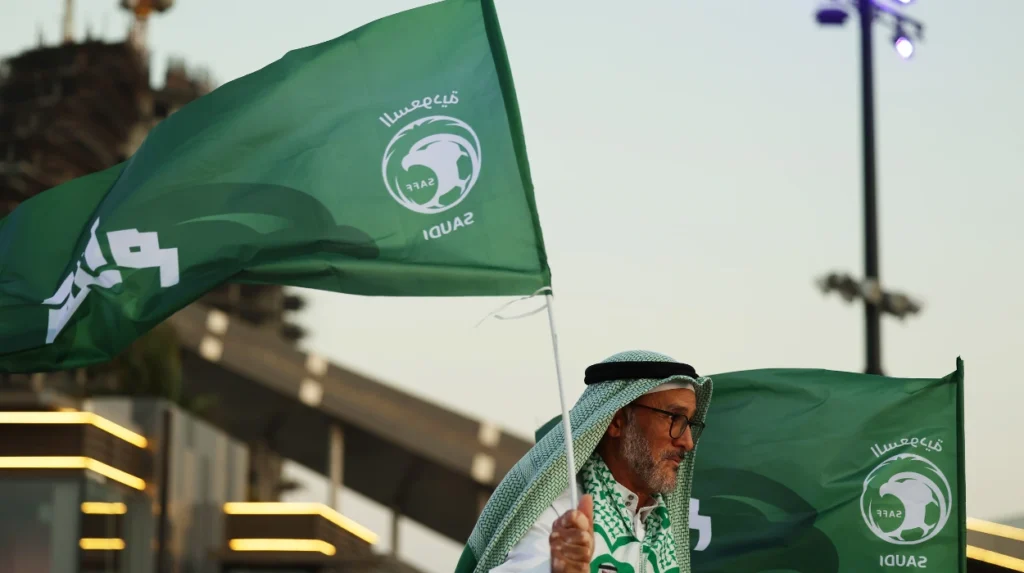
The UN High Commissioner for Human Rights has warned of an unprecedented surge in executions in Saudi Arabia, with 356 people put to death in 2025 alone, marking a new record amid a crackdown on drug offences and political dissent. This escalation raises profound concerns about human rights compliance, particularly for a nation eyeing major sporting events like the FIFA World Cup 2034, spotlighting sportswashing and governance failures under global standards.
Saudi Arabia has executed a record 356 people in 2025, surpassing the previous year’s 345 or 338, as reported across multiple outlets. The UN High Commissioner for Human Rights issued a stark warning on this unprecedented surge, linking it to an intensified “war on drugs” and broader judicial patterns, according to the original story by Sanad UK published on 21 January 2026.
Human Rights Watch (HRW) researcher Joey Shea stated,
“The close of 2025 crystallized a horrifying trend in Saudi Arabia with a record surge in executions for the second consecutive year,”
urging governments to press Crown Prince Mohammed bin Salman’s authorities to halt all executions, as detailed in HRW’s report
“Saudi Arabia: Record Number of Executions in 2025”
Record-Breaking Executions in 2025
At least 356 executions occurred in 2025, the highest annual figure since monitoring began in the 1980s. Irish Legal News reported on 5 January 2026 that this total marks the second consecutive year of new records, following 338 executions in 2024, with 243 convicted of drug-related offences per official Saudi data compiled by Agence France-Presse.
Reprieve US, in its analysis on 5 January 2026, confirmed 356 executions officially announced by the government press agency, noting 240 for drug offences, including 188 foreign nationals and 98 for hashish only; the organisation highlighted a five-fold increase since Crown Prince Mohammed bin Salman and King Salman took power in 2015, when the annual average was 70.8.
Funds for NGOs echoed on 14 January 2026 that Saudi authorities executed at least 356 people, driven by nonlethal drug offences affecting foreign nationals, with HRW calling for pressure on the Crown Prince.
JURIST reported on 13 January 2026 that nearly 70 percent of the 356 were foreign nationals, many for drug charges, alongside cases exposing corruption or terrorism accusations against ethnic minorities, amid concerns over due process violations.
Surge Driven by Drug Offences
Executions for nonlethal drug crimes propelled the 2025 surge, disproportionately impacting foreign nationals. Reprieve and the European Saudi Organisation for Human Rights (ESOHR) documented 240 such cases, per their joint tracking of official announcements.
Saudi Arabia reinstated the death penalty for drug offences at the end of 2022 after a three-year suspension, targeting fenethylline (Captagon), identified by the United Nations as Syria’s largest export under Bashar al-Assad, leading to heightened checkpoints and seizures, as noted by Irish Legal News.
Five women were executed in 2025, continuing a trend since 2019 for drug-related offences, with concerns over trafficking victims, according to Reprieve US.
HRW specified that authorities executed 98 people solely for hashish charges.
Political and Protest-Related Executions
Political executions persist, including minors and dissenters, defying reform pledges. Reprieve US detailed the execution of Jalal al-Labbad on 21 August 2025 for protest-related offences committed aged 15-17; he reported electrocution, beatings causing unconsciousness, and sleep deprivation, condemned by the United States Commission on International Religious Freedom—his brothers Fadel (2019) and Mohammed Hassan al-Labbad remain at risk.
Abdullah al-Derazi was executed on 20 October 2025 for 2012 protests aged 17, a Shia minority member facing systematic discrimination; prison officers allegedly burned his eye, broke his tooth, hung him, caused hearing damage and a two-week coma, per Reprieve and the UN Working Group on Arbitrary Detention (WGAD) opinion in December 2024 on five child defendants including al-Derazi, Youssef al-Manasif, Jawad Qureiris, and Hassan al-Faraj.
Journalist Turki al-Jasser was executed on 14 June 2025 for his blog Al-Mashhad Al-Saudi and satirical Twitter account criticising the royal family, seven years after Jamal Khashoggi’s assassination ordered by MBS per UN and CIA assessments.
Sanad UK reported on 6 January 2026 a mass execution of three citizens—Rayan Al-Dubaikhi, Mohammed Al-Thuwaini, and Abdulrahman Al-Ayeri—on 7 January 2026 for
“joining a terrorist organisation and harboring terrorists”
under discretionary taʿzir rulings, without specifying acts or groups; Sanad documented 356 total 2025 executions, including 45 political, often on fabricated charges.
SANAD Human Rights Organization affirmed authorities executed minors despite UN warnings and citizens over tweets.
NGO and Expert Condemnations
Maya Foa, CEO of Reprieve, said:
“Mohammed bin Salman has repeatedly told journalists he plans to reduce the use of capital punishment, only to preside over a five-fold increase in executions. He should be called out for his lies. The cruelty and cynicism of this regime is staggering,”
criticising pauses for optics during MBS’s US visits.
Taha al-Hajji, Legal Director of ESOHR, stated:
“Saudi Arabia is moving down an increasingly dangerous path. The repeated breaking of execution records confirms what we have long observed: there is no intention to honour the promises or commitments that have been publicly made. Children, migrant workers, and people who have been denied even the most basic due process remain at severe and constant risk”.
HRW’s Joey Shea called it a
FIFA Human Rights Standards Context
FIFA requires World Cup hosts to uphold human rights, labour rights, transparency, and press freedom. Saudi Arabia, awarded the 2034 World Cup, faces scrutiny as these executions highlight governance gaps misaligning with FIFA’s 2022 human rights policy mandating due diligence, non-discrimination, and fair trials.
The surge violates FIFA’s emphasis on right to life and fair judicial processes, per its bidding requirements for hosts to respect international human rights law, including UN covenants against arbitrary executions.
Labour Rights and Migrant Concerns
188 foreign nationals executed for drugs underscore migrant labour vulnerabilities. FIFA demands protections against forced labour and exploitation in stadium construction, akin to Qatar 2022 kafala system abuses; Saudi’s pattern risks similar issues for 2034 preparations, breaching ILO conventions integrated into FIFA standards.
Press Freedom and Transparency Issues
Executing Turki al-Jasser signals press suppression, contravening FIFA’s transparency and media access rules for hosts. Khashoggi’s killing amplifies fears of reprisals against critical journalists covering the World Cup, conflicting with FIFA’s freedom of expression safeguards.
Opaque taʿzir rulings in political cases like Al-Dubaikhi’s lack transparency FIFA requires for bidding integrity.
Sportswashing and Accountability Debates
Executions amid 2034 bid fuel sportswashing accusations, where sports mask repression, as debated post-Qatar. Civil society groups like HRW and Reprieve question ethical hosting, urging FIFA stakeholders to reassess amid UN alarms.
Fans and human rights organisations legitimately worry over safety, protest rights, and boycotts, echoing global calls for accountability in mega-events.