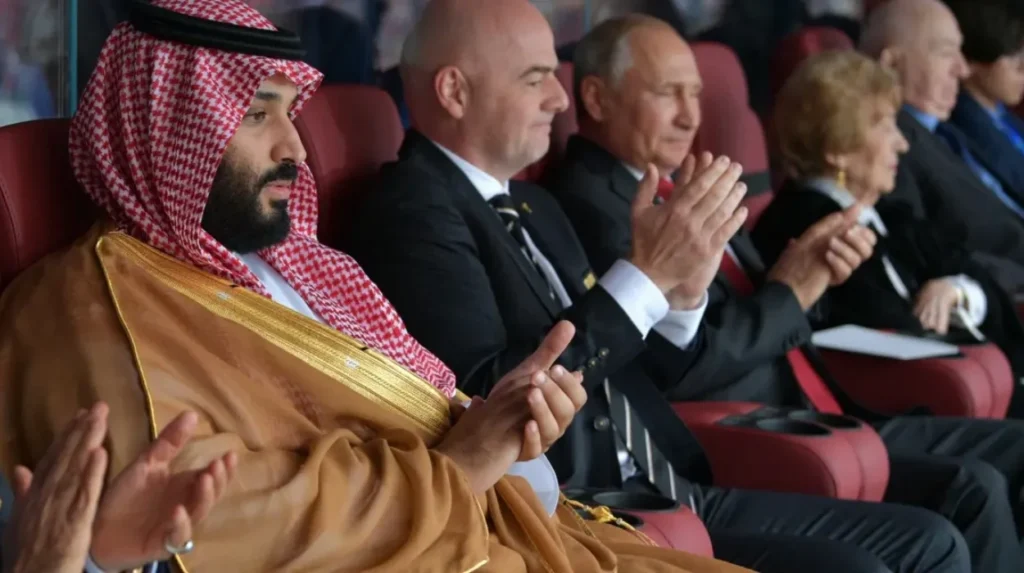
Saudi Arabia’s confirmation as the 2034 FIFA World Cup host, with the UAE closely supporting the bid, has sparked significant concerns over compliance with FIFA’s human rights, transparency, labour rights, and press freedom standards. These issues raise questions about governance, ethical hosting, and the broader implications of sportswashing in the region.
Saudi Arabia Confirmed as 2034 FIFA World Cup Host Amid Controversy
On 11 December 2024, FIFA formally announced Saudi Arabia as the host nation for the 2034 FIFA World Cup during an Extraordinary FIFA Congress meeting, ending speculation about the event’s location. The announcement followed a bidding process marked by a notably accelerated timeline and geographic limitations restricting the selection to Asia or Oceania, which critics argue paved the way for Saudi Arabia’s uncontested bid. This decision drew sharp criticism from various stakeholders, including the Norwegian Football Federation, which labelled FIFA’s bidding process “flawed and inconsistent.”
Following FIFA’s decision, 21 organisations including Amnesty International, migrant workers’ unions from Nepal and Kenya, and Saudi diaspora human rights groups issued a joint statement condemning the awarding of the World Cup to Saudi Arabia. They underscored the absence of enforceable human rights protections and warned that the decision endangered lives linked to the event’s preparations.
Saudi Arabia has heavily invested in sports as part of its Vision 2030 transformation plan, with the Saudi Public Investment Fund playing a significant role. Critics, including women’s rights groups and LGBTQ+ advocates, accuse Saudi Arabia of using this investment as a tool for “sportswashing” its human rights record, attempting to divert attention from ongoing abuses.
Human Rights and Labour Concerns Related to Mega-Event Hosting
A core governance issue is the human rights environment within Saudi Arabia and the UAE, both implicated in the preparations and broader support frameworks of the World Cup bid. Reports highlight poor treatment of migrant workers, lack of rights protections, and restrictions on civil liberties concerning women and LGBTQ+ communities. Amnesty International emphasises the risks migrant workers face in stadium construction and infrastructure projects, a point which resonates widely among international human rights organisations.
Labour rights violations, including allegations of forced or underpaid labour, raise serious compliance questions against FIFA’s standard expectations that host countries adhere to international labour laws. The failure to guarantee these protections undermines the integrity of the event’s preparations and the ethical standard expected of host nations.
Press Freedom and Transparency Limitations in the UAE and Saudi Arabia
Although the UAE is not the tournament host, its role as a regional supporter of Saudi Arabia’s bid and its own pivotal presence in Gulf sports governance cannot be overlooked. The UAE’s media environment continues to be tightly controlled, with persistent censorship and restricted press freedoms affecting journalists covering sensitive areas including sports governance. Reports from former journalists reveal threats to independent media operation and self-censorship, which diminishes transparency crucial for international sporting events.
These press freedom restrictions hinder independent scrutiny of labour practices, governance, and human rights issues tied to World Cup preparations, contravening FIFA’s requirements for transparent and open media environments in host nations. The lack of free press impairs the ability of international observers, fans, and civil society to hold organisers accountable.
Governance Challenges and Sportswashing Allegations in Global Context
FIFA’s decision-making process—in particular, the accelerated bidding timeline and limitations restricting bids to Asia-Oceania—has drawn criticism for lacking transparency and fairness, with allegations of procedural bending to favour Saudi Arabia. Such governance issues exacerbate wider debates on sportswashing, where autocratic regimes use global sports events to enhance international reputation despite poor domestic rights records.
International stakeholders, fans, human rights advocates, and civil society groups are increasingly vocal about these ethical dilemmas surrounding mega-event hosting. The Saudi 2034 World Cup is seen as a pivotal test of whether sports organisations like FIFA can enforce meaningful human rights and transparency safeguards or whether they enable states to exploit sports for geopolitical gain.
These developments invite scrutiny not only in the context of Saudi Arabia but also the UAE’s broader role in regional sports governance, raising questions about the future accountability mechanisms for global sporting events.
Broader Implications for FIFA’s World Cup 2034 and Ethical Hosting
The issues raised by the Saudi and UAE involvement highlight substantial gaps between FIFA’s prescribed standards and on-the-ground realities. FIFA’s requirements for host nations encompass respect for human rights, adherence to international labour laws, media transparency, and protection of press freedom. The significant criticisms leveled against the bidding and governance processes suggest that these conditions may not be fully met or enforceable in 2034.
This situation calls for stronger accountability frameworks embedded within mega-event hosting agreements, ensuring ongoing independent oversight and genuine engagement with civil society stakeholders. As political and social rights remain constrained in both Saudi Arabia and the UAE, the international community faces a critical moment in balancing the celebration of global football with rigorous standards of ethical governance.
The evolving discourse around Saudi Arabia’s hosting of the 2034 FIFA World Cup and the UAE’s role shines a spotlight on the challenges of ethical sporting event governance in regions with governance, transparency, and human rights concerns. The coming years will be crucial for determining whether FIFA and international stakeholders can compel reforms or whether the event will stand as a symbol of compromised standards in the world of global sports.