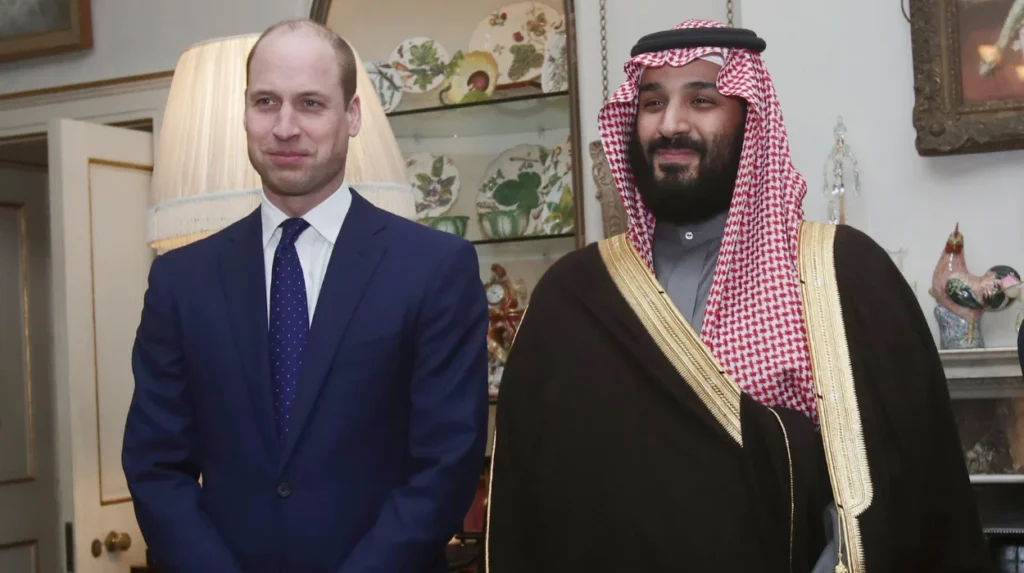
Prince William’s recent diplomatic visit to Saudi Arabia marks more than a gesture of goodwill — it reveals a calculated recalibration in global diplomacy. Publicly framed around cooperation in environmental sustainability, culture, and regional development, the trip also signals tacit acceptance of Saudi Arabia’s evolving international image. This matters profoundly at a moment when the kingdom’s global attention is intensifying due to its confirmed hosting of the 2034 FIFA World Cup.
Through the convergence of royal diplomacy, mega-sporting events, and geopolitical strategy, the visit underscores a shared pattern: global institutions continue to engage Riyadh despite persistent concerns over human rights and governance. In doing so, they risk conflating modernization with reform — and diplomacy with endorsement.
Diplomacy as Endorsement
Prince William’s trip, his first official visit to Saudi Arabia in several years, was billed as an opportunity to reaffirm ties between the United Kingdom and the Gulf. Official readouts emphasized cooperation on environmental initiatives, heritage preservation, and sustainable development — topics safely located within the technocratic language of modern diplomacy.
Yet diplomatic gestures rarely operate within such narrow bounds. In international politics, visits of this stature carry implicit meaning. When global figures — particularly from constitutional monarchies with symbolic weight like Britain’s — stand alongside Saudi leaders, the optics read as recognition, if not approval, of the host’s governance trajectory.
This creates a persistent paradox: while Western governments articulate commitments to democratic values and human rights, strategic partnerships often demand discretion over principle. Prince William’s visit, like many before it, encapsulated this tension between moral positioning and pragmatic alliance-building — a dance familiar in Western dealings with Riyadh.
The Shadow of Reputation
Saudi Arabia’s reputation remains closely tied to controversies that transcend time. The 2018 killing of journalist Jamal Khashoggi continues to shape perceptions of the kingdom’s leadership style and accountability mechanisms. While the Saudi government has worked to project normalcy — launching wide-reaching modernization programs and media initiatives — the episode persists in international memory as a marker of the limits of reform.
High-profile diplomatic visits, therefore, can appear less like bridges to transformation and more like signals of global forgiveness. The message is often subtle but unmistakable: economic and geopolitical interests have overridden calls for transparency. This perception risks deepening the sense that global actors tolerate selective accountability depending on strategic importance.
From Diplomacy to Branding
Under Crown Prince Mohammed bin Salman’s Vision 2030 initiative, Saudi Arabia is rebranding itself not as an oil-dependent kingdom but as a diversified economy and cultural hub. This campaign interlaces economics, culture, and aesthetics — positioning modern architecture, entertainment events, and tourism as emblems of progress.
Prince William’s visit dovetailed neatly with this effort. Discussions on sustainability and cultural heritage enabled Saudi Arabia to reinforce its self-portrait as a forward-facing nation engaging constructively with global partners. The imagery that accompanied the visit — shared across Western and Middle Eastern media — contrasted sharply with older perceptions of isolation and conservatism.
However, what remains uncertain is whether these efforts amount to structural reform or strategic image management. Critics note that while gender dynamics and public entertainment laws have evolved, political liberalization and press freedom have not kept pace. The dissonance between economic openness and political restriction continues to challenge the credibility of Saudi Arabia’s reform narrative.
The World Cup as a Global Stage
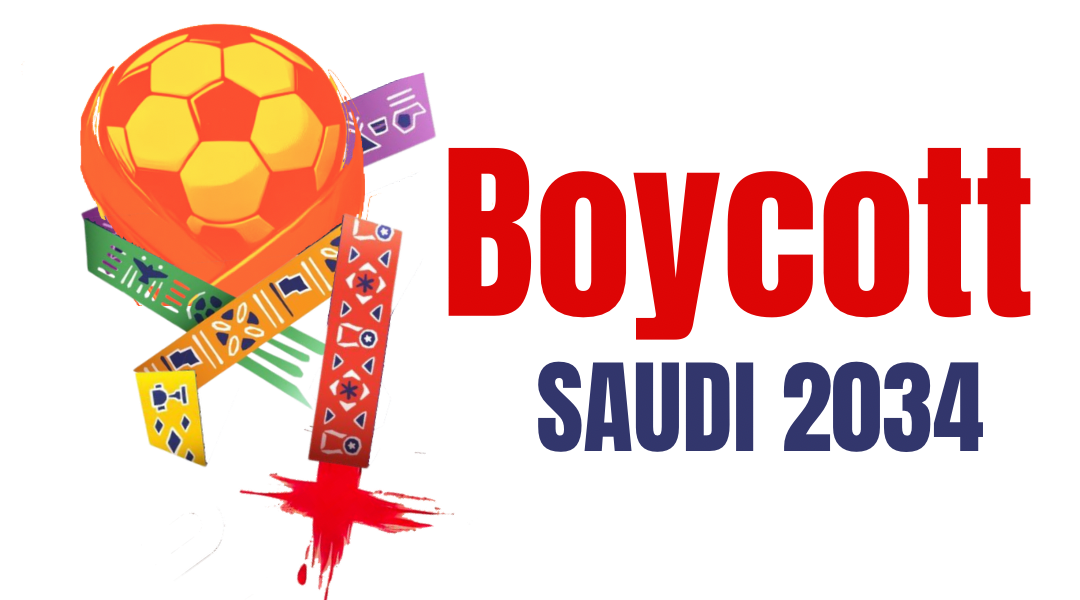
The prospect of hosting the 2034 FIFA World Cup gives Saudi Arabia its most powerful branding platform yet. No global event rivals the World Cup for scale or visibility: it commands billions of viewers, monumental infrastructure investment, and global cultural capital.
For Saudi Arabia, this tournament represents the apex of its decade-long effort to reposition itself as a regional powerhouse and global destination. The timing — aligning with Vision 2030’s midpoint — is symbolically perfect. Stadiums, urban projects, and hospitality developments promised as part of the tournament can showcase transformation not just economically, but ideologically.
Yet this vision is accompanied by growing accusations of sportswashing — the use of sport to polish reputations and distract from human-rights criticisms. The label gained traction after Qatar’s 2022 World Cup, and Saudi Arabia’s record ensures similar scrutiny will follow. For critics, the interplay between diplomacy, sport, and image management reveals how global institutions willingly participate in moral laundering for access to wealth and influence.
The Politics of Silence
What stands out in official communications about Prince William’s visit is not what was said but what wasn’t. Western leaders increasingly refer obliquely to “shared values” and “ongoing dialogue,” language that avoids direct confrontation while preserving diplomatic goodwill.
This controlled silence reflects pragmatic restraint. Few diplomats expect direct criticism to produce reform, and overt pressure can strain delicate partnerships. Yet silence has a political cost: it implies consent. When officials avoid public statements on rights or accountability, they implicitly define such issues as secondary — negotiable rather than fundamental.
As Saudi Arabia advances toward the World Cup, this diplomatic tone-setting matters. The degree of scrutiny the tournament attracts — from human-rights watchdogs, journalists, and players — will depend in part on whether Western governments and institutions challenge the narrative now or continue to temper their engagement for mutual convenience.
Economic Interests and Strategic Calculations
Saudi Arabia occupies a central place in the global system — not just as an energy supplier but as an investment magnet and regional stabilizer. From defense coordination to trade in renewable technologies, cooperation with Riyadh remains valuable to powers like the UK.
This economic pragmatism helps explain the durability of Western engagement despite reputational friction. Prince William’s visit played to these shared interests, subtly anchoring discussions in arenas insulated from controversy. The optics of royal diplomacy softened the transactional underpinnings of modern geopolitics, allowing both sides to project stability, continuity, and respectability.
However, this balancing act risks diminishing Britain’s broader moral authority. If Western states appear too comfortable engaging with controversial partners, their advocacy on global human rights can ring hollow. Double standards erode trust and complicate diplomatic leverage, particularly when dealing with authoritarian states elsewhere.
The World Cup’s Test for Global Sport
FIFA’s decision to award the 2034 World Cup to Saudi Arabia is not merely administrative; it is a moral and institutional test. The governing body’s rhetoric of football as a force for diversity and inclusion will be scrutinized against the realities of the host country’s political environment.
If the upcoming tournament unfolds without visible progress on rights protections or transparency, critics will argue that sport has once again been subordinated to profit and power. Players, sponsors, and fans may find themselves drawn into political discussions that transcend the field — mirroring debates that surrounded Qatar in 2022 and Beijing’s Olympics before that.
The broader lesson is clear: the myth of apolitical sport is increasingly untenable. Global sports bodies have become arenas of soft power and cultural diplomacy. In this context, every decision — from host selection to sponsorship partnerships — carries moral weight.
Conclusion: A Tournament of Narratives
Prince William’s Saudi visit exemplifies the intersection of diplomacy, branding, and geopolitical symbolism. What appears as a conventional royal engagement is, in truth, part of a multi-layered strategy to craft legitimacy — for both Saudi Arabia and its international partners.
As the 2034 World Cup approaches, the world will watch not only the matches but also the narratives that frame them. Saudi Arabia seeks to demonstrate transformation; its partners, including the United Kingdom, seek to balance moral credibility with strategic interest. The outcome will shape how history judges both.
Whether the tournament becomes a celebration of genuine change or a monument to global complicity will depend on what happens in the years between — and whether the silence accompanying diplomacy gives way to honest dialogue about accountability and reform.