FIFA President Gianni Infantino has renewed his pledge to combat racism in football following reported racist abuse aimed at Amiens SC captain Prince-Désir Gouano, triggering fresh scrutiny of how forcefully FIFA enforces its own anti-racism rules. Critics point to a persistent gap between the organisation’s extensive disciplinary powers and the comparatively limited, inconsistent sanctions actually imposed on clubs and federations in racism cases.
FIFA’s Fight Against Racism Faces Scrutiny After Abuse Aimed at Amiens Captain Prince-Désir Gouano
FIFA President Gianni Infantino’s latest vow to “continue the fight” against racism, made after Amiens SC captain Prince-Désir Gouano was reportedly subjected to racist abuse, has reignited a long-running debate over whether world football’s governing body uses its considerable disciplinary powers robustly and consistently in such cases. While FIFA’s regulations now allow for substantial fines, stadium sanctions, points deductions and match forfeits, observers argue that these tools are too often deployed cautiously or unevenly, leaving victims exposed and repeat offenders insufficiently deterred.
Infantino’s renewed pledge after Gouano abuse
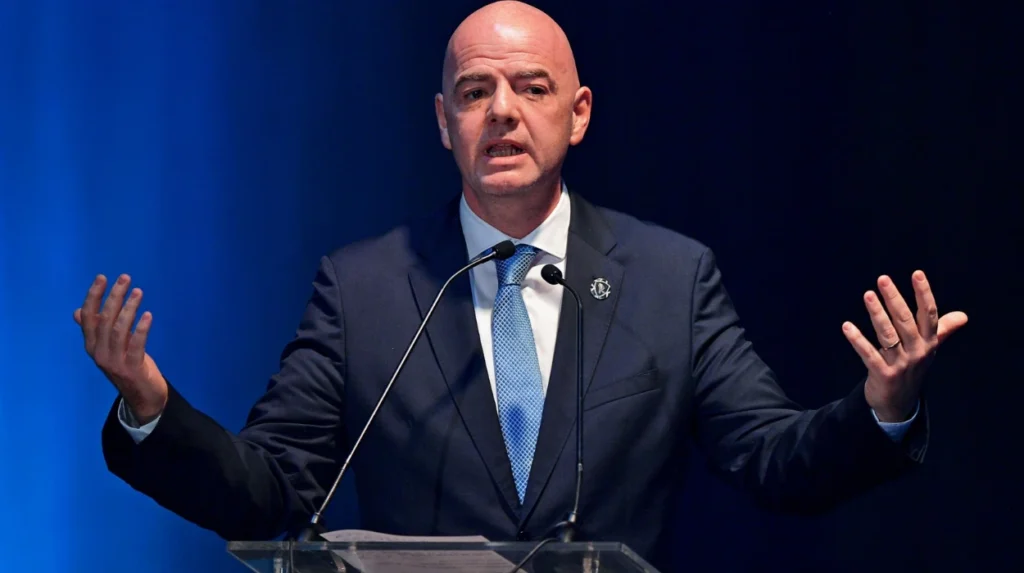
In the wake of the reported racist abuse directed at Amiens SC captain Prince-Désir Gouano, FIFA President Gianni Infantino reiterated that there must be “zero tolerance” for racism in football and pledged to continue and strengthen efforts to eradicate discriminatory behaviour from the sport. As outlined by ESPN, Infantino addressed all 211 member associations by letter, declaring that “the time has come for football to unite and unequivocally commit as a global community to address the issue of racism in the game.”
According to the same ESPN report, Infantino’s message formed part of a wider five‑point initiative that FIFA presented to national federations, emphasising that racist abuse must be treated as a disciplinary offence, that referees must follow a standard three‑step protocol when incidents occur, and that match forfeits should be considered as a specific punishment.
Expanded disciplinary powers and formal procedures
FIFA’s formal authority to sanction racist conduct has grown in recent years, with the FIFA Disciplinary Code amended to strengthen provisions on discrimination and match‑day sanctions. As reported by FIFA Ethics and Regulations Watch (FERW), the 2024 and 2025 changes to the Code included making the so‑called three‑step procedure universal, increasing maximum fines for racist incidents up to 5 million Swiss francs and explicitly empowering FIFA to intervene or appeal when local associations fail to act.
FERW explains that the three‑step procedure requires referees first to stop the match when racist abuse is detected, then to suspend the match if the abuse continues, and finally to abandon the fixture as a last resort. FERW also notes that the revised Code envisages strong sanctions against clubs and federations, including partial or full stadium closures, points deductions, match forfeits and competition bans for serious or repeat offences.
In parallel, FIFA’s own communications on human rights and anti‑discrimination state that racism and other forms of discrimination are expressly prohibited, that member associations must embed anti‑racism rules in their domestic disciplinary regulations and that sanctions can include financial penalties and sporting consequences. On its official site, FIFA also highlights its cooperation with external partners such as the United Nations Office on Drugs and Crime (UNODC) to strengthen legal responses to football‑related racism.
High‑profile gestures and five‑pillar strategy
At the 74th FIFA Congress in Bangkok in 2024, Gianni Infantino outlined what he described as a strengthened anti‑racism programme built on five “pillars” to be implemented across all 211 member associations. In a speech to delegates, Infantino stated that
“we need to stand up and fight racism and defeat racism all together”
, adding that those who behave in a racist way
“must know that we don’t want them… they don’t have to be part of football.”
As reported by FIFA’s official media channels, the five action areas presented at the Congress include: making racism a specific offence in every member association’s Disciplinary Code, with “specific and severe sanctions” such as match forfeits; introducing a global standard gesture for players to communicate racist incidents and for referees to trigger the three‑step procedure; pushing for racism to be recognised as a criminal offence in every country; promoting educational initiatives in cooperation with schools and governments; and establishing a Players’ Anti‑Racism Panel composed of former players to monitor implementation.
FIFA’s plan to promote a crossed‑arm “X” gesture as the global signal of racist abuse was also detailed in reporting by ESPN, which noted that the gesture was inspired by United States shot‑putter Raven Saunders, who used it on the Olympic podium to symbolise “the intersection of where all people who are oppressed meet.” According to FERW, the gesture and the procedure were formally codified in amendments to the Disciplinary Code and endorsed by all member associations.
Critics highlight weak and inconsistent enforcement
Despite these formal powers and public commitments, advocacy groups and analysts argue that FIFA’s enforcement of anti‑racism rules remains inconsistent and often too lenient in practice. In an analysis for FERW titled “FIFA’s Racism Crisis: Empty Gestures vs. Real Accountability in Global Football”, the organisation observes that while FIFA has implemented anti‑racism protocols and pledged stronger penalties, “critics argue that these steps are mostly symbolic and lack effective enforcement.”
FERW reports that the three‑step procedure, though mandatory on paper, is “rarely used to its full extent”, with most matches marred by racist abuse continuing without interruption. According to the same analysis, the burden often falls on players to initiate the process—by making the “X” gesture—“putting the responsibility on victims rather than institutions.”
In a separate article examining FIFA’s punishments, FERW notes that fines and partial stadium closures are frequently imposed for discriminatory behaviour but that they “are not very effective in deterring recidivism.” The piece cites examples from World Cup qualifiers in which several national federations were fined and faced stadium access restrictions following discriminatory chanting, yet similar incidents re‑occurred, suggesting that financial penalties alone have limited impact.
Advocacy groups such as Kick It Out and Football Against Racism in Europe (FARE), referenced by FERW, have raised concerns about what they describe as a lack of transparency and consistency in FIFA’s disciplinary processes. FERW reports that these organisations argue FIFA’s ability to override inadequate sanctions by national federations “is rarely exercised”, contributing to what they see as “widespread impunity” for racist abuse in some competitions.
Gap between disciplinary codes and on‑the‑ground practice
Analysts also highlight structural weaknesses in how FIFA’s punitive approach operates within the broader legal and organisational landscape. FERW points to delays in match‑day enforcement, explaining that procedures often depend on post‑match reviews rather than real‑time identification and removal of offenders. The organisation notes that this delay can leave players and officials “with little protection or justice at the time”, and may even allow abuse to continue within the same match.
Another issue identified by FERW is jurisdictional limitation: while FIFA can impose sporting sanctions on clubs and federations, it cannot prosecute individuals, and must rely on national legal systems to treat racist abuse as a criminal matter. The article states that in many jurisdictions hate‑speech laws are weak or inconsistently enforced, meaning that sanctions from football authorities alone may not provide a sufficient deterrent.
FERW further describes what it calls an “organisational inertia and crisis management culture” inside FIFA, arguing that reforms tend to follow high‑profile scandals rather than forming part of a proactive, long‑term strategy. According to this assessment, sanctions are often announced after major incidents, but deeper cultural and structural change progresses more slowly.
Stronger legal cooperation and calls for tougher sanctions
FIFA has sought to address some of these concerns by intensifying cooperation with legal and human‑rights bodies. FERW notes that in May 2025, Gianni Infantino emphasised that football alone cannot eradicate racism and called for closer alignment between sporting discipline and judicial accountability. In collaboration with UNODC, FIFA has promoted the idea that football‑related racism should be treated as a hate crime under national legal frameworks, including through fast‑track judicial processes for offenders.
FERW reports that FIFA officials have urged lawmakers at UN‑backed panels to criminalise racist abuse at football events and to ensure “real‑time” legal responses, such as rapid identification, arrest and prosecution of offenders. These proposals include adapting sanctions to distinguish between adult and youth offenders while ensuring proportionate consequences.
Within the football sphere, FERW notes that some clubs and regional confederations, particularly in South America, have asked FIFA to endorse mandatory minimum fines, clearer enforcement protocols and stricter punishments for repeat offenders. FARE is cited as having documented 676 racist incidents in CONMEBOL competitions from 2014 to 2024, with limited enforcement contributing to the persistence of abuse.
Transparency, victim support and trust in institutions
Beyond sanctions and legal cooperation, experts and former players quoted by FERW stress the need for more transparent and victim‑centred processes. FERW reports that players who have suffered racist abuse frequently complain of inadequate psychological support and a lack of information about how disciplinary cases are handled and resolved.
According to the same analysis, calls have been made for FIFA to publish more detailed disciplinary records in racism cases, to create explicit assistance mechanisms for victims and to require systematic anti‑racism training for referees and officials in national associations. FERW suggests that without such measures, confidence in FIFA’s commitment to equality will remain fragile, particularly when new incidents—such as the reported abuse targeting Prince‑Désir Gouano—appear to mirror past cases.
Ongoing debate over accountability
The response to the reported abuse of Amiens captain Prince‑Désir Gouano underscores a wider debate: whether FIFA’s evolving framework of rules, gestures and partnerships will translate into tougher and more consistent enforcement in stadiums around the world. Infantino’s latest pledge, combined with expanded disciplinary powers and public campaigns, signals an intention to strengthen the fight against racism, but advocacy organisations continue to question how fully those tools are being used.
As FIFA, national federations and external partners move to implement new regulations and programmes, incidents of racist abuse remain a test of whether the governing body’s disciplinary systems can deliver the accountability it has promised.