While Ukrainian cities still endure air raid sirens and missile strikes, football’s global governing body is quietly preparing the stage for Russia’s return to international competition. The move exposes not only a profound moral blindness at the heart of FIFA, but also a broader crisis over what global sport stands for in the face of war and mass atrocities.
A War That Has Not Stopped
Nearly two years after Russia’s full‑scale invasion of Ukraine, the war is neither “frozen” nor forgotten on the ground. Ukrainian officials stress that civilians continue to be killed and maimed, including children hit by shrapnel while doing something as ordinary as playing football. Against this backdrop, the notion that now is the time to rehabilitate Russia in world football does not just feel premature; it feels like complicity.
The original bans on Russian teams by FIFA and UEFA in 2022 were not symbolic gestures plucked from thin air. They followed a wave of refusals by European national teams to share a pitch with Russia and strong pressure from governments that recognised sport as one of the few global languages Moscow could not easily ignore. The message was simple: a country waging a war of aggression cannot expect “business as usual” on the world’s most watched sporting stages.
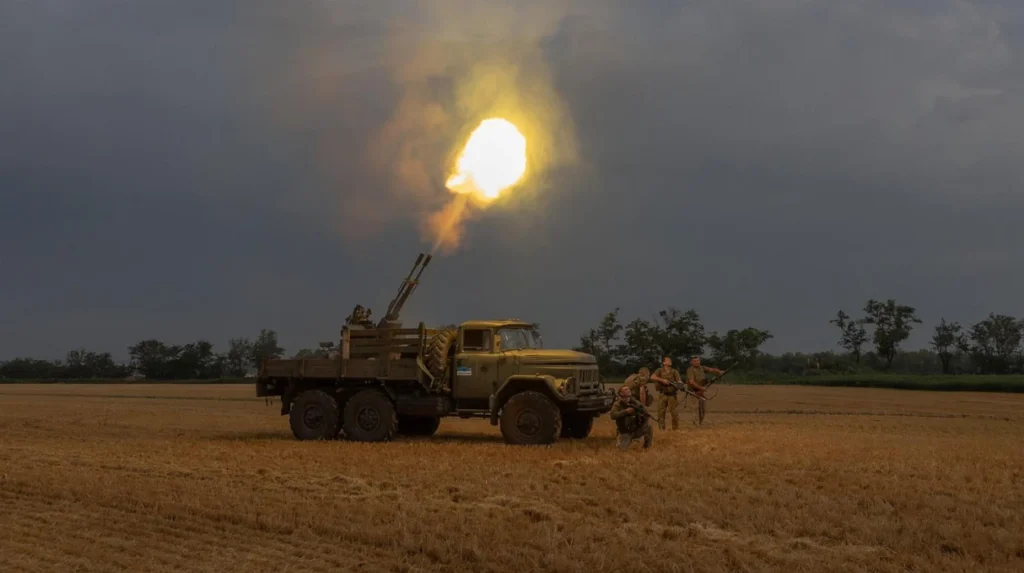
Nothing about the situation in Ukraine today suggests that this logic has changed. On the contrary, Ukrainian officials argue that the violence has intensified and become more entrenched, with long‑range missile and drone attacks regularly targeting infrastructure and residential areas. To pretend the conditions now justify a softening of sporting sanctions is to rewrite reality in the service of political convenience.
Infantino’s Argument: A Dangerous Trivialisation
FIFA president Gianni Infantino has reportedly told European officials that the ban on Russia “has not achieved anything,” implying that punishing Russian football has failed to alter the Kremlin’s course. At first glance, this sounds pragmatic; in practice, it is a deeply cynical standard to apply to any form of non‑military pressure.
By that logic, one might dismiss economic sanctions, diplomatic isolation, or arms embargoes every time they fail to deliver instant regime change. International pressure rarely “solves” a conflict outright; its role is to constrain, delegitimise, and signal that certain actions will carry real costs. Football, with its unmatched global audience, is uniquely placed to send such signals—precisely why Russia wants back in.
Infantino’s framing also trivialises the lived reality of Ukrainians. Ukraine’s sports minister, Matvii Bidnyi, has condemned his stance as
“irresponsible and infantile,”
pointing out that behind every abstract debate about sanctions are real people under bombardment. When a child is killed on a pitch by a Russian attack, the question is not whether a football ban will stop the next missile; it is whether the football world is prepared to pretend that missile has nothing to do with who is allowed to walk out under FIFA’s flags.
Legitimising Aggression Through Sport
Ukraine’s core argument is stark: readmitting Russia to world football now would legitimise Vladimir Putin’s aggression. Sport does not exist in a vacuum; it is a powerful instrument of soft power and prestige. For Russia’s leadership, a return to FIFA competitions would function as visual proof that, despite war crimes allegations and mounting civilian casualties, Russia remains an accepted member of the international community.
This is precisely why Ukrainian officials are scrambling to build a new coalition to block FIFA’s push. Kyiv is urging European governments to sign a joint statement opposing the reinstatement of Russia, echoing a similar united stance that many states took over Russian participation in the Paralympics. The aim is to show FIFA that if it restores Russia’s football privileges, it will not be doing so in the name of
“the world,”
but in defiance of many of its own member governments.
Framed this way, the issue is not only about who plays whom in qualifiers; it is about whether global sport will be used to whitewash or to recognise aggression. If Russia can wage a brutal war while still parading its colours on football’s biggest stages, the deterrent value of sporting sanctions against any future aggressor will be severely undermined.
FIFA’s Double Standards on Justice
The current debate also exposes a wider pattern of double standards in how FIFA approaches human rights and political responsibility. Over the past decade, the organisation has repeatedly faced scrutiny over corruption scandals, opaque decision‑making, and its willingness to award hosting rights or legitimacy to states with grave human rights records. The Russia question lays this hypocrisy bare in a war context that is impossible to ignore.
When smaller associations or individual players speak out on social issues, they are frequently warned not to “politicise” football. Yet when a major power like Russia is involved, FIFA seems eager to depoliticise the discussion, reducing it to a technical question about the effectiveness of bans. The notion that re‑admitting Russia is a neutral or apolitical choice is absurd; it is every bit as political as the decision to exclude them in the first place.
The UK culture secretary, Lisa Nandy, has criticised both FIFA and the International Olympic Committee for exploring ways to let Russia back into sport despite the ongoing war. She notes that the situation in Ukraine has worsened since the bans were imposed, not improved, undercutting any narrative that time alone justifies a “normalisation” of Russia’s status. Her intervention underscores that this is not merely a dispute between FIFA and Ukraine; it is a broader clash between sporting bureaucracies and governments that still recognise the gravity of Russia’s actions.
The Moral Weight of Symbolic Actions
Critics of sporting sanctions often deride them as merely symbolic. Yet symbols matter, particularly in a conflict where information, narrative, and legitimacy are themselves battlegrounds. For Ukrainians, seeing Russia welcomed back into international football while missiles continue to fall would send a chilling message: the world’s patience for their suffering has run out.
Symbolic actions also have cumulative power. When national teams refused to face Russia in 2022, it signalled that players and associations were unwilling to treat an invading state as just another opponent. When sponsors and broadcasters distance themselves from a pariah regime, it affects not only finances but also public perception at home and abroad. To reverse those steps without any corresponding change in Russian behaviour is to squander that hard‑won moral clarity.
Ukraine’s appeal for a renewed joint statement by European governments recognises this. Even if such a declaration does not stop FIFA outright, it would represent a line in the sand: a collective refusal to accept that Russia’s war can be cordoned off from its presence in global sport. The fact that officials in Kyiv believe they are close to securing such a statement shows that many capitals still see the stakes clearly.
Shifting Responsibility Away From FIFA
One of the more troubling aspects of FIFA’s posture is the way responsibility is being subtly shifted away from the organisation itself. By arguing that governments continue to trade with Russia in certain non‑sanctioned goods, some within FIFA question why football should be expected to maintain a harder line than states do. The implication is that if politicians are not fully consistent, FIFA is absolved from setting any moral standard at all.
This is a convenient but dangerous argument. It assumes that sport can only follow, never lead, and that institutions like FIFA have no independent obligation to defend basic principles. In reality, global sporting bodies wield enormous influence and have often claimed to promote peace, unity, and respect. If those slogans are to mean anything, they must apply when doing the right thing is politically uncomfortable, not only when it is easy.
Moreover, pointing to gaps in government policy does nothing to answer Ukraine’s central charge: that reinstating Russia now would help normalise a war that is still in full swing. Even if some governments fail to enforce a comprehensive economic embargo, it does not follow that FIFA must help rehabilitate Russia’s international image. On the contrary, sport could be one of the few arenas where a consistent moral line is maintained.
Europe’s Choice: Stand Firm or Fold
As European ministers and football leaders meet in Brussels, they face a stark choice. They can either support Ukraine’s call to keep Russia out of international football until meaningful change occurs—such as a ceasefire, withdrawal, or credible peace process—or they can acquiesce to FIFA’s push for reinstatement in the name of
“moving on.”
Supporting Ukraine would mean recognising that the ban is not a magic bullet but a necessary stance: a refusal to equate aggressor and victim on the pitch while they are anything but equal off it. It would also mean sending a clear signal to FIFA that its authority is not unlimited, and that its decisions must align, at minimum, with basic standards of justice.
Folding to FIFA, by contrast, would set a bleak precedent. It would tell future aggressors that time and persistence are enough to outlast sporting sanctions, even if the bombs never stop falling. It would reinforce the perception that global football is governed not by principles but by the desire to keep all markets, broadcasters, and political blocs engaged, no matter the cost in credibility.
What Kind of Game Is This?
At its heart, the fight over Russia’s place in international football is a fight over what the game represents. If football is merely entertainment, detached from any responsibility to the world in which it is played, then FIFA’s push to bring Russia back may seem logical. In that view, politics is an unwelcome intrusion, and the suffering of Ukrainians is just one more background fact to be bracketed out when the whistle blows.
But football is not just entertainment. It is a global ritual of identity, pride, and belonging, which states invest in precisely because it carries political and moral weight. When a country walks out under its flag at a World Cup qualifier, it is demonstrating not only athletic prowess but also a claim to legitimacy and status.
That is why Ukraine is fighting so hard to keep Russia off the pitch—and why FIFA’s eagerness to move past the war is so alarming. Allowing Russia back into international football while missiles still strike Ukrainian cities would not be a neutral administrative decision. It would be a statement to the world that, in the eyes of football’s most powerful institution, the game matters more than justice, and the show must go on—even over the sound of air raid sirens.