
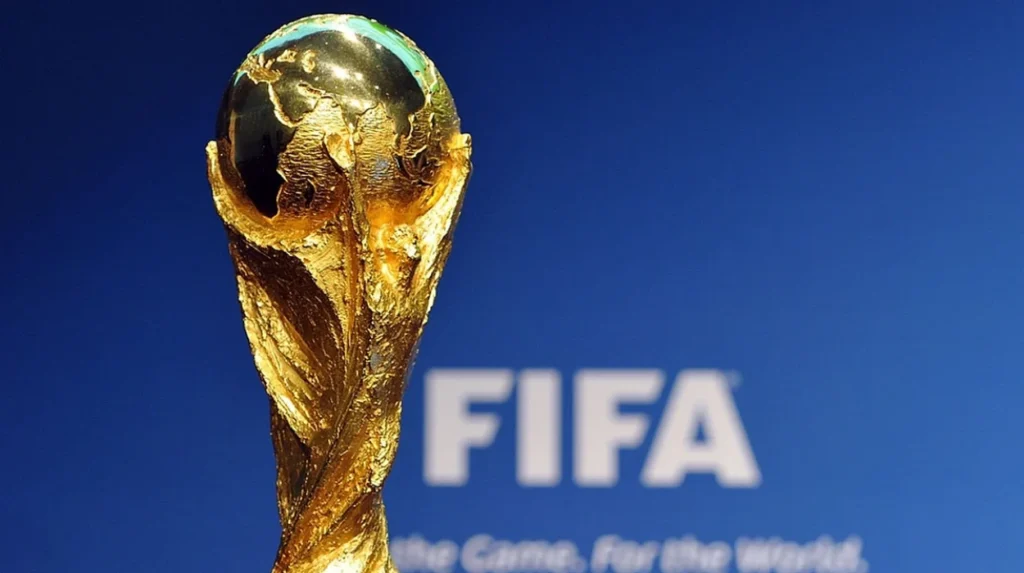
FIFA’s decision to dramatically raise ticket prices for the FIFA World Cup 2026 final has sparked an international backlash, with fans, policymakers, and football associations condemning the governing body’s latest move as emblematic of its deepening commercial priorities.
According to reporting by The Guardian, prices for top-tier seats for the 2026 final — set to be held at MetLife Stadium in New Jersey — will reach as high as $10,990, a near sevenfold increase from the approximately $1,600 average charged during the Qatar 2022 final. Even mid-tier seats, once accessible to ordinary supporters, are now priced between $5,000 and $7,000, while entry-level seats remain scarce and subject to FIFA’s new dynamic pricing system.
The unprecedented surge has reignited broader debates over affordability, fairness, and the growing divide between football’s global fan base and its corporate elite.
Commercialisation vs Football Culture
The announcement exposes a widening chasm between football’s commercial evolution and its cultural roots. Historically, the World Cup was marketed as a festival for all, bringing together fans from every corner of the globe in a shared love of the sport. In many countries, attending a World Cup match was a once-in-a-lifetime dream within economic reach.
In stark contrast, the FIFA World Cup 2026 ticket prices reflect an event increasingly calibrated for an affluent audience. The shift undermines FIFA’s long-standing rhetoric of inclusivity and global unity. Critics argue that this monetisation is transforming football’s most cherished event into an exclusive corporate gala.
As The Guardian noted, organisations representing supporters have accused FIFA of “pricing out the working class” — the very demographic that sustains football’s emotional heartbeat. Older fans recall that tickets for the 1998 final in France were under $400, making today’s costs a 25-fold jump in less than three decades. This dramatic escalation illustrates how football ticket inflation has accelerated faster than global incomes, particularly outside Western economies.
Dynamic Pricing and Growing Inequality
FIFA’s introduction of a dynamic pricing model — commonly used in aviation and concert ticket sales — marks a historic shift for world football. Under this system, ticket prices fluctuate in real time based on demand, seat location, and purchasing trends, effectively turning each seat into a commodity whose value is algorithmically determined.
While marketed as a tool for “market flexibility,” many observers describe it as a mechanism that favours wealthy consumers and corporate buyers over loyal supporters. Economists note that dynamic pricing, in entertainment markets, tends to reward instantaneous, high-spending decisions while penalising those who wait or seek affordability.
Transparency is another major concern. The Guardian reported widespread confusion and technical malfunctions during the online rollout, with thousands of fans unable to access or complete transactions as prices surged within minutes. For some, the same seat doubled in cost within an hour.
This unpredictability not only fuels frustration but threatens the perceived fairness of the World Cup experience. As one fan advocacy group in the UK commented,
“Football shouldn’t be a stock market — it should be a sport.”
Corporate Dominance of the Stadium Experience
FIFA’s reliance on corporate hospitality packages and exclusive resale channels further reveals how the organisation’s business model increasingly sidelines traditional supporters. VIP suites and corporate boxes now account for an ever-larger share of stadium capacity — in some cases, as much as 20% of total seating, according to independent audits.
Hospitality bundles, which include luxury dining and concierge services, can exceed $25,000 per person for the final. These packages are heavily promoted to international sponsors, investment groups, and high-net-worth individuals rather than ordinary fans.
Moreover, FIFA’s commissioned resale platform — which takes a 15% transaction fee — has been criticised for driving secondary market inflation. Many resale listings for the 2022 final reached over $8,000, and early indicators suggest 2026 may surpass even that, solidifying the perception that World Cup final tickets cost whatever the wealthiest bidder is willing to pay.
Such dynamics shift the emotional centre of the event away from terraces filled with singing supporters toward sanitized corporate enclosures where spectacle eclipses spirit. Sociologists warn this trend erodes the communal energy that defines football fandom.
Global Inequality Amplified
The financial barriers imposed by the FIFA dynamic pricing controversy amplify global inequality in stark terms. Fans from developing nations — particularly in Africa, South America, and parts of Asia — face prohibitive travel and accommodation costs before even considering tickets. For many, total expenses for attending the final would exceed a year’s income.
This international disparity contradicts FIFA’s long-held claim that the World Cup “belongs to everyone.” Instead, participation now appears geographically and economically restricted to higher-income brackets, particularly from North America and Western Europe.
During the 2018 and 2022 tournaments, national associations from countries such as Mexico, Senegal, and Argentina organised subsidised packages for low-income supporters. By comparison, 2026 offers no such mechanism, with FIFA maintaining that
“market structures will self-regulate demand.”
The statement was met with sharp rebuke from political figures across Latin America and Africa, many accusing FIFA of moral negligence. A Brazilian sports minister described the pricing model as “an act of exclusion masked as innovation,” echoing a wider sense of disillusionment among fans in the Global South.
Reputational Risk and Fan Trust
The short-term financial gains from premium ticket sales could come at a steep reputational cost. Public trust in FIFA — already weakened by past corruption scandals and transparency failures — faces renewed scrutiny.
Polls conducted in March 2026 by international fan associations reveal that over 70% of respondents believe FIFA is “out of touch” with ordinary supporters. Social media has amplified the backlash, with hashtags like #BoycottFIFA2026 and #FootballForTheRich trending across platforms.
FIFA officials have defended the policy as a response to “unprecedented logistics” and “a multi-host structure,” given that the 2026 tournament spans the United States, Canada, and Mexico. Yet many experts see this justification as insufficient. The commercial emphasis appears misaligned with football’s communal ethos.
Reputationally, the episode recalls the 2015 corruption crisis that prompted calls for structural reform within FIFA. Critics argue that despite administrative changes, the organisation’s financial instincts remain largely unchanged — prioritising profit maximisation over accessibility.
Long-Term Impact: The Future of Live Football
The implications of this pricing policy extend far beyond a single tournament. With the FIFA World Cup 2026 ticket prices setting a new global benchmark, other major sports organisers may follow suit. This could accelerate a transformation of football into a premium entertainment product, rather than a universally accessible sport.
Sociologists warn that younger generations, especially in developing countries, may grow increasingly detached from live football culture. As televised streaming and digital experiences replace in-person match attendance, stadiums risk becoming spaces for economic elites rather than diverse communities.
The trend echoes broader patterns seen in global entertainment, where access to cultural events depends heavily on income. Yet football’s historical power — its emotional universality — has always rested on inclusion, not exclusion. Losing that balance could threaten its moral authority and mass appeal.
Furthermore, political scrutiny is likely to intensify. European and Latin American governments have already hinted at potential regulatory interventions to ensure fair pricing in future tournaments. In the long term, FIFA’s commercialisation strategy could invite oversight not only from fan groups but also from policymakers concerned about exploitation of global audiences.
Broken Promises and Historical Contrast
When the United States, Canada, and Mexico jointly won the 2026 hosting bid, FIFA pledged that prices would remain “accessible” and that shared infrastructure would help reduce costs. At the time, this claim formed part of the official bid evaluation report, citing inclusivity as a key rationale for awarding the tournament to North America.
That promise now rings hollow. Critics note that the World Cup 2026 ticket prices directly contradict FIFA’s own commitments. In practical terms, even average tickets now cost more than double the median monthly wage in countries such as Mexico and Colombia.
This contradiction underscores the widening gap between FIFA’s branding and its operational reality. By commodifying attendance, the organisation risks undermining the very narratives of unity and equality it uses to market global football.
A Fan Base Left Behind
At the heart of this controversy lies a simple truth: millions of supporters — the core of world football — are being priced out. From grassroots clubs in Lagos to local bars in Buenos Aires, fan communities express a shared sense of alienation.
The same digital platforms that amplify FIFA’s promotional campaigns also document fan frustration, capturing the growing mistrust and disengagement. Where the World Cup once stood as a celebration of global togetherness, it now faces accusations of becoming an event by and for the elite.
The technological sophistication of dynamic algorithms contrasts sharply with the simplicity of football’s roots — a ball, a pitch, and players representing national pride. The gap between those two worlds appears wider than ever.
FIFA’s steep ticket hikes for the 2026 final crystallise a deeper identity crisis within world football. The governing body that once claimed to unite the planet under one sport increasingly operates like a commercial entertainment conglomerate.
While profitability and global marketing are integral to any major event, the FIFA dynamic pricing controversy highlights the tension between financial innovation and social responsibility. In choosing algorithms over affordability, FIFA risks eroding the emotional contract it holds with its supporters.
The longer-term consequences may be profound. As live attendance becomes unattainable for most, football’s grassroots foundations could weaken — replaced by a more transactional, less inclusive vision of global sport. Unless FIFA reevaluates its priorities, the world’s game may soon belong only to those who can afford the ticket.