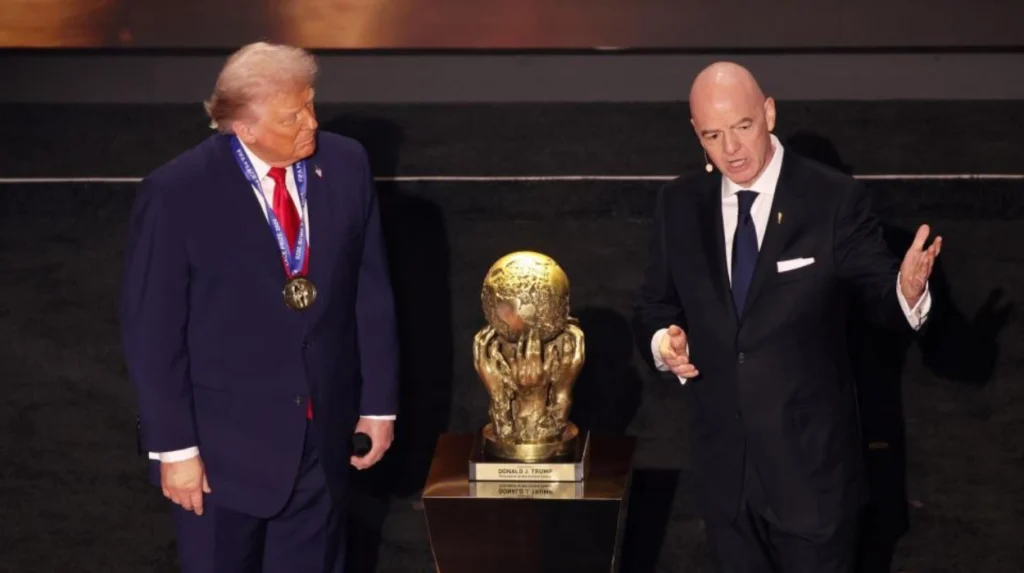
Gianni Infantino’s reported referral to the IOC ethics system has drawn attention because it goes beyond FIFA and into the Olympic movement’s own standards on neutrality and conduct. The complaint, filed by the human rights organization FairSquare, alleges that Infantino’s public behaviour around the World Cup and his apparent political alignment with Donald Trump may have breached rules on political neutrality. That allegation is not proof of wrongdoing, but it is significant because Infantino has been an IOC member since 2020, giving the IOC a basis to assess his conduct under its ethics framework.stillmed.
The story matters because it places a top football official under scrutiny from a body that expects its members to uphold impartiality and the Olympic Charter’s ethical standards. It also arrives at a moment when FIFA is preparing for the 2026 World Cup, making governance questions especially sensitive.stillmed.
FIFA’s Political Neutrality Under Fresh Scrutiny
FIFA has long said that it is politically neutral, but that principle becomes difficult to maintain when its leaders engage directly with heads of state and governments. Reuters reported that the complaint against Infantino centers on alleged breaches of neutrality linked to his conduct in the World Cup debate, particularly after Trump took public credit for FIFA’s decision regarding Folarin Balogun’s suspension. The concern is not simply that political figures were involved, but that FIFA’s own president appeared too closely associated with one side of a political controversy.
This raises a broader question about consistency. FIFA has often sanctioned players or teams for political gestures, yet critics say senior officials may not always face the same scrutiny when their own actions appear politically charged. That perceived double standard can damage confidence in the federation’s commitment to neutrality, even before any ethics body reaches a conclusion.
The Growing Debate Over FIFA Governance
The complaint also reflects a wider debate about FIFA governance that has persisted since the corruption crisis that reshaped world football in 2015 and 2016. Infantino came to power promising reform, transparency, and a cleaner institutional culture, and he has argued that FIFA is no longer the body it once was. But critics have continued to question whether reforms have genuinely strengthened accountability or simply concentrated power around the presidency.
That criticism matters because governance is not only about formal rules; it is also about whether those rules are applied in a way the public can trust. Reuters has reported that FIFA has struggled to regain fan confidence, and that reputational damage has lingered despite repeated assurances of reform. In that context, any new ethics complaint against the president revives long-running doubts about institutional independence.
How Infantino’s Leadership Shapes FIFA
Infantino’s presidency has been marked by a more centralized and highly visible leadership style, with critics saying the role of the presidency has grown more influential in FIFA’s internal and external affairs. Supporters argue that this approach has helped FIFA secure revenue, broaden its global reach, and keep the organization relevant in a fast-changing sports landscape. Both points can be true at once: a president can deliver commercial growth while still attracting criticism for governance style and transparency.
There is also a history of ethics scrutiny surrounding Infantino himself. Reuters reported that FIFA’s ethics committee has previously cleared him after investigations, underscoring that allegations alone do not establish misconduct. Still, repeated controversy can shape public perception, especially when critics see a pattern of executive discretion, limited transparency, and blurred lines between football administration and political symbolism.
Politics and Football: Where Should the Line Be Drawn?
International football cannot fully separate itself from politics because tournaments depend on state cooperation for security, infrastructure, travel, and diplomatic coordination. That reality gives FIFA a practical reason to maintain relations with governments and political leaders, particularly when hosting mega-events. The challenge is identifying where necessary engagement ends and political endorsement begins.
Observers and rights groups argue that the line should be drawn where institutional necessity gives way to personal alignment or public signalling that appears partisan. The IOC’s code of ethics is relevant here because it places weight on neutrality and restraint, especially for members who hold prominent positions. In practice, the debate is less about whether FIFA can speak to governments and more about whether its leadership can do so without compromising the appearance of independence.stillmed.
What the IOC Ethics Code Means for FIFA
The IOC Ethics Commission is responsible for the Olympic movement’s ethical framework, and its code is built around values including neutrality, integrity, and respect for the Olympic Charter. Because Infantino is an IOC member, the complaint gives the IOC a jurisdictional basis to examine whether his conduct meets those standards. That makes the case important beyond FIFA itself, because it tests whether the Olympic movement is willing to apply its standards to a powerful football figure.inside.
It is important to separate an ethics investigation from legal liability. An ethics process asks whether conduct violated a code of behaviour; it does not determine criminal wrongdoing or civil responsibility. That distinction matters because a complaint can be serious without being conclusive, and a formal review can still end without any finding of misconduct.stillmed.
Could the Controversy Affect the 2026 World Cup?
The short-term operational impact on the 2026 World Cup may be limited, but the reputational risk is real. FIFA depends on public confidence from fans, sponsors, host governments, and broadcasters, and repeated governance controversies can weaken the sense that the organization is being run with sufficient transparency. Even if the complaint does not result in sanctions, the process itself could sustain scrutiny at a sensitive moment in the build-up to the tournament.
That is particularly important because the World Cup is one of FIFA’s most visible products and one of the most politically complex sporting events in the world. A controversy over neutrality, even one that remains unresolved, can feed narratives that FIFA’s leadership is too close to political power. FIFA’s likely defense is that all such interactions were part of ordinary tournament business and that no ethics breach has been established.
What This Means for FIFA’s Global Credibility
The broader issue is credibility. FIFA has spent years saying that it has reformed after corruption scandals and governance breakdowns, but public trust remains fragile. FairSquare’s complaint does not prove Infantino crossed a line, yet it highlights how easily questions about neutrality, accountability, and executive behaviour can reopen old doubts about the organization’s culture. For a global federation that depends on legitimacy as much as revenue, that is a serious problem.
The controversy also speaks to a larger structural question: can any modern sports body remain fully neutral while operating in a world where politics, diplomacy, and mega-events are deeply intertwined? The answer may be that absolute neutrality is difficult, but ethical consistency is still possible. Whether or not the IOC takes action, the complaint has already forced football to confront the gap between the neutrality it claims and the political realities it inhabits.