
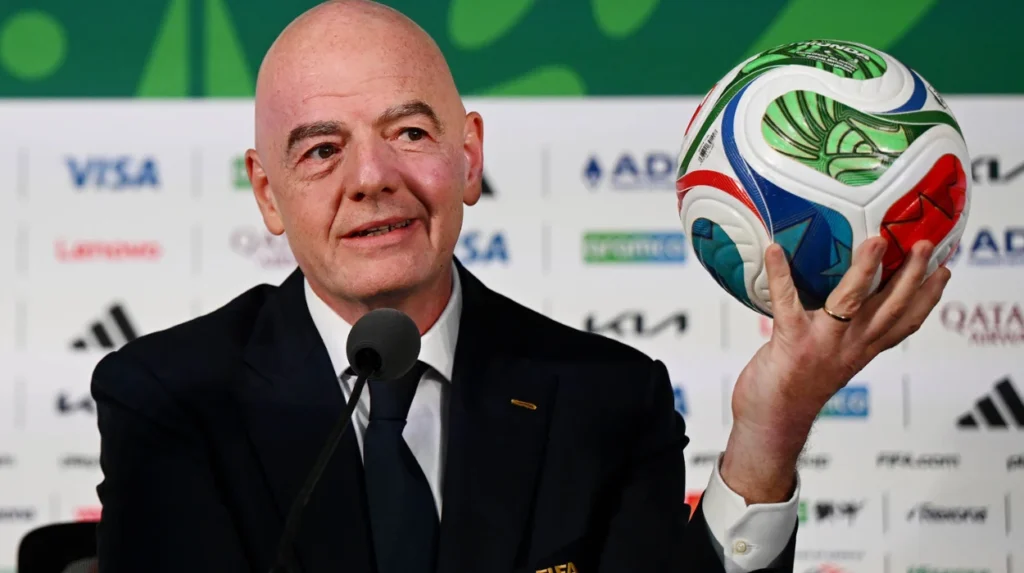
The Portsmouth News recently unearthed a narrative that connects English football’s coastal history to the epicenter of global football governance, weaving together FIFA President Gianni Infantino, former World Cup player and commentator Craig Foster, Portsmouth FC, and Crystal Palace into a story that illuminates the fractured state of modern football. Craig Foster, the Australian Soccer captain who played for both Portsmouth and Crystal Palace over two decades ago, has emerged as a vocal critic of FIFA’s handling of the 2026 World Cup visa controversies linked to Trump administration policies, while Infantino’s dismissive “chill and relax” response to critics has intensified scrutiny of FIFA’s leadership. This connection between a club once wrestling with financial survival and the world’s most powerful football organization reveals how local football identities increasingly collide with global commercial imperatives, exposing the widening divide between elite and non-elite clubs in an era where FIFA’s expanding influence reshapes the sport’s fundamental DNA.
The World Cup Story Behind Portsmouth FC
Portsmouth FC, affectionately known as Pompey, represents a particular strand of English football identity that has become increasingly rare in the contemporary landscape. The club’s history includes playing in the top flight of English football, winning the FA Cup twice, and maintaining a deep connection with its working-class coastal community in Hampshire. Yet the club’s trajectory over the past two decades mirrors the struggles of countless non-elite clubs across England’s football pyramid. After financial collapse in 2007 that led to administration and eventual liquidation of the original company, Portsmouth was reborn through fan ownership and has since worked its way back through the divisions, currently competing in League One.
The connection between Portsmouth and Craig Foster adds an unexpected dimension to this story, demonstrating how football’s global migration patterns once created surprising links between English clubs and international players. Foster, the Australian midfielder, joined Portsmouth from Australia in 1997, making 16 appearances and scoring two goals before transferring to Crystal Palace in October 1998. His relatively brief spell at Pompey reflects the era when English clubs outside the wealthiest tiers still attracted international players seeking opportunities in England’s football system. Today, such movement is far more restricted, with Premier League financial dominance concentrating talent within the top six divisions and making it increasingly difficult for clubs like Portsmouth to compete for international players.
Foster’s subsequent career at Crystal Palace provides a contrasting case study in English football’s structural evolution. At Palace, Foster made 54 league appearances and scored three goals, establishing himself more prominently in the English system. Crystal Palace has since undergone its own transformation, becoming a stable Premier League club with international branding, commercial partnerships, and the financial resources to consistently compete at Europe’s elite level. The divergence between Portsmouth’s survival narrative and Palace’s ascent illustrates how modern football increasingly rewards clubs operating within the Premier League’s financial ecosystem while clubs with strong historical identities face different realities in the contemporary landscape.
Gianni Infantino’s Vision for Global Football
Gianni Infantino’s decade as FIFA President has been defined by an ambitious vision for football’s global expansion that prioritizes commercial growth, tournament accessibility, and increased revenue distribution. Since taking office in 2016 following FIFA’s corruption crisis, Infantino has championed the expansion of the World Cup from 32 to 48 teams, the creation of an expanded Club World Cup with 32 participants, and the proliferation of international tournaments designed to maximize FIFA’s revenue streams. His philosophy centers on the argument that football development requires financial investment, that global inclusion demands more participating nations, and that the sport’s commercial success ultimately benefits all stakeholders.
Infantino’s approach has generated substantial revenue for FIFA, with the organization reporting record incomes from World Cup tournaments and asserting that increased distribution of funds supports football development programs worldwide. The 2026 World Cup, hosted jointly by Mexico, the United States, and Canada, represents the culmination of this expansion strategy, featuring 48 teams and expected to be the largest World Cup in history. Infantino has publicly defended ticket pricing, tournament operations, and FIFA’s decision-making processes, arguing that critics fail to understand the complexities of organizing global events and that the organization’s actions ultimately serve football’s broader interests.
However, Infantino’s leadership has also attracted significant criticism from football governance experts, player representatives, and public commentators who argue that FIFA’s revenue-driven decision making concentrates power within the organization while undermining sporting integrity. The players’ union FifPro released a scathing statement characterizing Infantino as “the man who thinks he’s god” after the union was excluded from a player welfare meeting staged by the FIFA president. This criticism reflects broader concerns about FIFA’s governance structure, which operates with minimal external oversight and allows the organization to make decisions affecting millions of players without meaningful accountability mechanisms.
FIFA’s Expansion Strategy Under Scrutiny
The expansion of the World Cup to 48 teams represents the most significant structural change in international football’s premier tournament and has become a focal point for criticism of FIFA’s strategic direction. Supporters of expansion argue that it provides more nations with the opportunity to compete at the highest level, generates additional revenue for football development, and increases the tournament’s global reach. FIFA asserts that the expanded format strengthens football’s position as the world’s most popular sport and creates pathways for emerging football nations to develop their programs through World Cup participation.
Critics contend that expansion dilutes the tournament’s competitive quality, increases player workloads without adequate consideration for welfare, and prioritizes commercial interests over sporting excellence. The addition of 16 extra teams means more matches, longer tournaments, and increased physical demands on players who already face congested fixture schedules across club and international football. FifPro and other player representatives have raised concerns about the cumulative impact of expanded tournaments on player health, arguing that FIFA’s decision-making process insufficiently incorporates medical and welfare expertise.
The 2026 World Cup visa mess has emerged as a concrete example of how FIFA’s expansion strategy encounters practical and ethical challenges. Craig Foster has highlighted that the visa controversies surrounding the tournament have roots in Infantino’s closeness to political leaders who prioritize commercial and political expediency over human rights concerns. With Trump administration policies including visa denials and immigration enforcement creating barriers for players, fans, and officials, Foster has criticized FIFA’s failure to take meaningful action, arguing that the organization’s silence reflects its prioritization of commercial relationships over ethical principles. This situation demonstrates how FIFA’s expansion strategy, when divorced from adequate governance frameworks, can create operational crises that undermine the tournament’s credibility.
Craig Foster and the Governance Debate
Craig Foster’s significance in contemporary football extends far beyond his playing career, encompassing his role as a commentator, human rights activist, and public critic of football governance. The Australian captain represented his nation in the inaugural 1985 FIFA U-16 World Championship and later became a prominent figure in Australian football, fronting campaigns for refugee rights and asylum seeker support while maintaining his football broadcasting career. His transition from player to activist-combined commentator represents a growing trend in which former footballers leverage their public platforms to address governance issues within the sport.
Foster’s criticism of FIFA has become increasingly vocal in recent years, particularly regarding the organization’s handling of human rights concerns at World Cup tournaments. His coverage of the 2022 Qatar World Cup included extensive reporting on migrant worker abuses, and he has continued to highlight FIFA’s insufficient accountability for past and ongoing human rights violations. The 2026 World Cup visa controversies have provided another opportunity for Foster to articulate his concerns about FIFA’s governance, with his LinkedIn post stating that discussions about the organization’s lack of ethics, morality, and principles will gain further traction throughout the tournament.
Foster’s presence in the Portsmouth News story adds another dimension to discussions around FIFA, accountability, and the future direction of international football because it connects his critical perspective to the historical connection between English clubs and international players. His time at Portsmouth and Crystal Palace represents an earlier era of football globalization, one that operated under different power dynamics than the current landscape dominated by FIFA’s expanded commercial empire. Foster’s evolution from player to critic demonstrates how football’s global migration patterns created individuals with the perspective to identify systemic problems in football governance, and his willingness to publicly challenge Infantino and FIFA reflects a growing movement of accountability advocates within the sport.
Crystal Palace’s Rise on the World Stage
Crystal Palace’s trajectory from the club where Craig Foster established himself in English football to its current position as a stable Premier League competitor illustrates the financial and structural transformations that have reshaped English football over the past two decades. Palace’s return to the Premier League in 2013 and subsequent consistent presence in the top flight reflects the club’s ability to navigate the modern football economy, secure commercial partnerships, and maintain competitive squad depth despite operating with fewer resources than the league’s wealthiest clubs.
The club’s World Cup representation demonstrates how Premier League clubs have become increasingly international in their composition, with players from across the globe featuring in Palace’s squad and many of those players representing their national teams at World Cups. This internationalization of Premier League clubs contrasts sharply with the more domestically-focused rosters that characterized English football in Foster’s playing era, reflecting the league’s transformation into a global commercial enterprise that attracts talent from every continent.
Crystal Palace’s success story, however, also highlights the growing inequality within English football. While Palace has achieved stability and consistent Premier League presence, the club operates with significantly fewer resources than the league’s top six clubs, limiting its ability to compete for elite talent or consistently challenge for major honors. This intra-Premier League inequality mirrors the broader global divide between elite and non-elite clubs, where financial concentration at the top increasingly determines competitive outcomes and limits upward mobility for clubs outside the wealthiest tier.
The Growing Gap Between Football’s Haves and Have-Nots
The structural inequality within modern football has intensified over the past decade, with financial concentration at the elite level creating a divide that increasingly determines competitive outcomes across all levels of the sport. Premier League clubs, beneficiaries of the league’s record broadcasting revenues and commercial partnerships, operate with financial resources that dwarf those of clubs in lower divisions and across Europe’s secondary leagues. This concentration of wealth enables elite clubs to attract top talent, invest in infrastructure, and maintain competitive squads that younger clubs cannot realistically challenge.
Portsmouth’s survival narrative represents the reality for countless clubs outside the Premier League’s wealthiest tier, where financial precariousness remains a constant threat despite fan ownership models and community support. The club’s journey from administration and liquidation to League One competition demonstrates the difficulties that historically significant clubs face in the contemporary football landscape, where economic power increasingly determines sporting success. Clubs like Portsmouth maintain strong local identities and community connections but operate within a financial ecosystem that systematically disadvantages them relative to elite competitors.
The global dimension of this inequality extends beyond English football, with FIFA’s revenue distribution mechanisms failing to adequately address the widening gap between football’s wealthiest nations and organizations and those with limited resources. While FIFA asserts that increased tournament participation and revenue distribution support development programs, critics argue that the organization’s expansion strategy ultimately concentrates power and resources within existing elite structures while providing insufficient support for emerging football nations and clubs.
Local Identity in an Era of Global Football
Traditional football culture prioritized local identity, community connection, and regional pride as central elements of club identity, with fans viewing their clubs as extensions of their communities rather than commercial brands. Portsmouth FC exemplifies this tradition, with its identity rooted in Hampshire’s coastal community, working-class history, and the passionate support of fans who have maintained their connection to the club despite financial collapse and divisional descent. This local identity creates emotional investments that transcend commercial considerations and sustains fan support through periods that would eliminate businesses in other industries.
Modern football economics increasingly prioritizes globalization, commercial partnerships, international branding, and player development pathways that serve elite competition rather than local community needs. Premier League clubs like Crystal Palace have successfully navigated this transition, building international fanbases, securing commercial partnerships with global brands, and developing squads that reflect football’s global migration patterns. This transformation has generated substantial revenue and elevated these clubs’ competitive positions but has also altered the fundamental relationship between clubs and their local communities.
The tension between local identity and global football business creates ongoing conflict as clubs balance community expectations with commercial imperatives. Fan ownership models at clubs like Portsmouth represent an attempt to preserve local control and prioritize community interests over commercial extraction, but these models operate within a financial ecosystem that systematically disadvantages them relative to elite competitors with private ownership and unlimited financial resources.
What This Story Reveals About Modern FIFA
The Portsmouth News story connecting Infantino, Foster, Portsmouth FC, and Crystal Palace reveals how FIFA’s expanding influence fundamentally reshapes football’s power dynamics, creating tensions between global commercial imperatives and local football identities that will define the sport’s future trajectory. Infantino’s leadership has transformed FIFA into a revenue-generating powerhouse that prioritizes tournament expansion, commercial growth, and financial distribution while resisting external accountability mechanisms and criticism of its decision-making processes.
Foster’s criticism represents a growing movement of accountability advocates who challenge FIFA’s governance structure and argue that the organization’s revenue-driven approach undermines sporting integrity, increases player workloads, and fails to adequately address human rights concerns. The visa mess surrounding the 2026 World Cup demonstrates how FIFA’s expansion strategy encounters practical and ethical challenges when divorced from adequate governance frameworks, creating operational crises that undermine the tournament’s credibility and expose the organization’s prioritization of commercial relationships over ethical principles.
The contrast between Portsmouth’s survival narrative and Crystal Palace’s ascent illustrates how modern football increasingly rewards clubs operating within the financial ecosystem of elite competition while clubs with strong historical identities face different realities in the contemporary landscape. This inequality reflects broader structural changes in football governance, commercialization, and globalization that prioritize economic concentration over competitive balance and community connection.
The future direction of international football will depend on whether FIFA can address legitimate criticisms regarding expansion, governance, and accountability while maintaining its commitment to global inclusion and football development. The tension between commercial growth and sporting integrity will continue shaping football’s evolution, with the outcome determining whether the sport remains accessible to diverse participants and communities or becomes increasingly concentrated within elite structures that prioritize revenue over accessibility. The Portsmouth-Foster-Infantino connection demonstrates that football’s global story continues to intersect with local identities in ways that reveal the sport’s fundamental contradictions and the ongoing struggle to balance commercial imperatives with football’s community roots.