
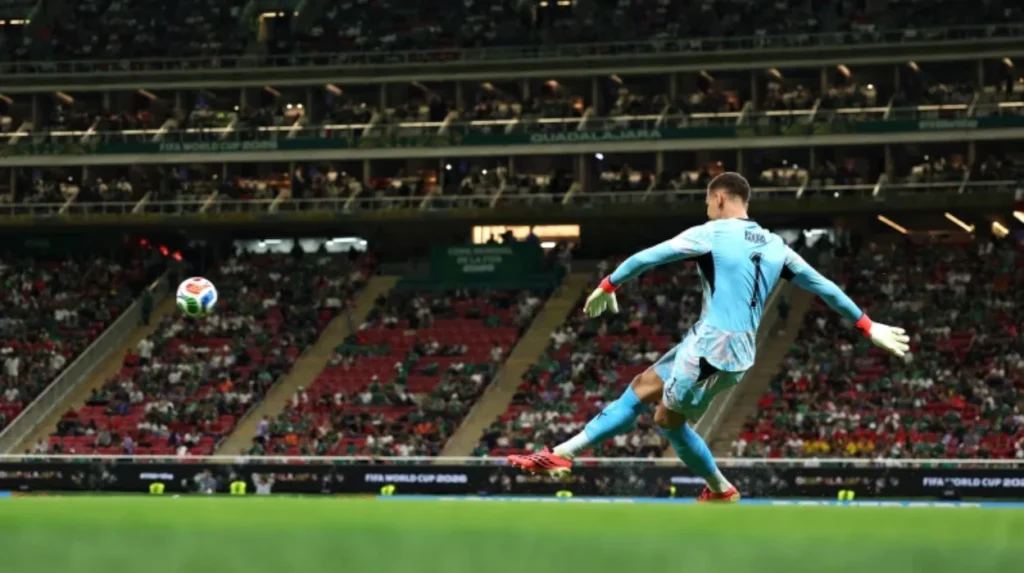
Wide patches of vacant seats materialized in stadiums on the opening day of the 2026 FIFA World Cup, creating an awkward visual contradiction against FIFA’s relentless messaging about record-breaking demand. FIFA reported an attendance of 44,985 for Thursday’s match between South Korea and the Czech Republic at Mexico’s Guadalajara Stadium, which has a capacity of 46,000, claiming the game was near sell-out. Yet photographs and witness accounts showed thousands of unoccupied places throughout the venue, with many empty seats appearing in VIP sections near the pitch. This mismatch between official attendance data and visibly empty stadiums has reignited a long-standing debate about how FIFA calculates and communicates crowd figures to the public and media.
The 2026 World Cup faces empty seats, but this is not a new problem for football’s governing body. Similar controversies erupted during the 2018 World Cup in Russia, when FIFA claimed the Egypt-Uruguay match in Ekaterinburg drew 27,015 fans against a capacity of 33,061, despite approximately 5,000 ticket holders not showing up. The 2022 Qatar World Cup saw even more acute scrutiny, with FIFA claiming the England-Iran match at Khalifa International Stadium was only 500 fans short of capacity at 45,334, while great swathes of empty seats showed that figure to be wildly inaccurate. In each case, stadium capacities were later updated on official websites after scrutiny of attendance figures, raising accusations that tournament organizers were massaging true attendance numbers.
How FIFA Calculates Attendance: Tickets Sold Versus Actual Turnstile Numbers
The core of the controversy lies in FIFA’s attendance calculation methodology. Official attendance figures are based on tickets sold rather than actual turnstile attendance, because there is no turnstile count at World Cup matches. This figure equals an average of 96 percent occupancy when calculated against stadium capacity, but it does not reflect how many fans actually entered the grounds. The fact that actual attendance is lower than the number of tickets allocated has been acknowledged by FIFA spokespeople, though the organization continues to publish ticket-based figures as official attendance.
This approach differs significantly from standard practice in most professional sports leagues and previous major tournaments, where actual headcounts through stadium entry points determine attendance figures. The absence of turnstile counting at the World Cup allows FIFA to report numbers that reflect commercial success—tickets sold—rather than the lived reality inside stadiums—fans present. Critics argue this methodology obscures the true picture of stadium occupancy and creates a misleading narrative about tournament demand.
Ticket Pricing Strategies and the Growing Accessibility Problem in Global Football
Ticket prices for the 2026 World Cup have increased fivefold compared to the 2022 World Cup in Qatar, according to fan group Football Supporters Europe, which described the costs as “extortionate”. The cheapest tickets to see a group stage match at this year’s World Cup cost an average of $200, nearly four times more than the $60 per ticket fans paid in Qatar in 2022. For the final match in New Jersey, the lowest price ticket was initially set at $3,119, with the most expensive seats initially priced at $6,730 before surging to $10,990. FIFA also introduced a new “Front Category” of tickets in April, with front-row seats for the final match costing over $30,000.
FIFA President Gianni Infantino defended the pricing strategy as recently as Wednesday, saying costs were comparable to those of other major sporting events and that the prices reflect the North American market. He added,
“If we do something wrong, then probably everyone selling tickets in North America is doing something wrong”.
However, this justification has faced significant backlash, with the attorneys general of both New York and New Jersey launching investigations into “impossibly high prices” and FIFA’s ticketing practices. Former President Trump, who has established a rapport with Infantino, expressed to the New York Post that he wouldn’t pay around $1,000 for the least desirable seats at the U.S. opening game.
The pricing structure raises serious questions about fan accessibility and whether World Cups are excluding local supporters. Football Supporters Europe noted that World Cup organizers had promised tickets priced as low as $21 in a 2018 bid document, a promise that stands in stark contrast to current reality. Following criticism, FIFA offered a smaller number of $60 tickets to all 104 matches to national federations for their regular supporters, with Infantino saying 130,000 tickets were offered in that category.
The Growing Role of Corporate Allocations, Hospitality Seats, and No-Shows
FIFA blamed the empty seats issue on corporate and government ticket holders, as well as overseas fans, not attending games despite having purchased or been allocated tickets. The affected areas at the South Korea-Czech Republic match appeared to be in sections where ticket prices ranged between $400 and $5,000 for corporate allocations. This pattern mirrors previous World Cups, where empty seats were concentrated in hospitality and corporate sections rather than general admission areas.
The phenomenon of no-shows has been a persistent problem at major football tournaments. In 2014, FIFA stated that empty seats visible at some stadiums during the opening 14 matches were due to fans who had bought tickets but had not turned up, rather than corporate absences. However, the 2026 controversy suggests corporate and government allocations remain a significant factor. Almost 180,000 tickets were still available on FIFA’s official resale platform just days before kickoff, with the median ticket price on there falling by 20 percent over the past month. Third-party resale sites such as StubHub and SeatGeek also have World Cup tickets for sale, indicating that ticket holders are attempting to recoup costs rather than attend matches.
FIFA Transparency Concerns Deepen Over Reported Crowd Numbers
FIFA will earn billions from the World Cup, but critics are questioning the transparency of the organization’s finances and how attendance figures are communicated. The organization is set to earn billions from selling World Cup match tickets and hospitality over the next five weeks, with critics questioning how the money is spent and the transparency of FIFA’s finances. FIFA expects the four-year cycle that ends with this summer’s World Cup to generate $13 billion, of which $8.9 billion will come from the tournament.
It did not confirm whether the 44,985 attendance figure for the South Korea-Czech Republic match was based on ticket sales or the number of fans who entered the grounds, leaving ambiguity about the methodology. This lack of clarity has fueled suspicions among analysts and fans regarding whether the presentation of data reflects the full reality. Data from aceodds.com shows that it will cost an estimated $62,000 for two people to follow one of the 48 teams to all its matches, with the single most expensive expense being tickets at $31,000 for two people.
Gianni Infantino’s Demand Claims Versus On-Ground Stadium Reality
Gianni Infantino has defended the 2026 World Cup amid criticism over ticket prices, saying demand has been unlike anything seen before. On the eve of the tournament, 29 games were sold out and 75 had tickets remaining, according to the Associated Press. Infantino claimed,
“We have six to seven million tickets for sale, and in just 15 days, we received 150 million requests. In the almost 100 years of the World Cup, FIFA has sold 44 million tickets in total. In 2 weeks, we could have filled 300 years of World Cups”.
FIFA President Gianni Infantino says all 104 matches of the 2026 World Cup are “sold out,” even though visible stadium realities contradict this claim. However, the governing body still has roughly 180,000 unsold seats across host cities in the U.S., Canada, and Mexico, raising fresh concerns about the validity of the “sold out” messaging. The gap between Infantino’s public messaging around record-breaking demand and ticket sales success versus the visible gaps in stadium crowds suggests a disconnect between official narratives and on-ground reality.
The Calgary Herald noted that the World Cup was never about the average fan in 2026, according to the organization’s actions and pricing decisions. Empty sections would hurt the in-stadium atmosphere and make matches feel like much less of an event, yet FIFA and Infantino have made clear that commercial priorities dominate.
Commercial Success Versus Fan Experience: The Tension Defining Modern World Cups
The tensions between commercial success and fan experience have become defining characteristics of modern World Cups. Empty sections would hurt the in-stadium atmosphere and make matches feel like much less of an event, yet FIFA continues prioritizing ticket revenue over occupancy. The sight of numerous vacant seats at stadiums paints a different picture than FIFA’s official attendance figures, creating a credibility gap that extends beyond this single tournament.
The commercialisation of global football events has reached unprecedented levels, with FIFA’s ticketing system turned into a perplexing maze filled with artificial scarcity and exorbitant costs, all to the detriment of consumers. FIFA has utilized tactics that could be described as fear-based to create demand for tickets, implying that fans must pay inflated prices or risk missing out on a once-in-a-lifetime experience, though consumers cannot verify if this is indeed the case.
The broader implications for tournament credibility are significant. When official reporting diverges from on-ground reality, fans and media lose trust in the organization’s communications. This erosion of credibility extends beyond attendance figures to questions about FIFA’s governance, transparency, and commitment to the sport’s traditional supporters.
Historical Comparison and the Broader Meaning for Football Governance
Historical comparison with previous World Cups reveals this is a recurring pattern rather than an isolated incident. The 2022 Qatar World Cup saw FIFA solves World Cup attendance confusion by increasing stadium capacities after questions over the validity of attendance figures. The 2018 Russia World Cup featured similar controversies with Egypt-Uruguay and other matches showing empty seats despite near-capacity official figures.
The 2025 Club World Cup in the United States provided a preview of these problems, with more than 400,000 seats left empty during the opening round of group matches and stadiums reporting an average occupancy of 56.8 percent. Half of the 16 matches played to date experienced attendance figures falling below 50 percent of their respective stadium capacities, with the match with the lowest turnout attracting just 3,412 spectators at a venue with 25,500 capacity.
These patterns suggest systemic issues in how FIFA approaches tournament management, pricing, and communication. The global expansion of World Cups—expanding to 48 teams in 2026, adding 16 more matches—has formed part of a legal complaint against FIFA filed by FIFPRO, with the expansion becoming contentious. The tension between global expansion and local accessibility remains unresolved, with pricing structures increasingly excluding traditional supporters while prioritizing corporate and hospitality revenue.
The broader meaning for football governance is clear: when commercial success becomes the primary Metric of tournament success, fan experience and traditional atmosphere suffer. The pricing structures excluding local supporters, the growing role of corporate allocations with high no-show rates, and the mismatch between official reporting and on-ground reality all point to a sport struggling to balance its commercial ambitions with its cultural roots.
Future World Cups will need to address these tensions if FIFA wants to maintain tournament credibility. This requires transparent attendance calculation methodology, pricing structures that ensure local accessibility, and leadership messaging that aligns with observable reality. The empty seats at the 2026 World Cup are not just vacant chairs—they are symbols of a deeper crisis in how global football events are managed, priced, and communicated to the world.