
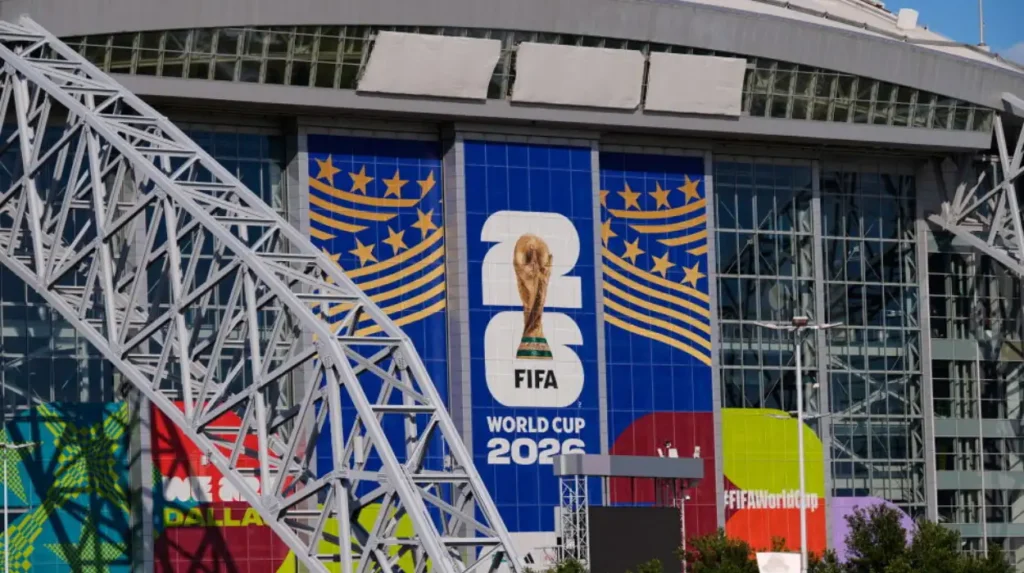
The cluster of shooting and stabbing incidents reported in several United States host cities ahead of the FIFA World Cup 2026 has reignited a familiar debate that surfaces before nearly every global sporting spectacle: how safe is safe enough, and who gets to define that threshold? While isolated acts of violence are not unusual in large metropolitan areas, their timing—less than two years before the largest World Cup in history—has drawn disproportionate international scrutiny. The challenge now lies in distinguishing between legitimate security concerns and the amplification of risk perception in a hyperconnected media environment.
World Cup 2026 Security Concerns Rise After US Violence Incidents
Recent violent incidents in cities such as New York and Kansas City have been quickly folded into a broader narrative about World Cup readiness. These events, while serious in their own right, occurred within the context of existing urban crime patterns rather than in direct connection to tournament infrastructure or planning. However, the proximity of these incidents to the World Cup timeline has elevated them from local law enforcement matters to international talking points.
From a security analysis standpoint, the critical question is whether these incidents indicate systemic vulnerabilities that could affect tournament operations. At present, there is limited evidence to suggest that they do. Instead, they highlight the persistent challenge of managing public safety in large, densely populated cities that routinely host major events without incident. The concern, however, is less about the incidents themselves and more about how they shape global perception, particularly among traveling fans, sponsors, and participating teams.
How Safe Is FIFA World Cup 2026 in the United States?
Assessing the safety of World Cup 2026 requires a broader lens than isolated incidents. The United States has a long track record of hosting high-profile sporting events, including the Super Bowl, Olympic Games, and Copa América tournaments, all under extensive security frameworks that integrate federal, state, and local agencies. These systems are designed to manage both routine urban crime and event-specific threats, including terrorism and crowd control.
Yet, the scale of the 2026 tournament introduces new variables. With 48 teams and matches spread across multiple cities in three countries—the United States, Canada, and Mexico—the logistical complexity far exceeds previous editions. Each host city operates within its own policing structure, legal framework, and risk profile, making uniform security standards difficult to implement.
This decentralization does not necessarily equate to weakness, but it does complicate coordination. Ensuring consistent levels of preparedness across diverse jurisdictions will be one of the defining challenges of the tournament’s security architecture.
FIFA Faces Scrutiny Over Security Planning for Mega Event
FIFA’s role in this equation is both central and contentious. While the organization sets baseline requirements for host nations, the responsibility for implementation rests largely with local authorities. This model has long been criticized for its ambiguity, particularly when security concerns emerge.
The selection of a tri-nation hosting model for 2026 was driven by commercial and logistical considerations, including stadium capacity and market reach. However, this expansion has inevitably diluted centralized oversight. Critics argue that FIFA’s governance structure prioritizes scale and revenue growth over operational cohesion, leaving host nations to navigate complex security challenges with varying degrees of support.
FIFA maintains that it works closely with governments and security agencies to ensure readiness, but the absence of a unified command structure raises questions about accountability. If a security lapse were to occur, responsibility would likely be diffused across multiple stakeholders, complicating both response and post-event analysis.
Mega-Event Security in a Multi-City, Multi-Country Format
The 2026 World Cup represents an unprecedented logistical undertaking. Unlike previous tournaments hosted by a single nation or, at most, two countries, this edition spans an entire continent. Matches will be played across 16 cities, each with distinct security environments, infrastructure capabilities, and emergency response systems.
This fragmentation introduces several layers of complexity. Intelligence sharing between countries must be seamless, yet it is often constrained by legal and bureaucratic barriers. Transportation networks, including cross-border travel for teams and fans, add another dimension of risk management. Coordinating security protocols across such a ფართ landscape requires not only technological integration but also political alignment.
Moreover, the sheer volume of spectators expected to attend matches and fan zones increases the potential for both opportunistic crime and organized threats. Managing these risks will depend on the ability of host cities to adapt global security standards to local conditions without creating gaps in coverage.
Media Amplification and the Security Narrative Around World Cup 2026
The role of media in shaping perceptions of security cannot be understated. In the lead-up to major tournaments, isolated incidents are often reframed within the context of the event, creating a narrative that may not accurately reflect the underlying risk.
In this case, reports of shootings and stabbings have been widely circulated alongside references to the World Cup, despite the lack of direct linkage. This framing can contribute to a sense of escalating danger, even when statistical trends do not support such a conclusion. For international audiences unfamiliar with the baseline crime rates of US cities, these narratives can be particularly influential.
At the same time, media scrutiny serves a legitimate function by holding organizers and authorities accountable. The challenge lies in balancing vigilance with proportionality, ensuring that coverage informs rather than inflames public perception.
Urban Crime vs Tournament Risk: Understanding the Difference
One of the most important distinctions in this discussion is between general urban crime and event-specific threats. Cities like New York and Kansas City, like many global metropolises, experience varying levels of violent crime as part of their daily reality. These incidents are typically localized and do not target international events or visitors.
Tournament-related risks, by contrast, involve factors such as crowd density, high-profile targets, and geopolitical symbolism. These require specialized security measures, including surveillance, controlled access zones, and coordinated emergency response protocols.
Conflating these two categories can lead to misinformed assessments of risk. While urban crime is a legitimate concern for residents and visitors alike, it does not necessarily translate into a direct threat to the World Cup. Effective communication from authorities will be crucial in clarifying this distinction as the tournament approaches.
Political and Institutional Pressure on Security Narratives
Governments and law enforcement agencies in host countries face a dual mandate: to ensure public safety and to project confidence. This often results in carefully calibrated messaging that emphasizes preparedness while downplaying vulnerabilities. FIFA, for its part, has a vested interest in maintaining the image of a secure and well-organized tournament.
This alignment of interests can create tension when incidents occur. Authorities may be reluctant to acknowledge systemic issues, while media outlets and independent analysts push for greater transparency. The resulting discourse is shaped as much by political considerations as by empirical data.
In the United States, where gun violence is a persistent and politically charged issue, this dynamic is particularly pronounced. Efforts to address security concerns ahead of the World Cup are inevitably entangled with broader debates about public safety and policy, adding another layer of complexity to the narrative.
What Security Failures Could Mean for Future FIFA World Cups
The implications of these early concerns extend beyond 2026. FIFA’s approach to host selection and tournament expansion will likely come under increased scrutiny, particularly if security challenges persist. Future bidding processes may place greater emphasis on centralized governance and demonstrable security capacity, potentially narrowing the field of eligible hosts.
At the same time, advancements in surveillance technology and data analytics are likely to play a larger role in mega-event security. While these tools can enhance safety, they also raise questions about privacy and civil liberties, especially in democratic societies. The balance between security and individual rights will remain a contentious issue long after the final whistle of the 2026 tournament.
For host cities, the World Cup represents both an opportunity and a test. The ability to manage security effectively will not only influence the success of the event but also shape their reputations as global destinations for future competitions.
A Defining Test for World Cup 2026 Security Legacy
As preparations continue, the narrative surrounding security at World Cup 2026 will likely evolve in response to both real-world developments and media framing. The recent incidents in US host cities serve as a reminder of the complexities inherent in staging a global event across diverse urban environments. They do not, at this stage, constitute evidence of systemic failure, but they do underscore the importance of coordinated planning and transparent communication.
Ultimately, the success of the tournament will depend on the ability of FIFA, host governments, and local authorities to align their efforts within a coherent security framework. If managed effectively, 2026 could set a new benchmark for multi-nation event security. If not, it risks reinforcing longstanding criticisms of FIFA’s governance model and raising difficult questions about the sustainability of ever-expanding global tournaments.