
FIFA’s last-minute decision to prohibit fans from bringing refillable water bottles into 2026 World Cup stadiums has turned a routine stadium-rule update into a wider argument about safety, heat, cost, and trust. The change landed just days before the tournament and quickly drew criticism because it affects an event staged across the United States, Mexico, and Canada, where summer temperatures and large crowds make hydration a central spectator issue.
The controversy matters because the policy sits at the intersection of several pressures that define modern mega-events: security screening, commercial stadium operations, environmental commitments, and basic public-health expectations. FIFA says the move is about reducing the risk of bottles being thrown, but critics see a broader pattern in which convenience and fan welfare are too often secondary to control and uniformity.
Security Concerns Behind FIFA’s Decision
FIFA’s stated rationale is straightforward: reusable bottles could be used as projectiles, and the governing body says it wants to prevent risk and injury to players, referees, volunteers, staff, and spectators. Reuters reported that the organization also pointed out that some venues already prohibit outside bottles and that the World Cup rule is being standardized across all stadiums for consistency. ESPN and NBC News reported the same basic justification, noting that the revised code specifically says reusable water bottles are no longer permitted inside venues.
That explanation is not implausible. Large international tournaments are among the most security-sensitive sporting environments in the world, and stadium codes increasingly treat even ordinary containers as potential hazards. FIFA also faces the operational challenge of applying one rule across multiple countries and a large number of venues, each with its own local security practices, staffing models, and entry procedures. In that sense, the decision reflects a familiar mega-event logic: reduce ambiguity, tighten screening, and eliminate objects that can complicate ingress or be repurposed in the stands.
The problem is that a security argument is strongest when it is matched by clear evidence and careful communication. FIFA has not publicly shown that allowing empty reusable bottles created a specific threat unique to this World Cup, and that has made the policy feel abrupt rather than preventative. A rule can be understandable and still be poorly timed, especially when announced after fans had already been told the opposite.
The Growing Heat Safety Challenge
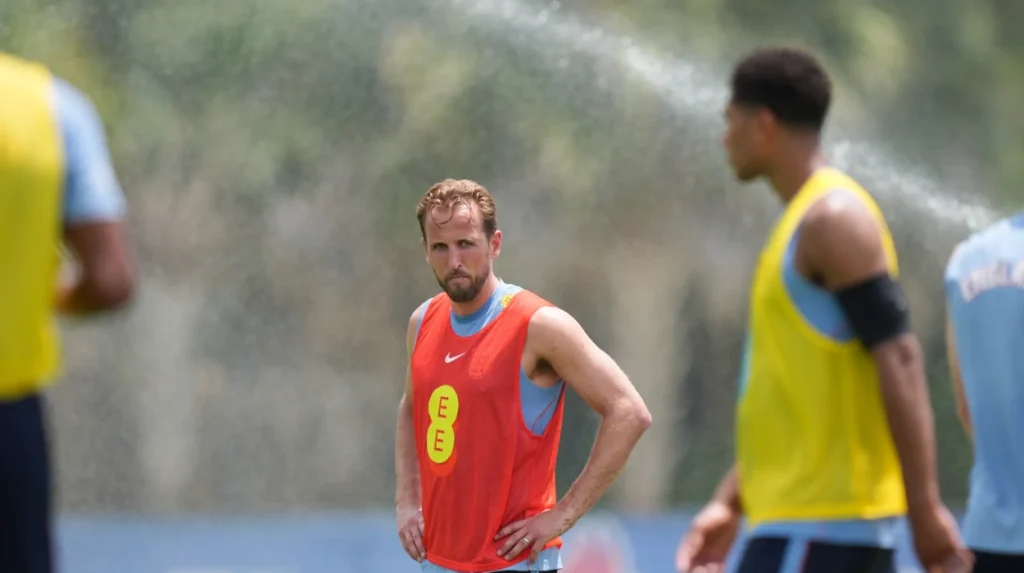
The most immediate criticism is not about symbolism but hydration. The 2026 World Cup will be played during the North American summer, and heat concerns are already central to tournament planning in several host cities. NBC News noted that the policy change raised fresh concerns about heat during the event, while other reports pointed out that FIFA’s own stadium code had previously allowed empty bottles that could be refilled inside venues.
That matters because outdoor sporting events increasingly must treat spectator welfare as a heat-management problem, not just a comfort issue. Fans standing in queues, walking long distances from transport hubs, and sitting through long matches can face the same environmental stress that players do, even if the risk profile is different. Water breaks for players do not solve the needs of tens of thousands of people in the stands, especially if those spectators are now dependent on lines for concessions rather than carrying an empty bottle they can refill.
Supporter organizations have been quick to argue that the policy is at odds with modern event design, where reusable containers and refill stations are often encouraged to reduce waste and maintain access to water. The concern is amplified by the fact that FIFA had recently given the impression that clear reusable bottles up to one liter would be allowed, making the reversal feel less like a clarified security standard and more like a late-stage retreat from a fan-friendly policy. In hot-weather tournaments, trust in the hydration plan is part of trust in the event itself.
Fan Experience Under Increased Scrutiny
The economic criticism is simple: if fans cannot bring their own refillable bottles, they become more dependent on what the venue sells. Reuters reported that FIFA said water pricing at the World Cup would align with other events at each venue, which may sound reassuring but does not address the broader concern that spectators lose a degree of choice and control once outside containers are banned. In practice, the policy can turn water into just another stadium purchase, subject to concession pricing, availability, and queue times.
That is why the debate extends beyond one tournament rule. Fans do not object only because they must buy water; they object because the policy seems to narrow the options available to ordinary spectators while leaving commercial operators intact. In a global sports event that already generates significant revenue from tickets, hospitality, sponsorship, and concessions, a water-bottle ban can easily be read as part of a broader tilt toward monetization, even if FIFA insists the rule is about safety.
There is also a practical concern about accessibility. The code reportedly includes limited exceptions for baby formula, sterilized water, and certain medical liquids, which suggests FIFA recognizes that hydration can be a health issue rather than a mere convenience. But exceptions do not answer the broader question of whether ordinary fans, including older spectators and those in high-heat stadiums, should have more direct access to water through refillable containers.
Sustainability Questions
The policy also cuts against the sustainability language that now surrounds most major sporting events. Modern stadiums and tournament organizers often promote waste reduction, reusable products, and greener fan behavior, yet a ban on refillable bottles can push spectators toward single-use alternatives if they must buy water inside the venue. That does not automatically make the policy environmentally damaging, but it does create an awkward tension between public sustainability messaging and actual operational restrictions.
This tension matters because sports governing bodies have increasingly used environmental stewardship as part of their legitimacy narrative. Reusable bottles are one of the most visible symbols of that effort, and they are easy for fans to understand in daily life. If a tournament hosted across three countries discourages reuse at the very moment it is encouraging fans to travel, consume, and gather in large numbers, critics will inevitably ask whether sustainability is being treated as a branding exercise rather than an operational principle.
To be fair, stadium security and sustainability are not always aligned. Empty bottles can slow screening and, in some venues, create legitimate safety concerns. But that is precisely why the debate should be framed as a trade-off rather than a simple prohibition. If FIFA wants to defend the policy as necessary, it will need to show that the environmental cost is being offset by a credible hydration plan inside the stadiums.
Governance and Transparency
The governance criticism may prove more durable than the bottle ban itself. The most damaging aspect of the controversy is the sense that FIFA altered the rules abruptly and only then explained the reasoning after the backlash had already begun. The Athletic reported that the official code had initially allowed empty transparent reusable bottles up to one liter, before a revised version removed that permission and replaced it with a blanket prohibition. That sequence created confusion, and confusion is often what turns a routine policy change into a trust problem.
There is also the question of consultation. Supporter groups, public-health voices, and local venue operators appear not to have been meaningfully part of the public conversation before the change was finalized. FIFA may argue that stadium-security decisions cannot always be negotiated in public, but high-profile policies affecting tens of thousands of visitors are not just internal compliance matters; they are part of the event experience and should be communicated with enough lead time to be credible.
This is where governance and perception overlap. FIFA has spent years trying to present itself as more transparent and professionally managed than in the past, yet decisions like this revive old doubts about top-down rulemaking. Even when the logic is defensible, the process can still look opaque if the announcement is sudden, the justification is narrow, and the practical consequences are left for fans to absorb on match day.
FIFA’s Wider Record
The bottle dispute cannot be separated from FIFA’s historical reputation. For decades, the organization has been criticized for commercialization, weak accountability, inconsistent communication, and a tendency to prioritize operational control over supporter experience. That history does not mean every new policy is suspect, but it does mean FIFA starts from a position of limited goodwill when it announces changes that appear to burden fans.
At the same time, it would be inaccurate to suggest FIFA has made no reforms or learned nothing from earlier controversies. Its event management is generally more standardized than it was in previous decades, and the organization now operates in a much more security-conscious sporting environment. Yet the broader criticism persists because the same structural question keeps returning: who is the event for, and how much room do ordinary spectators have in decisions that directly affect their experience?
The bottle ban therefore becomes a proxy for a larger FIFA problem. The issue is not only whether the rule is reasonable in isolation. It is whether FIFA can consistently balance safety, commercial interests, and fan welfare in a way that feels predictable and fair rather than reactive and self-protective.
Global Event Comparisons
By international standards, FIFA’s approach is restrictive but not entirely unusual. Many stadiums and leagues ban certain containers, restrict caps, or allow only factory-sealed bottles, and the NFL, for example, permits empty transparent reusable plastic bottles in some venues while still enforcing a strict prohibited-items policy overall. UEFA and major European stadiums often prohibit bottles altogether, especially where security concerns are elevated, although practices vary widely by country and event.
That said, the comparison also shows why FIFA’s decision has triggered a sharper reaction. In several major sporting contexts, event organizers try to preserve some form of fan hydration access, whether through clear-bottle allowances, refill stations, or controlled exceptions. FIFA’s blanket ban looks less like an industry standard and more like the most restrictive end of a spectrum that many fans now expect to be managed more flexibly.
The difference is especially important because the World Cup is not a league game or a closed single-country competition. It is a global tournament that attracts traveling fans, families, and neutral spectators who may not be familiar with local stadium customs. In that environment, policy clarity and fan-friendly consistency matter more than ever.
Climate and Future Policy
Climate change is the background condition that gives this story its long-term significance. As extreme heat becomes more common, spectator welfare at outdoor events will have to be designed around hydration access, shade, cooling zones, and emergency response, not just crowd control. That makes the optics of banning reusable bottles more difficult, even if the security rationale is sincere, because the public increasingly sees hydration as part of basic event resilience rather than a luxury.
Future tournament policy may need to evolve toward layered solutions rather than blanket restrictions. That could mean more refill stations, more frequent water distribution points, better communication about medical exceptions, and clearer pre-event guidance to fans so they can plan around heat risk. If global sports bodies do not address those expectations proactively, they may find that the simplest security measures produce the greatest reputational costs.
The 2026 World Cup controversy ultimately captures a familiar tension in modern sport. FIFA is trying to manage safety in stadiums that must serve as secure, high-volume public spaces, but it is doing so in an era when fans also expect convenience, affordability, sustainability, and transparency. The strongest argument for the ban is that stadium security must be kept simple and enforceable; the strongest argument against it is that a World Cup in summer North America should make hydration easier, not harder.