
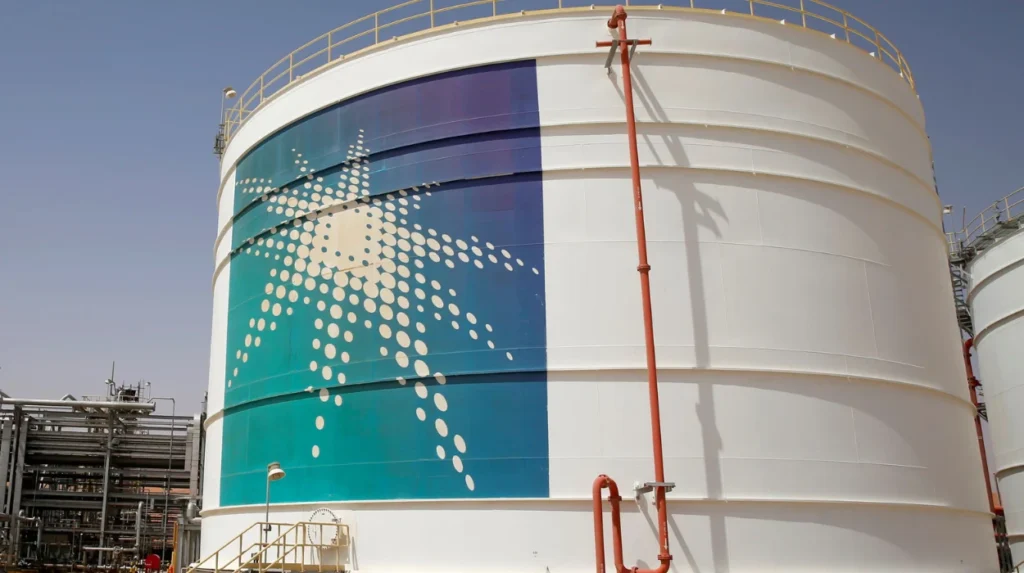
The Guardian’s report, drawing on FairSquare’s findings, places renewed scrutiny on Saudi Aramco’s supply chain and the treatment of migrant workers embedded within it. The central claim is not simply that abuses occurred at one company site, but that labor risks were pushed through layers of contracting and subcontracting in a system that made harm easier to conceal and harder to remedy.
What makes the case politically significant is that it sits at the intersection of Saudi Arabia’s energy sector, its mega-project economy, and the kingdom’s continuing dependence on migrant labor. The findings suggest a familiar pattern in Gulf labor markets: formal development goals are advanced through labor arrangements that distribute responsibility across multiple entities while leaving workers with limited practical protection.
What the FairSquare Report Claims
FairSquare’s broader reporting on Saudi labor conditions has argued that migrant workers face serious and often under-recorded risks in construction and related low-paid sectors, including fatal accidents, poor medical classification of deaths, and weak compensation outcomes. In the Aramco case, the report appears to extend that logic into the oil major’s supply chain, alleging that workers contracted into Aramco-linked projects experienced unsafe conditions and inadequate remedy mechanisms.
The value of this kind of reporting is that it surfaces cases that formal statistics often smooth over or fail to distinguish. However, the methodological limits are real: advocacy reports usually rely on case sampling, worker testimony, and reconstructive evidence rather than access to company internal records or full regulatory files. That does not weaken the claims out of hand, but it does mean the strongest conclusion is systemic risk rather than a complete account of every contracted site.
Aramco’s Role in the Supply Chain
Aramco occupies a difficult but unavoidable position in this story because a company of its scale does not manage every worker directly. Large energy and infrastructure projects typically move through EPC firms, labor suppliers, and subcontractors, which can obscure where operational control begins and ends. That complexity matters, because direct employment responsibility is not the same as supply chain responsibility, but it does not erase the latter.
The policy issue is whether Aramco’s oversight mechanisms are robust enough to detect abuse, compel remediation, and prevent cost-driven labor risk transfer down the chain. In principle, a multinational buyer or project owner can insist on wage protections, safety standards, grievance channels, and auditability across tiers. In practice, the deeper the subcontracting ladder, the more accountability tends to become procedural rather than effective.
Migrant Labour and Subcontracting Systems
Saudi Arabia’s construction and industrial sectors remain structurally dependent on migrant labor, particularly workers from South Asia and parts of Africa. That dependence is not incidental; it is built into the wage structure, labor mobility patterns, and contracting models that support the kingdom’s development agenda. Vision 2030 and the giga-project pipeline require a workforce that is large, flexible, and often disposable in commercial terms, even when it is legally protected on paper.
Subcontracting is central to this model. It allows project owners to separate brand-level reputation from frontline labor management, while labor brokers and subcontractors absorb the immediate pressure of wages, accommodation, transport, and disciplinary control. The result is a recurring asymmetry: multinational contractors and state-linked clients retain the economic benefit of the project, while migrant workers bear the highest exposure to wage theft, unsafe work, and retaliation.
Working Conditions and Safety Risks
The wider reporting around Saudi migrant labor has consistently pointed to preventable deaths, injuries from falls and machinery, heat exposure, and misclassification of causes of death as “natural” or unexplained. FairSquare’s work has emphasized a “critical absence” of effective processes for determining why migrant workers die, which is a serious governance problem because classification shapes whether families receive compensation and whether employers face scrutiny.
The pattern matters because a death recorded as natural can close off investigation before it begins. Even when formal workplace safety rules exist, they are only meaningful if authorities, hospitals, and employers are able and willing to investigate properly, preserve evidence, and connect a fatality to labor conditions. In the Gulf context, critics have long argued that medical, legal, and administrative systems often fail to do that consistently, leaving workers’ families with limited recourse.
Compensation and Legal Gaps
One of the most consequential aspects of the allegations is the gap between injury or death and compensation. The problem is not merely legal complexity; it is that families often must navigate a cross-border maze of employer denials, ambiguous death certificates, recruitment intermediaries, and weak documentation. Where the cause of death is uncertain or not independently investigated, compensation becomes delayed, reduced, or denied altogether.
Saudi Arabia has introduced labor reforms over recent years, and it would be inaccurate to say there is no law. The sharper criticism is that enforcement remains uneven and that the system does not reliably convert formal rights into workable remedies. In a high-churn contracting environment, legal protections can exist alongside practical impunity if the institutions responsible for enforcement are underpowered, politically constrained, or too fragmented to follow labor claims across subcontracting tiers.
Structural Labour Governance
The legacy of kafala is still important here, even where reforms have modified parts of the system. The core issue is not a single sponsorship rule but a broader governance culture in which migrant workers have historically had limited bargaining power, restricted mobility, and dependence on employer-controlled documentation and status. Those dynamics can persist even after formal changes if labor inspection, complaint handling, and dispute resolution remain weak.
This is why labor governance in Saudi Arabia should be read as a structural question, not only a compliance question. Reforms may improve optics and narrow some worst abuses, but they do not automatically alter the incentive structure of mega-project delivery. When project schedules are tight and reputational stakes are high, there is a persistent risk that labor costs and safety are treated as variables to be managed rather than rights to be guaranteed.
Corporate Responsibility Debate
The corporate responsibility debate turns on whether Aramco should be judged only by direct employment practices or also by the standards it imposes on contractors. In modern due diligence frameworks, that distinction matters less than it once did. Buyers and project owners are increasingly expected to monitor labor conditions across their value chains, especially where they exercise economic leverage and where labor risks are predictable.
Still, it would be simplistic to reduce everything to intentional corporate wrongdoing. Huge industrial projects depend on multiple firms, local labor markets, and state regulation, and even strong owners do not directly control every site-level decision. The harder question is whether Aramco’s procurement systems, audit practices, and remediation channels are designed to detect abuse before it becomes visible only through NGO documentation or death investigations.
Role of NGOs and Reporting Limits
FairSquare plays an important role in documenting conditions that are otherwise hard to see, especially where official reporting is limited or politically sensitive. Its value lies in assembling testimony, identifying patterns, and forcing public institutions and companies to answer questions they would prefer to treat as operational noise. In that sense, advocacy reporting can act as an early warning system for hidden labor harm.
At the same time, NGO reporting has limits that should be acknowledged. It often depends on access to affected workers, families, and secondary records rather than full investigative powers, and it may disproportionately capture the most serious or most visible cases. That means the findings are best read as evidence of a structurally credible problem, not as a statistically complete map of all outcomes across Aramco-linked supply chains.
Broader Political Context
The wider context is Saudi Arabia’s effort to modernize its economy while maintaining political control over labor and public narrative. Vision 2030 requires faster project delivery, foreign partnerships, and an image of reform, yet it also exposes the kingdom to more international labor scrutiny than before. That tension is not unique to Saudi Arabia, but it is especially acute there because the scale of migration and construction amplifies every governance failure.
Across the Gulf, the basic model is similar even if the legal details differ: ambitious development depends on imported labor, labor is managed through layered contracting, and accountability often lags behind the pace of expansion. Saudi Arabia is not an outlier in the region, but its combination of oil wealth, mega-project ambition, and global visibility makes the gap between modernizing rhetoric and labor reality harder to ignore.
The Guardian report and FairSquare’s documentation should be understood as a challenge to the way large energy projects distribute responsibility. Aramco may not directly employ every migrant worker connected to its supply chain, but that does not absolve it from oversight obligations where its procurement power shapes labor outcomes. The deeper issue is whether the kingdom’s labor governance, contractor structures, and remedy systems can deliver protection in practice rather than in principle.
The most defensible conclusion is not that every allegation proves a single unified abuse system, but that the risk architecture is clearly defective. Formal reforms, corporate policies, and public commitments have not yet eliminated the conditions that allow unsafe work, weak death classification, and compensation failure to recur. For Saudi Arabia’s economic model to retain credibility with global investors and partners, it will need stronger enforcement, greater transparency across subcontracting chains, and a clearer standard of responsibility for the companies that benefit from migrant labor.