
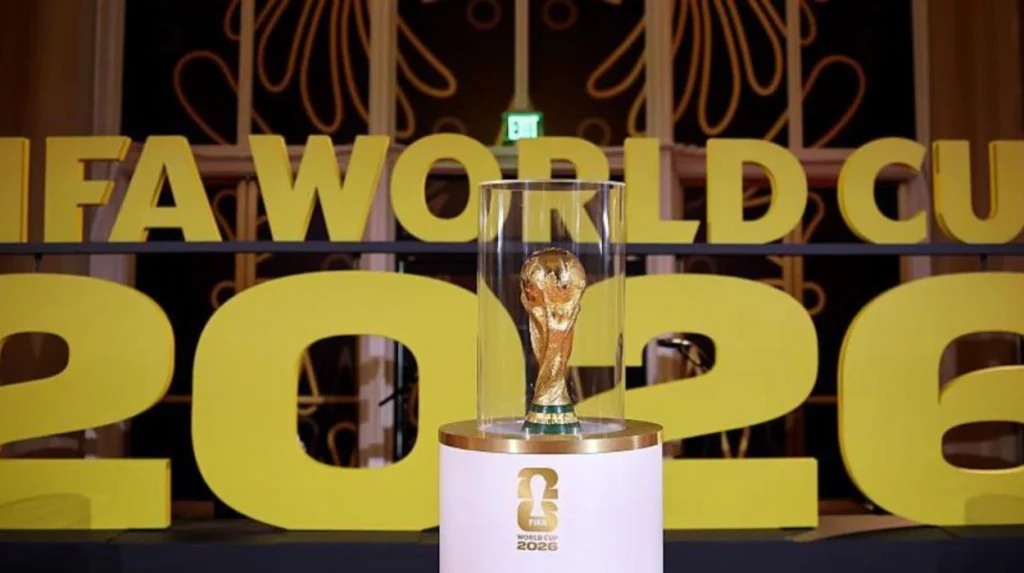
FIFA’s governance of the World Cup has long intertwined sporting prestige with financial imperatives, evolving from a modest international tournament into a multibillion-dollar spectacle. Since the 1990s, ticket revenues have formed a cornerstone of FIFA’s income, funding development programs, infrastructure, and operational costs across host nations. The reported tripling of Category 1 tickets for the 2026 World Cup final—to over $30,000—marks a significant escalation in this trajectory. According to recent reports from OneFootball, this pricing reflects FIFA’s shift toward premium commercialization, leveraging the tournament’s unprecedented scale across three host countries: the United States, Canada, and Mexico. This strategy builds on prior expansions, such as the 2022 Qatar event’s hospitality packages exceeding $100,000, but introduces a more aggressive model for individual premium seats. FIFA justifies such moves by citing rising production costs, estimated at $11 billion for 2026, including stadium expansions and enhanced broadcasting. Yet, this evolution raises questions about whether revenue maximization now overshadows the tournament’s role as a global public good, a tension evident in FIFA’s decade-long pivot from fixed pricing to market-driven models.
Understanding the Reported Surge in Category 1 Final Tickets
The specifics of the price hike center on Category 1 tickets, traditionally the most desirable seats offering optimal views of the pitch. Reports indicate these have jumped from an initial base of around $10,000-$15,000 in early allocations to over $30,000 for the July 19, 2026, final at MetLife Stadium in New Jersey. This surge stems from FIFA’s layered sales process: initial lotteries for general fans, followed by allocations to sponsors, national associations, and finally dynamic pricing for resales. Unlike standard tickets starting at $15-$50, Category 1 represents a luxury tier, comprising less than 1% of total inventory but generating disproportionate revenue. FIFA has not officially confirmed the exact figure, framing it as “market-adjusted” amid high demand from corporate buyers and affluent tourists. Counterarguments from FIFA emphasize that average ticket prices remain accessible, with over 90% under $300, preserving broad participation. Nonetheless, the final’s premium pricing underscores a deliberate stratification, where scarcity drives value in a 104-match event expected to draw 5.5 million attendees.
Dynamic Pricing and the Market Logic Behind Premium Sports Events
Dynamic pricing, now a staple in sports, adjusts ticket costs in real-time based on demand, akin to airline fares or Uber surges. For the 2026 World Cup, FIFA partners with platforms like Ticketmaster to implement this for high-demand matches, potentially inflating Category 1 finals tickets by 200-300%. This model mirrors the NFL’s Super Bowl, where 2025 seats topped $40,000 via secondary markets, or the NBA Finals, with courtside prices exceeding $25,000. Economically, it captures consumer surplus, directing funds toward FIFA’s $4.6 billion revenue target from broadcasting and sponsorships alone. Proponents argue it reflects true market value, deterring scalpers and funding grassroots football in underrepresented regions. Critics, however, note risks of volatility: in 2022, Qatar’s dynamic hospitality packages alienated fans when secondary prices crashed post-hype. For 2026, with 48 teams and North American hosting advantages like proximity to wealthy markets, dynamic pricing amplifies profitability but introduces unpredictability, challenging FIFA’s claim of equitable access.
Accessibility and the Question of Fan Inclusion in Global Football
At its core, the World Cup symbolizes football’s universality, drawing supporters from diverse socioeconomic backgrounds. The $30,000 barrier for top-tier final seats risks excluding dedicated fans, particularly those from emerging markets like South America or Africa, where average incomes pale against such costs. Historical data shows past finals averaged $500-$1,000 for premium tickets, enabling middle-class attendance; the 2026 leap could limit Category 1 to high-net-worth individuals and executives. FIFA counters with initiatives like the HSS (Hospitality Seat Sales) program, reserving 20% of tickets for lotteries and fan bonds, alongside affordable general admission. Yet, analysis of 2018 and 2022 sales reveals premium tiers often bypass these, funneled to FIFA partners like Adidas and Coca-Cola. This creates a two-tier fandom: mass spectators in upper decks versus elite viewers pitch-side. Broader inclusion efforts, such as free public screenings planned across host cities, mitigate some exclusion, but the pricing signals a prioritization of revenue over the egalitarian ethos that defined earlier tournaments.
Comparing World Cup Final Pricing Across Recent Tournaments
Historical comparisons illuminate the 2026 shift’s magnitude. The 2018 Moscow final’s Category 1 tickets peaked at $1,200, while 2022 Doha’s reached $5,000-$10,000 amid hospitality bundles. Adjusting for inflation, 2026’s $30,000 represents a 500-1,000% real increase, outpacing even the Olympics’ $7,000-$15,000 for top Paris 2024 athletics seats. Super Bowl LVIII’s $25,000 average pales beside it when factoring football’s global scale, yet both highlight premium sports’ convergence on luxury models. Unlike UEFA’s Champions League finals, capped at $800-$2,000 to balance revenue and access, FIFA’s approach diverges, buoyed by the World Cup’s monopoly status. This escalation correlates with tournament growth: from 64 matches in 2018 to 104 in 2026, diluting per-game revenue needs but inflating finals’ scarcity premium. Such trends suggest FIFA is benchmarking against U.S.-style events, adapting to North American markets where corporate spending dominates.
Corporate Demand, Stadium Economics, and Changing Spectator Demographics
MetLife Stadium’s 82,500 capacity, hosting the final, underscores economic drivers: renovations costing $800 million necessitate recouping via high yields. Corporate demand fuels this, with suites and Category 1 blocks pre-allocated to sponsors generating $500 million in hospitality sales. Spectator demographics are shifting; Nielsen data from recent Super Bowls shows 40% corporate attendees versus 20% in 2000s World Cups. For 2026, proximity to New York City attracts Wall Street buyers, potentially filling premium sections with non-fans seeking status. Stadium economics further justify hikes: variable costs like security for 3 million U.S. visitors and broadcast tech strain budgets. FIFA argues this sustains investments in host legacies, such as Atlanta’s Mercedes-Benz Stadium upgrades. However, it alters demographics, edging out traditional supporters and fostering “event-ization” over communal passion, a pattern seen in England’s Premier League where VIP boxes now comprise 15% of revenue.
FIFA’s Balancing Act Between Revenue Growth and Sporting Tradition
FIFA navigates a delicate equilibrium: revenue growth funds $2 billion in global development annually, including women’s football and infrastructure in Asia and Africa. The 2026 pricing strategy projects $10-12 billion total income, dwarfing 2022’s $7.5 billion, enabling expanded prize money from $440 million to $1 billion. Tradition, however, emphasizes the World Cup’s role as football’s people’s game, rooted in Pelé-era accessibility. Past presidents like Sepp Blatter prioritized affordability; current leader Gianni Infantino pivots to commercialization amid criticisms of opaque allocations. Balanced against this, resale caps and anti-scalping tech aim to protect fans, though enforcement remains inconsistent. The act falters if pricing erodes trust, as evidenced by 2022 boycotts over Qatar labor issues intertwined with high costs. Ultimately, FIFA must reconcile these to preserve legitimacy.
What the 2026 World Cup Pricing Signals for the Future of the Game
This pricing model portends a future where mega-events prioritize elite access, influencing governance beyond 2026. With 2030 and 2034 bids emphasizing commercial viability, dynamic pricing may standardize, pressuring confederations like UEFA to follow. Inequality implications loom: wealthier nations’ fans dominate premium experiences, potentially stunting global culture’s vibrancy. Stadium atmospheres could homogenize, with corporate cheers supplanting ultras’ fervor, as observed in NBA shifts. Positively, revenues could democratize football via subsidies, though distribution transparency is key. Global reactions—fan petitions and union statements—signal pushback, urging reforms like price caps. For football’s future, 2026 tests whether economic logic can coexist with sporting soul, shaping an era where the beautiful game risks becoming a luxury commodity.