
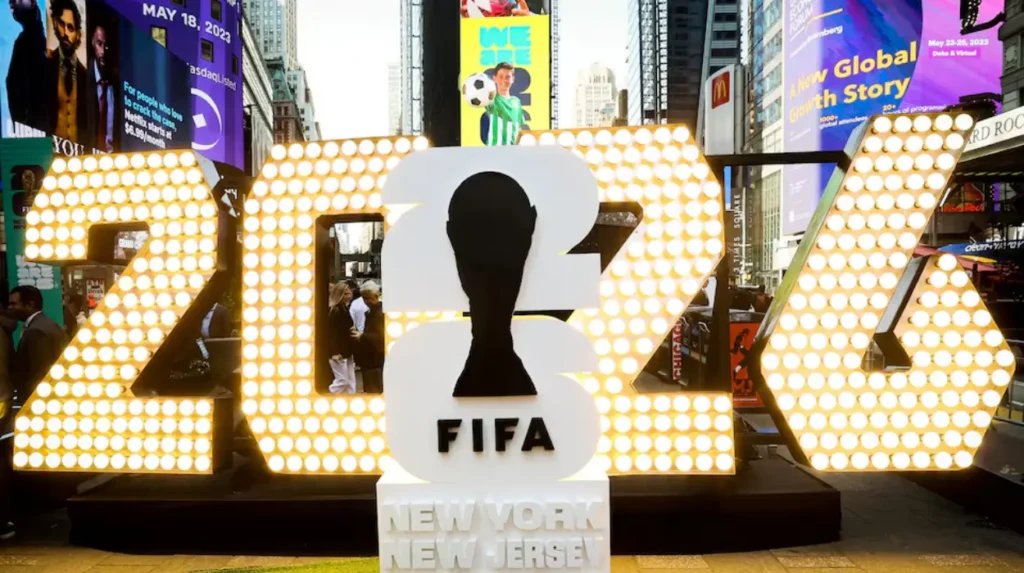
The global football landscape is currently witnessing a stark confrontation between legacy sports governance and the realities of modern media economics. As the 2026 World Cup approaches, FIFA finds itself in an unprecedented broadcast rights deadlock across two of its most critical emerging markets: India and China. This standoff, punctuated by a meager $20 million offer from the Reliance–Disney joint venture in India against FIFA’s high expectations, is not merely a negotiation hiccup; it is a profound structural crisis indicating that FIFA’s valuation model is becoming increasingly decoupled from the financial viability of regional media players.
The Indian Impasse
The situation in India serves as a bellwether for the shifting power dynamics between sports governing bodies and media conglomerates. FIFA reportedly sought upwards of $100 million for broadcast rights covering the 2026 and 2030 cycles, a figure that now seems wildly optimistic to industry analysts. In a significant blow to FIFA’s leverage, major players like Sony opted out of negotiations entirely, signaling a rational retreat from inflated rights fees that fail to promise proportional returns in an era of tighter advertising budgets and regulatory restrictions on sectors like real-money gaming.
The Reliance–Disney bid of $20 million reflects a cold assessment of the current Indian media landscape, where cricket maintains an overwhelming stranglehold on viewership and advertising revenue. Despite the massive population, the return on investment for football rights—particularly with match timings in the U.S.-hosted tournament potentially being less favorable for Indian audiences—has plummeted. This creates a “take-it-or-leave-it” environment where broadcasters are no longer willing to subsidize FIFA’s global revenue ambitions at the expense of their own local profitability.
China’s Self-Contained Ecosystem
Parallel to the Indian struggle, the lack of a finalized broadcast deal in China underscores the complications of dealing with increasingly self-contained media ecosystems. China’s market, while vast, is notoriously difficult for international rights holders due to strict regulatory oversight, the dominance of domestic platforms, and a cooling of speculative investments in international sports properties. FIFA’s assumption that traditional, high-premium bidding wars would naturally occur in these populous nations ignores the reality that these markets are now driven by domestic priorities and the need for fiscal discipline in a digital-first world.
Structural Fragility
At the heart of this crisis is the question of whether FIFA’s valuation model is fundamentally obsolete. For decades, the scarcity of World Cup content allowed FIFA to demand premium prices, but the current fragmentation of digital streaming and shifting audience habits have dismantled the traditional TV revenue model. Broadcasters now operate in an environment where they can no longer guarantee the massive reach required to amortize the astronomical costs of such rights, leading to a decoupling of “global cultural value” from “local commercial price”.
Furthermore, FIFA’s strategy appears heavily optimized for short-term revenue maximization, often at the expense of long-term accessibility and grassroots engagement. By holding firm to unrealistic valuations, FIFA risks creating a scenario where its marquee event is rendered invisible in key growth regions. If the world’s most populous nations are effectively blacked out, the resulting decline in viewership and fan engagement could permanently damage football’s growth trajectory in these critical markets.
The exit of major players like Sony and the aggressive posturing of consortiums like Reliance–Disney reveal a permanent shift: the era of unchecked inflation in sports rights is being met with a wall of economic reality. If FIFA continues to operate under the assumption that the World Cup’s prestige alone can command exorbitant fees, it will likely face repeated crises as it confronts a fragmented, digital-first media landscape where local broadcasters are increasingly willing to walk away.
To navigate this impasse, FIFA must fundamentally rethink its broadcast strategy to align with modern economic behaviors. This might involve adopting more flexible, regionally tailored pricing models, embracing direct-to-consumer digital distribution where necessary, or lowering the barrier to entry to ensure that the tournament remains a global, accessible phenomenon. Failure to pivot will not only result in short-term revenue loss but may also signal the beginning of a decline in the World Cup’s relevance as a truly universal event, as it risks becoming a product only for the markets that can—or will—pay the exorbitant price of admission.