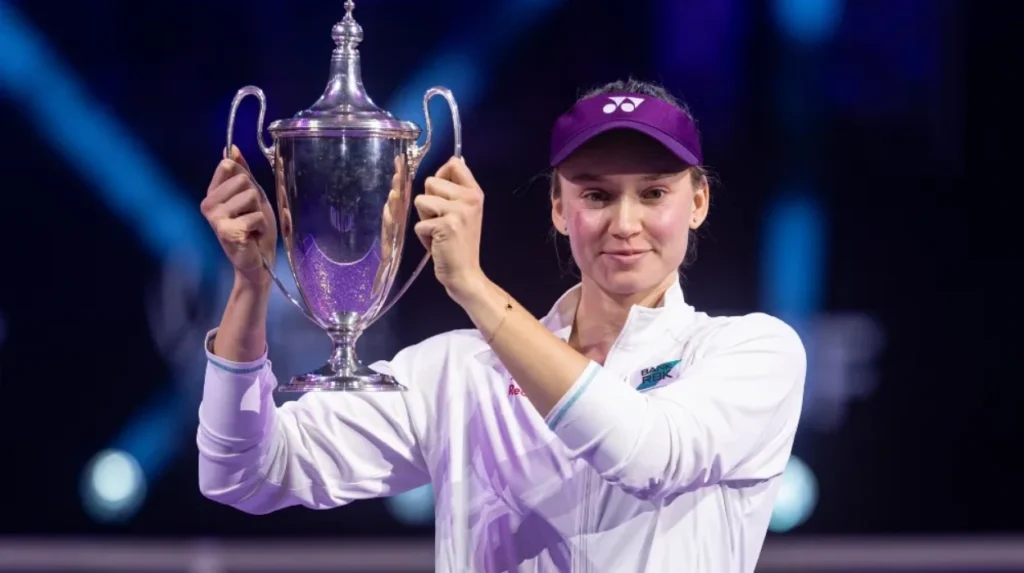
When the Women’s Tennis Association (WTA) confirmed in December 2023 that the WTA Finals would be staged in Riyadh, Saudi Arabia, the announcement triggered immediate controversy. For a sport that has long positioned itself as a standard-bearer for women’s empowerment and equality, taking its season-ending event to a country where women only recently gained the right to drive raised questions about integrity, ethics, and the limits of commercial compromise.
By 2026, with the event now replaced by Charlotte, North Carolina as the next host city, the experiment appears to have ended as abruptly as it began. The failure to secure a long-term extension for the Riyadh Finals reflects the deeper contradictions of Saudi Arabia’s global sporting strategy — an approach critics call sportswashing: the use of high-profile international events to launder reputations, obscure systemic abuses, and project an image of modernity abroad while suppressing fundamental freedoms at home.
The WTA’s Gamble and the Backlash
The WTA’s decision was framed by its leadership as an opportunity to promote women’s tennis in new markets and “build bridges through sport.” But this narrative quickly collided with harsh realities. Human rights organisations, tennis legends, and many current players voiced unease about the optics of hosting a women’s event in a country where gender-based restrictions remain embedded in law and practice.
While Saudi Arabia has made visible social reforms under Crown Prince Mohammed bin Salman — allowing women to attend sporting events, enter certain professions, and appear in public without a male guardian — its human rights record remains deeply concerning. The persistent imprisonment of women’s rights activists such as Loujain al-Hathloul and continued crackdowns on dissent expose stark contradictions between external image and domestic reality.
Within the WTA community, moral disquiet blended with pragmatic worries. Several players expressed frustration that they had not been adequately consulted before the decision was announced. Others questioned how the tour’s stated commitment to equality aligned with accepting funding from a regime that systematically restricts women’s autonomy. The rhetoric of “growing the game” rang hollow when juxtaposed with a country where female athletes must still navigate cultural taboos and institutional barriers simply to compete.
This disaffection extended to fans and media. On social platforms and in editorial columns, accusations of hypocrisy eroded the credibility of both the WTA and individual athletes seen as endorsing—or at least normalising—Saudi sports investments. For many observers, this was not a story about expansion or inclusion, but about commodifying a women’s sport to serve the geopolitical ambitions of an authoritarian state.
Financial Motives and Ethical Blind Spots
At the heart of the debate lies the tension between commercial gain and ethical responsibility. The WTA, still recovering from financial losses during the pandemic and from its costly decision to suspend tournaments in China after the Peng Shuai case, faced intense pressure to secure lucrative sponsorships. The Saudi offer reportedly included fees significantly higher than rival bids, a lifeline for an organisation struggling to bridge the revenue gap between men’s and women’s tennis.
However, this pragmatic calculus underscored a deeper moral inconsistency. The WTA’s founding ethos, championed by Billie Jean King and the Original 9, revolved around financial fairness and gender equality — principles rooted in integrity rather than expedience. To many commentators, choosing Riyadh represented a betrayal of that legacy, suggesting that financial incentives outweighed institutional conscience.
This dynamic mirrors a broader trend in global sport, where governing bodies increasingly prioritise market access and sponsorship value over ethical alignment. The WTA is not alone in facing such dilemmas: the ATP, PGA, and Formula One have all accepted Saudi funding despite international criticism. But in the context of women’s sport — where symbolism, representation, and advocacy remain core values — the contradiction was particularly glaring.
Sportswashing and the Saudi Strategy
Saudi Arabia’s rapid entry into elite sport is part of the Vision 2030 framework, a national diversification plan aimed at reducing dependence on oil revenues and reshaping the kingdom’s global image. Through substantial investments in football, golf, boxing, motorsport, and now tennis, Riyadh seeks to project itself as a modern, open, and globally integrated society.
This pattern clearly aligns with the concept of sportswashing — a term popularised to describe how states use sport to deflect criticism and manufacture soft power. By hosting international tournaments, signing star athletes, and acquiring prestigious clubs, governments can shift global discourse from human rights violations to entertainment spectacle.
For Saudi Arabia, this strategy has accelerated dramatically since the creation of the Public Investment Fund (PIF) sports portfolio. Beyond the WTA Finals, it owns LIV Golf, a large stake in the English Premier League’s Newcastle United, and key contracts with prominent footballers such as Cristiano Ronaldo and Neymar. Each investment reinforces the same narrative: spectacle over scrutiny, progress over protest.
Yet the domestic reality remains resistant to reform. The kingdom continues to impose severe restrictions on free expression, criminalise anti-government speech, and execute dissidents after trials criticised for lacking due process. Female activists who campaigned for basic rights — the very rights now used as evidence of reform — remain silenced or monitored. Such contradictions make global sporting partnerships less about genuine social transformation and more about branding.
Reputational Risks and Shifting Sentiment
For sports organisations and their commercial partners, association with Saudi initiatives brings reputational exposure. While large-scale sponsorships and hosting deals bring financial benefit, they also invite scrutiny from fans, advocacy groups, and media watchdogs.
In the WTA’s case, the inability to extend the Riyadh deal beyond 2025 (as reported by SportsPro and other outlets) underscores both external pressure and internal unease. Global tennis markets remain sensitive to perceptions of moral hypocrisy, particularly in a sport historically tied to advocacy and social progress. The missed opportunity to sustain Saudi funding illustrates how reputational cost can outweigh short-term financial advantage.
Corporations that endorse such events face similar dilemmas. Sponsors risk alienating consumers who increasingly demand ethical consistency from brands. As public awareness of sportswashing grows, the calculus of “visibility at any cost” becomes less viable.
The FIFA Parallel: World Cup 2034
If tennis’s flirtation with Riyadh exposed the dangers of moral compromise, football’s embrace of Saudi Arabia through the 2034 World Cup cements them. In 2023, FIFA effectively handed the tournament to Riyadh after Australia declined to bid — a process so truncated that critics called it preordained.
The parallels with the WTA episode are striking. Again, narratives of inclusion, growth, and global outreach masked deeper political realities. FIFA President Gianni Infantino lauded the decision as a step toward “a truly global game,” yet the choice of host revived memories of the 2022 Qatar World Cup, where labour exploitation and human rights abuses drew global condemnation.
FIFA’s governance, long criticised for opacity and corruption, remains susceptible to political influence and financial seduction. Saudi Arabia’s estimated spending on sports since 2016 exceeds US$10 billion, a figure dwarfed only by its ambitions to serve as a global tourism and entertainment hub. Hosting the World Cup provides the ultimate legitimising platform: a month-long media spectacle projecting an image of openness while deflecting attention from domestic repression and regional interventions.
Critically, both the WTA and FIFA cases illustrate how sports governance structures enable sportswashing. They rely on private negotiation, limited transparency, and a commercial logic divorced from social accountability. By accepting state sponsorship without enforcing human rights conditions, these organisations effectively legitimise whitewashing campaigns.
Boycotts and the Question of Effectiveness
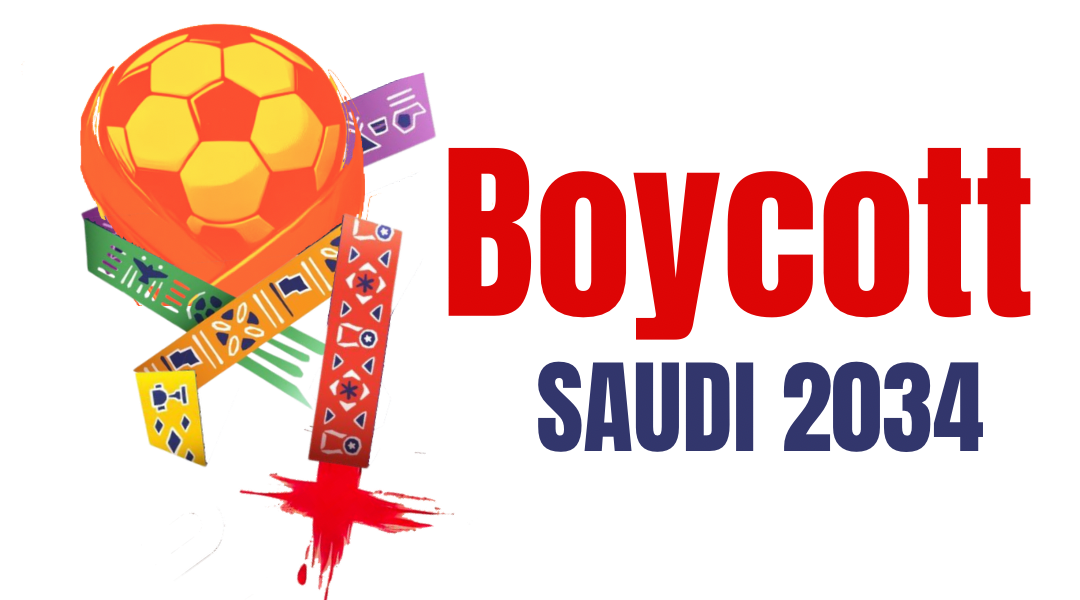
In light of these patterns, growing voices within civil society argue that the only meaningful response is collective refusal — a consumer, athlete, and sponsor-led boycott of sporting events hosted in Saudi Arabia, including the 2034 World Cup. But can boycotts drive meaningful political or social change?
History offers mixed evidence. The international boycott of apartheid South Africa in the 1970s and 1980s remains a notable example of sport catalysing political pressure. Denying South Africa participation in global competitions helped isolate its regime and strengthened internal opposition movements. Similarly, the partial boycotts of the 1980 Moscow and 1984 Los Angeles Olympics, although driven by Cold War politics, demonstrated sport’s capacity as a symbolic battleground for ideology.
However, modern sport operates in a far more commercialised ecosystem. Global broadcast rights, corporate sponsorships, and digital revenue streams dilute the impact of traditional boycotts. Even if specific athletes or nations abstain, replacement participants and global audiences may sustain profitability. In Saudi Arabia’s case, immense state subsidies make such events financially self-insulating, reducing vulnerability to external pressure.
Yet moral and reputational consequences remain powerful. Sustained outcry can tarnish brand image, deter sponsors, and alter public perception. For athletes, collective action — even symbolic refusals or public statements — can challenge the culture of silence that allows such deals to persist unopposed. For fans, participation choices (viewership, purchasing, attendance) still shape market responses.
The greater risk lies in complacency: accepting spectacle as apolitical or neutral when it clearly operates as an instrument of power.
Rethinking Accountability in Global Sport
The cases of the WTA Finals and FIFA World Cup 2034 force a reckoning with the ethics of global sport. When financial imperatives dominate decision-making, institutions that claim to represent fairness, equality, and human progress inherit the moral burden of hypocrisy.
To progress, reform must target transparency and conditionality. Governing bodies should adopt binding human rights criteria for host selection, independent oversight for financial agreements, and meaningful consultation with athletes and advocacy groups. Sponsors, too, must assess partnerships not only for profitability but for moral coherence.
For Saudi Arabia, sport could yet serve as a genuine avenue for reform — but only if engagement occurs with integrity. That requires openness to criticism, inclusion of local activists, and tangible steps toward civic freedom, not merely polished branding campaigns. Without such change, every tournament and trophy hosted in Riyadh risks further entrenching authoritarian legitimacy.
Saudi Arabia’s growing portfolio of global sporting events illustrates how soft power can be constructed through spectacle. Yet as the short-lived WTA Finals in Riyadh demonstrate, no amount of glitz can conceal the underlying contradictions indefinitely.
The decision to host the FIFA World Cup in 2034 consolidates this trajectory, signalling a sport increasingly divorced from its ethical foundations. Unless fans, athletes, and sponsors demand accountability through coordinated resistance — including strategic boycotts — global sport may continue enabling regimes that weaponise visibility to mask repression.
Sport has long claimed to transcend politics. But in the age of sportswashing, silence is itself political.