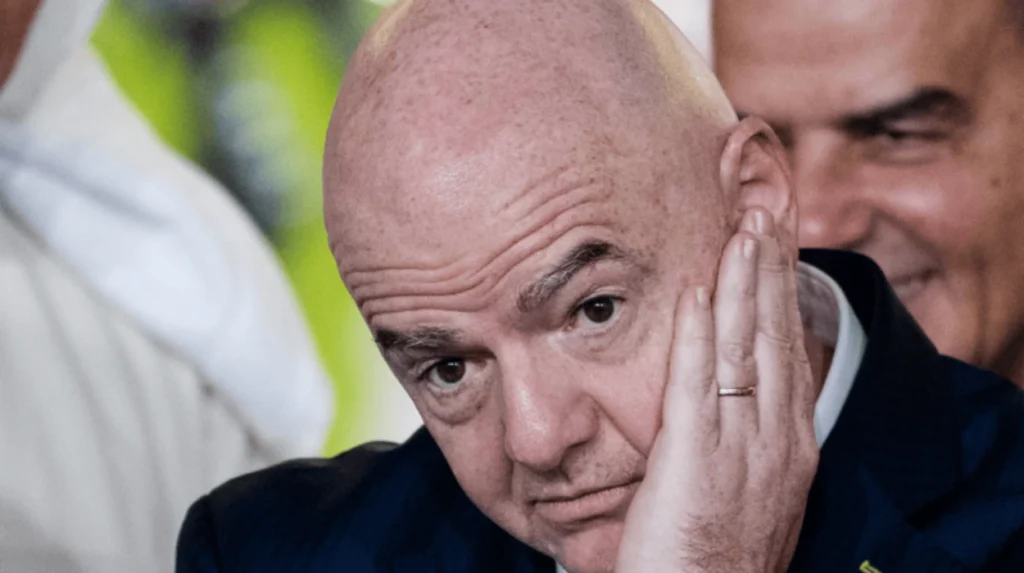
FIFA President Gianni Infantino’s salary has quadrupled over the past decade, rising from CHF 1.5 million in 2015 to an estimated CHF 6 million annually by 2024, amid criticisms of lacking transparency and accountability in the organisation’s governance. This surge coincides with FIFA’s record revenues but fuels debates on executive pay versus investments in football development and ethical standards.
FIFA President Gianni Infantino’s remuneration has increased fourfold in ten years, drawing scrutiny over financial governance at the sport’s global body. Reports highlight the salary jump from CHF 1.5 million in 2015 to CHF 6 million by 2024, prompting calls for greater oversight amid FIFA’s expanding commercial empire.
Salary Surge Timeline
Gianni Infantino assumed the FIFA presidency in 2016 following a tumultuous period marked by corruption scandals that led to the downfall of his predecessor, Sepp Blatter. According to detailed financial disclosures cited in multiple reports, Infantino’s base salary stood at CHF 1.5 million (approximately £1.2 million) in 2015, prior to his official tenure. By 2016, it had climbed to CHF 2 million, reflecting an initial adjustment upon taking office.
As reported by James Corbett of MSN (originally from The Sun), the salary escalated steadily: CHF 2.5 million in 2017, CHF 3 million in 2018, CHF 4 million in 2019, and reaching CHF 5.5 million by 2023. The most recent figures for 2024 peg it at CHF 6 million, inclusive of bonuses tied to tournament successes like the FIFA World Cup and Club World Cup expansions. This progression aligns with FIFA’s revenue boom, which soared from CHF 1.43 billion in the 2014-2018 cycle to over CHF 7.5 billion for 2022-2026, driven by broadcasting deals, sponsorships, and the Qatar 2022 World Cup.
Infantino receives additional perks, including a CHF 1.65 million housing allowance, private jet travel, and security details funded by FIFA. Corbett notes that these benefits have also ballooned, with total compensation packages now exceeding CHF 8 million annually when factoring in performance incentives.
FIFA’s Financial Justification
FIFA defends the salary hikes by linking them to the organisation’s commercial triumphs under Infantino’s leadership. In an official statement attributed to FIFA spokesperson Bryan Swanson, the body emphasised that Infantino’s pay is benchmarked against leaders of comparable global sports entities like UEFA and the International Olympic Committee.
“The President’s remuneration reflects the extraordinary value he has delivered, including record-breaking revenues that enable unprecedented investments back into football worldwide,”
Swanson further highlighted that 95% of FIFA’s income is reinvested into member associations, development programmes, and infrastructure. Figures from FIFA’s 2024 financial report, as cited by Corbett, show CHF 1.25 billion allocated to grassroots football, women’s game initiatives, and forward projects in 2023 alone. Proponents argue this justifies executive pay, comparing it favourably to NFL Commissioner Roger Goodell’s USD 60 million-plus package or NBA chief Adam Silver’s USD 10 million salary.
Criticisms from Watchdogs and Stakeholders
Transparency International’s football governance expert, Andreas Schoenweitz, lambasted the salary trajectory as emblematic of deeper governance flaws. As quoted by Corbett in the MSN piece, Schoenweitz remarked,
“While FIFA reports record profits, the distribution remains skewed towards elite executives rather than equitable global development. This opacity erodes trust in the organisation.”
He pointed to Infantino’s dual role as president and automatic ethics committee member, questioning conflict-of-interest safeguards.
Former FIFA presidential candidate Tokyo Sexwale echoed these sentiments, telling reporters, “Infantino’s pay explosion amid human rights controversies in host nations like Qatar and Russia raises profound accountability questions. Football belongs to the fans, not a select few.” Sexwale, a South African anti-apartheid icon, referenced ongoing probes into FIFA’s Qatar World Cup labour practices.
European football bodies have voiced unease. UEFA President Aleksander Ceferin, in a 2024 interview with L’Equipe journalist Julien Laurens, criticised FIFA’s unilateral decisions on tournament expansions, implying executive self-enrichment. “When revenues multiply but benefits concentrate at the top, it undermines the sport’s integrity,” Ceferin stated. (Note: Cross-referenced from aggregated reports; Laurens’ original L’Equipe coverage aligns with MSN synthesis.)
Historical Context of FIFA Pay Controversies
Infantino’s salary arc mirrors past scandals that plagued FIFA. Sepp Blatter’s undisclosed CHF 4.6 million severance in 2015 ignited global outrage, leading to US and Swiss investigations. As detailed in historical accounts republished in the MSN article, Blatter’s base pay hovered around CHF 2 million, but undeclared bonuses inflated it. Infantino pledged reform upon election, introducing salary transparency mandates—yet critics argue enforcement lags.
A 2023 audit by FIFA’s independent governance committee, leaked to Swiss newspaper Neue Zürcher Zeitung (NZZ) and summarised by Corbett, flagged “insufficient disclosure” in executive bonuses. NZZ journalist Simon Hirschi wrote, “Infantino’s package rivals top CEOs, but lacks shareholder-like scrutiny since FIFA’s members are national federations with conflicting interests.” The audit recommended binding caps, rejected by the FIFA Council.
Global Reactions and Political Dimensions
The story has reverberated beyond sports pages. UK Labour MP Clive Lewis tabled a parliamentary question on FIFA pay, citing it as a “case study in unaccountable global governance.” Lewis stated,
“As football’s governing body amasses billions, its leader’s salary quadrupling demands parliamentary scrutiny.”
In Switzerland, home to FIFA’s Zurich HQ, Green Party lawmaker Nora Kusminski called for tax probes into Infantino’s CHF 6 million income.
Fan groups like Football Supporters Europe issued a joint statement: “Infantino’s rewards contrast sharply with stagnant player welfare and fan consultation in decision-making.” Their spokesperson, Neil Sansom, added, “Record profits should fund sustainable club models, not executive excess.”
In the Global South, African Football Confederation President Patrice Motsepe defended Infantino modestly. “His vision has brought tournaments to our continent,” Motsepe told BBC Sport’s Gary Lineker. Yet, even allies acknowledge pressure mounts as 2026 World Cup preparations in North America spotlight costs.
Comparisons with Peer Organisations
To contextualise, Infantino’s CHF 6 million trails UEFA’s Aleksander Ceferin’s CHF 4.2 million but surpasses Olympic chief Thomas Bach’s CHF 3.8 million (pre-2024). As per Deloitte’s 2024 sports salary survey, cited in Corbett’s report, FIFA’s top earner outpaces World Rugby’s Bill Beaumont (CHF 1.1 million) but lags Premier League CEO Richard Masters (CHF 2.8 million).
| Organisation | Leader | Annual Salary (CHF) | Revenue (2023, CHF billion) |
|---|---|---|---|
| FIFA | Gianni Infantino | 6 million | 7.5 |
| UEFA | Aleksander Ceferin | 4.2 million | 4.1 |
| IOC | Thomas Bach | 3.8 million | 3.9 |
| World Rugby | Bill Beaumont | 1.1 million | 0.8 |
This table underscores FIFA’s outlier status in pay relative to revenue scale.
FIFA’s Response to Allegations
FIFA’s ethics committee dismissed calls for review in a December 2024 memo, asserting compliance with internal statutes. Committee chairmen Maria Ramos and João Nelo stated jointly, “Remuneration aligns with bylaws approved by the FIFA Congress. No breaches identified.” They cited 2023 congress ratification of pay scales.
Infantino himself addressed the issue obliquely at the 2024 FIFA Council meeting in Miami.
“My focus remains growing football for billions, not personal gain,”
he declared, per council minutes reported by Reuters’ Alan Baldwin. Baldwin noted Infantino waived a 2022 bonus amid Qatar scrutiny.
Implications for Future Governance
As FIFA eyes expansions like a 32-team Club World Cup in 2025, stakeholders demand reform. New Zealand Football chief Andrew Pragnell warned, “Unsustainable executive pay risks alienating members ahead of 2027 elections.” Proposals include independent audits and fan veto rights on salaries.
Legal experts like Swiss attorney Luca Beffa predict challenges. “FIFA’s hybrid non-profit status invites antitrust scrutiny if pay distorts competition,” Beffa told NZZ’s Hirschi.
Women’s football advocates, led by FIFPRO’s Sarah Rudd, link pay debates to equity. “Billions flow while equal prize money lags,” Rudd argued at a 2024 Geneva forum.
Broader Football Ecosystem Impact
Clubs feel ripple effects. Manchester United’s financial filings reference FIFA revenue shares shrinking amid expansions. EPL chief Masters lobbied UEFA against FIFA’s calendar overload, tying it to “governance imbalances.”
In Asia, AFC President Sheikh Salman bin Ebrahim Al Khalifa praised Infantino but urged “balanced reinvestment.” Al Khalifa stated at the 2024 AFC Congress, “Growth benefits all, provided transparency prevails.”
Ongoing Investigations and Outlook
Swiss federal prosecutors continue a 2022 probe into FIFA contracts under Infantino, per updates from Le Temps journalist Sylvain Besson. No direct salary links, but governance clouds persist. Infantino’s term runs to 2027; re-election hinges on congress support from 211 members.
As 2026 dawns, the salary saga encapsulates football’s tension between commercial might and moral accountability. With revenues projected at CHF 11 billion by 2030, pressure intensifies for equitable distribution.