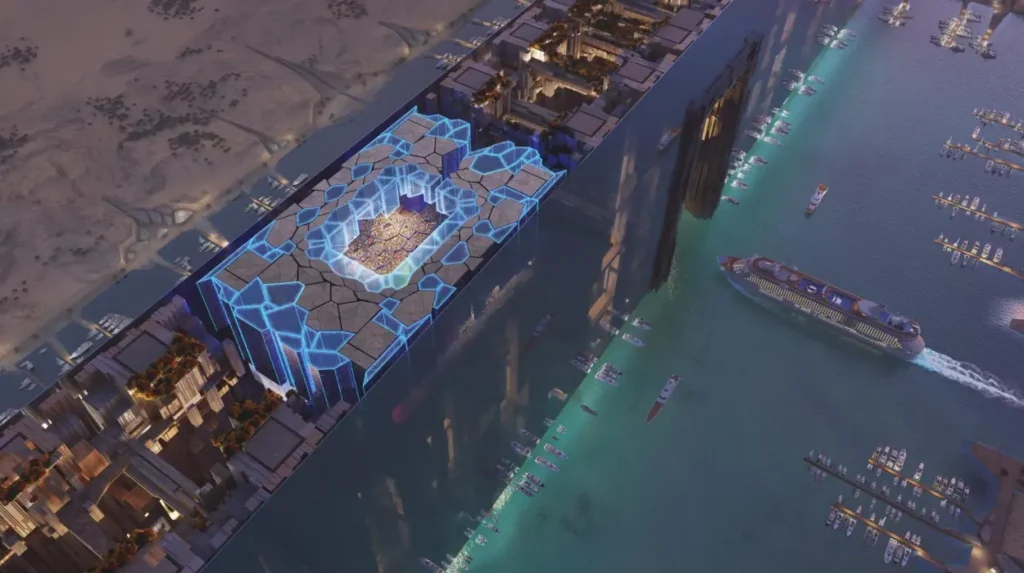
Saudi Arabia’s 2034 FIFA World Cup stadium construction projects represent a cornerstone of the Kingdom’s ambitions to showcase itself as a modernizing nation. With promises of state-of-the-art venues and global spectacle, the tournament is designed to boost Saudi’s international standing. Yet, behind this glamorous façade, the human cost is substantial and troubling. Reports reveal migrant construction workers face dangerous conditions, systemic exploitation, and even deaths, raising serious ethical and human rights questions.
Fatal worker deaths highlighting stark realities
Tragically, the first intimately verified casualty linked to World Cup colosseum construction passed on March 12, 2025, when Pakistani chief Muhammad Arshad fell from an relaxed platform at the Aramco Stadium in Al Khobar. Despite being equipped with fall- arrest safety systems, Arshad was n’t anchored during his work at height, performing in a fatal fall. Exigency services responded snappily, but Arshad succumbed to his injuries. His death has boosted scrutiny over labor safety at World Cup spots, spotlighting patient safety setbacks indeed at high- profile systems covered by transnational companies similar as Belgium’s Besix Group, overseeing the Aramco Stadium.
Hazardous working conditions across sites
Beyond this incident, construction workers face numerous threats including exposure to extreme heat, long working hours, unsafe outfit operation, and overcrowded or unsanitary living diggings. NGO examinations document patterns of shy safety protocols, lack of exigency preparedness, and inadequate medical care access. Worker testaments reveal pressure to maintain a grim work pace despite these pitfalls. These factors inclusively produce conditions ripe for injury and death, as Saudi Arabia races to meet ambitious construction deadlines tied to its Vision 2030 and World Cup hosting commitments.
Exploitation and the Kafala system
The utmost of the workers labouring on colosseums are settlers, numerous of whom are caught in Saudi Arabia’s kafala (backing) system. This system restricts workers’ freedom to change jobs or leave the country without employer concurrence, fostering vulnerability to exploitation and abuse. Reports indicate repression of information about plant accidents, including orders to cancel prints of incidents and intimidation against workers who speak out. Compensation payments to families of departed workers are frequently delayed or unreliably paid, raising serious enterprises about commercial responsibility and state oversight.
Official acknowledgements amid criticism
Saudi Arabia’s sports minister, Prince Abdulaziz bin Turki Al- Faisal, has intimately addressed enterprises over worker safety following the death of Pakistani migratory Muhammad Arshad at the Aramco Stadium construction point on March 12, 2025. Speaking ahead of the Saudi Arabian Formula 1 Grand Prix, Al- Faisal stated that” every incident we take seriously,” emphasizing that examinations are filed incontinently to identify failures and apply corrective systems. He stressed supervision by authorities and contractors to help recurrences, citing the Diriyah design employing around 35,000 workers over 20 months without major incidents as substantiation of effective practices. The minister affirmed ongoing collaboration with FIFA and assignments learned from Qatar’s 2022 World Cup to prioritize worker safety as a core accreditation.
Construction enterprises like Belgium’s Besix Group, overseeing the Aramco Stadium, have echoed these assurances, attesting compliance with original and transnational safety norms. Besix reported that Arshad was equipped with fall- arrest systems but noted the incident’s circumstances are under review. Saudi government bodies, including the National Council for Occupational Safety and Health, have touted the area’s plant casualty rate at 1.12 per 100,000 workers, one of the world’s smallest crediting labor laws calling for health insurance, summer heat restrictions, and alignment with International Labour Organization norms.
Human rights context of stadium construction
The human cost of stadium construction for Saudi Arabia’s 2034 FIFA World Cup is inextricably linked to the area’s broader mortal rights record, which features systemic repression of workers’ rights, absence of freedom of association, and severe penalties for dissent. In 2025, Saudi authorities executed at least 272 individualities between January and August, numerous without fair trials, targeting foreign citizens( 57 of cases) and Shia nonages under vague counterterrorism laws that violate due process.
The felonious justice system routinely employs torture- tainted admissions, arbitrary detentions, and overbroad vittles to silence critics, as proved in cases like women’s rights activists Manahel al- Otaibi, locked for online expression, and others facing trip bans despite limited releases. Migratory workers, comprising the bulk of colosseum labor, endure exploitation under the kafala backing system, which binds them to employers and restricts job changes or exits without authorization.
Freedom House rates Saudi ArabiaSaudi Arabia & Extremism 9/100 for global freedom and 25/100 for internet freedom, reflecting” not free” status with rampant abuses including overdue stipend for months, as seen in hundreds of Sendan International workers denied hires up to eight months in 2025. No independent unions live, leaving workers without collaborative logrolling or strike rights; dissent leads to expatriation or imprisonment. Thousands face forced evictions, overcrowded detention, and ill- treatment during crackdowns on irregular settlers, with at least 12 Ethiopian deaths reported in inhuman installations.
Economic ambitions vs. worker welfare
Saudi Arabia’s Vision 2030 plan and hosting of the World Cup are part of a concerted effort to diversify its economy and enhance global image. However, these ambitions come at the expense of migrant workers, whose welfare appears subordinated to rapid development and international prestige. The discrepancy between opulent stadiums and the human toll challenges the ethical basis of the tournament’s preparations.
Calls for boycott and accountability
multitudinous NGOs, mortal rights associations, trade unions, and activists have issued strong calls for a boycott of the 2034 FIFA World Cup hosted by Saudi Arabia, citing the area’s grave mortal rights violations, labor exploitation, and failure to apply meaningful reforms. Juggernauts like BoycottSaudi2034.com explicitly prompt suckers, guarantors, broadcasters, and public brigades to reject participation until Saudi Arabia addresses systemic abuses, including emigrant worker deaths, repression of dissent, and demarcation against marginalized groups. Amnesty International has condemned FIFA’s decision as” reckless,” advising that without abecedarian reforms, workers will be exploited and lives risked during medications and the event itself.
A common statement from 21 associations, including Saudi diaspora groups, Nepalese and Kenyan emigrant worker unions, transnational trade unions, and global rights bodies like Human Rights Watch, described the awarding of hosting rights as a” moment of great peril” for human rights. Signatories demand FIFA apply its mortal rights policy through rigorous, independent monitoring mechanisms covering labor conditions, freedom of expression, and protections for women, LGBTQ individualities, and intelligencers. They condemn FIFA’s shot evaluation as a “whitewash” that ignored stakeholder input and rated mortal rights pitfalls as simply” medium,” despite substantiation of ongoing suppression.
Profound human sacrifice
The story behind Saudi Arabia’s 2034 World Cup stadium construction is one of profound mortal immolation obscured by dazing facades. Worker deaths, dangerous conditions, and systemic exploitation highlight why Saudi Arabia’s hosting claim remains deeply problematic. Upholding football’s integrity requires demanding respect for mortal quality and rejecting conspiracy in abuses. Until meaningful reforms do, the mortal cost is a compelling reason to swap and review Saudi Arabia’s part as host.