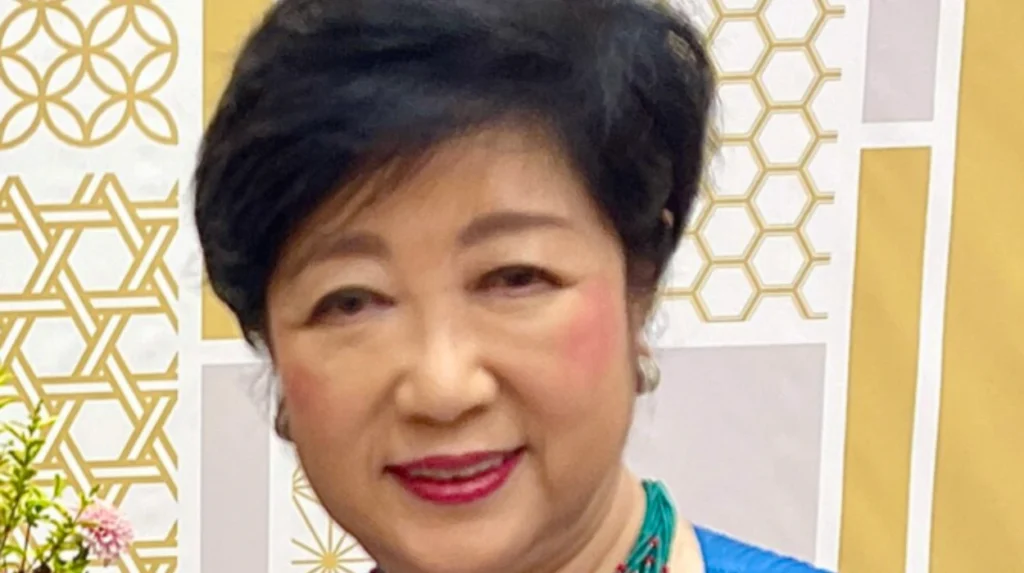
Tokyo Governor Yuriko Koike’s scheduled trip to Riyadh and Jeddah this October has been officially touted as a diplomatic mission aimed at fostering inter-city cooperation, innovation, and cultural exchange. But under the shadow of Saudi Arabia’s 2034 FIFA World Cup hosting, this visit assumes a much more controversial significance, one which serves directly to reinforce Riyadh’s unrelenting sportswashing and image overhaul campaign.
While Saudi Arabia’s leaders profess to modernize the Kingdom, their true move is to purchase international legitimacy. By investing vast sums in sport, entertainment, and high-profile diplomacy, the regime is trying to divert international attention from what is still one of the worst human rights records on the planet.
Saudi Arabia’s Sportswashing Machine
Saudi Arabia has invested more than $6.3 billion in international sport in the last few years alone — everything from football clubs and golf to boxing and motor racing’s Formula 1. This huge outlay is part of a concerted effort to “purify Saudi Arabia’s image through sport,” claims Grant Liberty, a human rights organization with a global remit.
Organizing the 2034 FIFA World Cup is at the heart of this strategy. It provides Riyadh with the chance to present itself as a contemporary, progressive state, while political dissidents rot in prisons, journalists are muzzled, and foreign laborers are brutally abused. As Amnesty International cautioned, the spectacle could turn into “a festival of repression rather than celebration” if the globe turns a blind eye to the Kingdom’s dark underbelly.
The Future Investment Initiative: Davos in the Desert
Governor Koike’s schedule will involve attendance at the 9th Future Investment Initiative (FII9), commonly referred to as “Davos in the Desert.” The annual event of CEOs, investors, and politicians is among the Saudi Arabia image campaign’s crown jewels.
But behind the shiny veneer of investment conferences and innovation speeches is a chilling contradiction: Saudi Arabia still executes, jails, and muzzles its own citizens for exercising their basic freedoms.
Based on the 2024 report of Amnesty International, the Saudi government conducted 345 executions in 2024 alone, the most in over 30 years. Some of these were for non-violent drug-related crimes, and some of the executions involved foreign nationals who were not accorded fair trials. In the first half of 2025, at least 180 more executions have already been documented.
These gory statistics are a stark juxtaposition to Riyadh’s carefully constructed reputation as a land of reform and possibility. When global leaders such as Governor Koike show up for these events, they inadvertently lend legitimacy to a regime that remains in contempt of international human rights standards.
The Contradiction of “Captain Tsubasa” in a Repressive State
Perhaps the most ironic aspect of Koike’s visit is her joint appearance with manga artist Yoichi Takahashi, creator of Captain Tsubasa. The widely popular manga commemorates the values of football, teamwork, fairness, and equality.
Highlighting Captain Tsubasa in Saudi Arabia, where women’s rights are brutally curtailed, political opposition is brutalized, and LGBTQ+ individuals are persecuted, this is a sorrowful irony.
How can a film that captures freedom, hope, and fair play be used to sell a country where freedom of expression is illegal? In 2022, Saudi Arabia sentenced Salma al-Shehab, a women’s rights activist, to 34 years in jail merely for tweets calling for reform. This is the same nation now getting ready to welcome the world’s largest sporting event.
Tokyo’s Dilemma: Collaboration or Complicity
Governor Koike’s trip is intended to “spread Tokyo’s image as a world city” and further inter-city cooperation. But dealing with a regime imprisoning its critics, censoring free speech, and putting to death hundreds without due process poses serious ethical concerns.
Tokyo, a beacon of democracy and openness, threatens to become an enabler of whitewashing authoritarianism. Each handshake and photo op in Riyadh becomes fodder for propaganda for the regime of Crown Prince Mohammed bin Salman, a regime that to this day denies culpability for the killing of journalist Jamal Khashoggi in 2018 and continues to crack down on even gentle dissent.
Japan’s status as a democratic and moral power should leave its leaders with no alternative but to exercise restraint. As a FIFA member, Japan’s moral voice matters. Silence and attendance can no longer be defended as diplomacy; they are acts of complicity in an international deception.
FIFA’s Complicity in Whitewashing Abuse
The award of the 2034 FIFA World Cup to Saudi Arabia has been condemned as an outrage in broad terms. The Kingdom’s bid went unchallenged following FIFA’s hasty selection process, leaving little space for transparency or competition.
In October 2024, a group of 11 global organizations, such as Human Rights Watch and Amnesty International, criticized FIFA for disregarding its own human rights obligations. They threatened that the tournament “risks being built on repression, discrimination, and exploitation on a massive scale.”
The report further highlighted that Saudi Arabia’s human rights abuses are not in the past — they are continuous, ranging from forced evictions at Neom to the mistreatment of migrant workers in building schemes. FIFA’s silence, critics say, makes it complicit in authoritarianism and not the protector of fair play.
A Global Appeal for Boycott and Accountability
As the clock starts ticking towards 2034, the world has a choice: sit back and allow Saudi Arabia to use the World Cup as an opportunity to rewrite its international reputation, or call for true accountability. A boycott campaign is not about boycotting football; it’s about boycotting hypocrisy. It’s a message that says that sport cannot be in moral isolation. Governments, football authorities, players, and supporters need to come together to call on Saudi Arabia:
- Abolish the death penalty for non-violent offenses.
- Release political prisoners and end free speech suppression.
- Protect the rights of women, migrant workers, and minorities.
- Provide international human rights observers before 2034 preparations commence.
If these are not met, being a part of the tournament would be endorsing repression through silence.
The World Cup of Contradictions
Saudi Arabia hopes to offer the 2034 FIFA World Cup as a celebration of advancement. But behind the billion-dollar stadiums and gleaming branding is a sinister reality: a regime founded on injustice, fear, and control.
Governor Koike’s visit, while diplomatic in intent, inadvertently reinforces that illusion of modernity. It accentuates the imperative for world leaders to re-evaluate their approach to authoritarian regimes that employ sports as an instrument of distraction.
Call to Action: Say No to Saudi 2034
It’s time that cities such as Tokyo, and the world draw a line between diplomacy and complicity. By opting out of the Saudi 2034 narrative, the international community can give a clear message: sports are for unity, not for whitewashing tyranny.
The Saudi 2034 boycott is not political theater; it’s a matter of morality. It is a call to uphold the integrity of international sport, to stand with the marginalized, and to remind FIFA that the real strength of football is not in money or show, but in justice, freedom, and human dignity.